Quwa Premium

Pakistan-Indonesian Ties: Why Pakistan ought to Push for Partnerships, not Sales Plus

Introduction

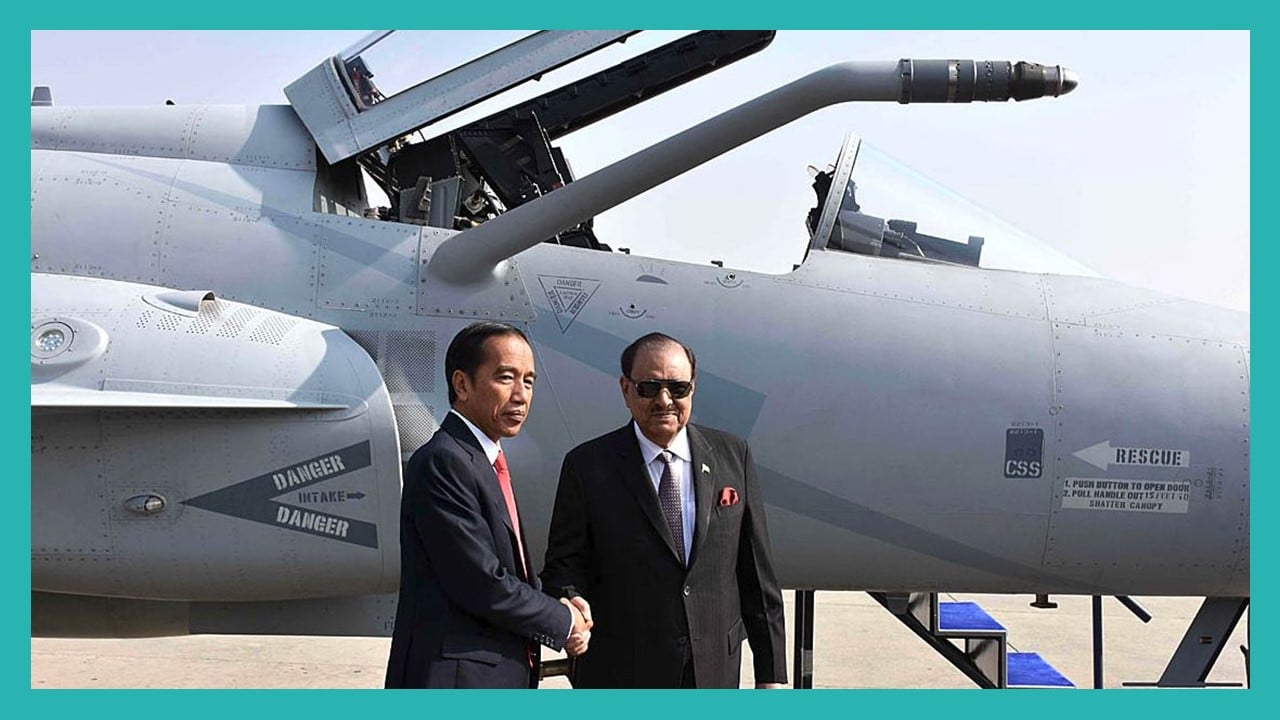
On 26-27 January 2018, the President of Indonesia Joko Widodo paid an official state visit to Pakistan. The visit was earnestly received by Pakistan, which not only presented Mr. Widodo and Indonesia’s First Lady Mrs. Iriana Widodo a guard of honour, but also a flypast involving three Pakistan Air Force (PAF) JF-17 Thunder multi-role fighters. In a press statement from the Pakistani Ministry of Foreign Affairs, Indonesia and Pakistan recognized that the two countries “share deep political, cultural, religious ties and respect for democratic values…[and] stand together for their progress, prosperity, stability, security and territorial integrity”[1] On that basis, Pakistan and Indonesia agreed to enhance bilateral defence relations, especially in the form of training and defence education. Furthermore, the two countries agreed to establish a ‘Joint Committee’ to further the memorandum-of-understanding (MoU) ‘Agreement on Defence Cooperation’.

Is a JF-17 Sale a Factor?

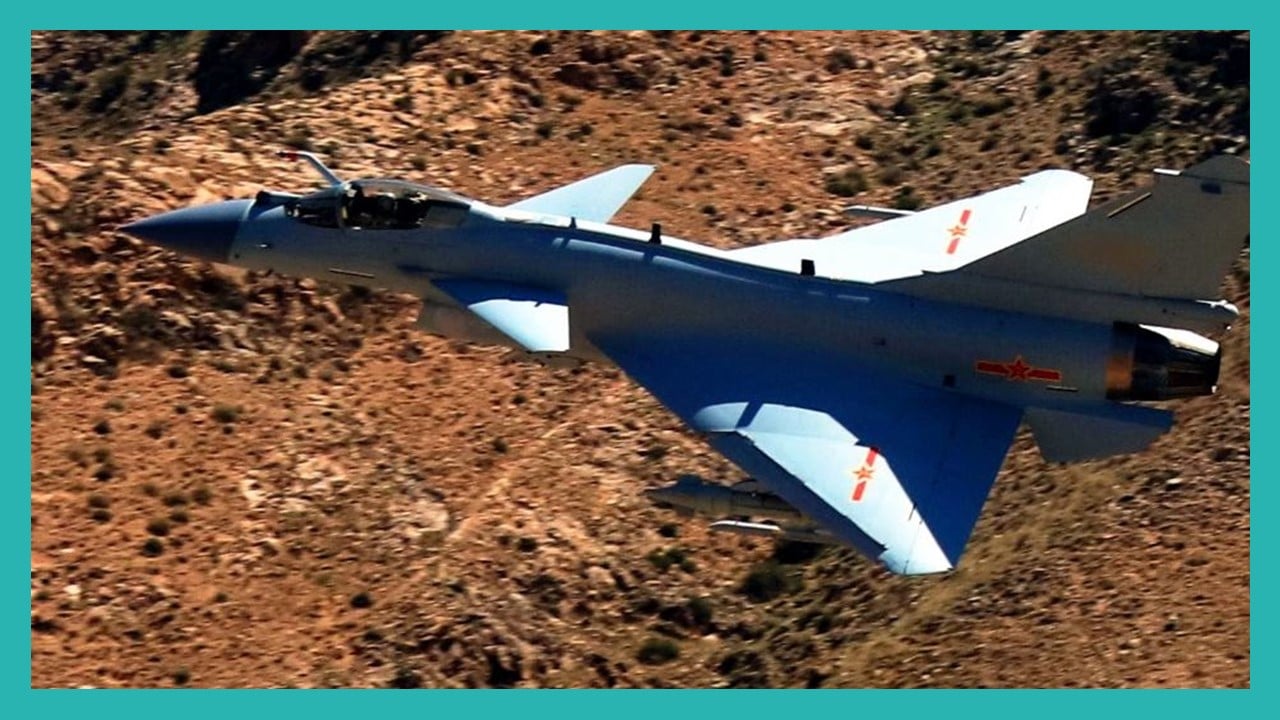
The marquee scene of Widodo’s visit was the tour the PAF provided him of the JF-17, which is today the mainstay multi-role fighter of the PAF. It was an interesting gesture considering reports of the Indonesian Air Force (Tentara Nasional Indonesia-Angkatan Udara: TNI-AU) being in the process of defining a fighter requirement (ostensibly to complement the 11 Sukhoi Su-35 Flanker-Es it agreed to procure from Russia in November 2017). This new requirement could amount to as many as 48 new combat aircraft.[2]

On the surface, it would seem natural for Pakistan to market the JF-17 to Indonesia, which is probably among the states that Pakistan had envisioned would be interested in the Thunder (i.e. a populous Muslim-majority country with tenuous ties with the U.S. and Europe and once affected by sanctions). However, it is unfair to reduce the potential of Pakistani-Indonesian defence relations to the viability of a JF-17 sale, which – for reasons inherent to its technical merits and beyond them, such as the Pakistani economy, bilateral foreign ties and Indonesia’s own foreign relations realities – is unlikely to occur.

On its own technical merits, the JF-17 would be redundant for the TNI-AU. The TNI-AU has been operating the Korea Aerospace Industries (KAI) T-50 Golden Eagle since 2013. It would be erroneous to assume that the Golden Eagle’s profile as a lead-in-fighter-trainer (LIFT) prevents it from being a lightweight multi-role fighter akin to the JF-17. For example, the T-50’s maximum take-off weight (MTOW) is 12.3 tons, just shy of the JF-17’s MTOW of 13.4 tons.[3] [4] The T-50’s turbofan engine – i.e. the General Electric F404 – is in the same power-rating and weight class of the JF-17’s Klimov RD-93.[5] The stated payload of the T-50 (or FA-50, which is the official designation of the T-50’s fighter variant) is less than the JF-17 (i.e. 3,700 kg against 4,325 kg), but alone is not enough to justify the need for a completely different, but overlapping, aircraft. If the TNI-AU prefers lightweight fighters, then it can scale the infrastructure it already has in place for the T-50 and add the FA-50 (logistically, it would also be a smooth transition for new pilots as they move from the T-50 LIFT to the FA-50). Thus, the technical case for the TNI-AU to acquire the JF-17 is not present.

Understanding Indonesia’s Dynamics with China (and the US)

However, even if the T-50 and FA-50 were not factors, Jakarta’s geo-political positioning in Southeast Asia may make a big-ticket procurement involving China untenable, at least today. The US Defence Secretary James Mattis’ visit to Indonesia on January 23 came in a bid to reinforce what the US perceived as Jakarta reinforcing its territorial claims against China, specifically in the South China Sea. In March 2017, Indonesia renamed the northern areas of its exclusive economic zone (EEZ) – i.e. north of the Natuna Islands – into the ‘North Natuna Sea’.[6] The strain in ties between Jakarta and Beijing manifested in the former arresting the latter’s fishermen around the Natuna Islands.[7] Indonesia is simply another in a group of states with a dispute with China over the South China Sea, a resource-rich area in the Pacific Ocean.

Although Beijing has downplayed the significance of it, renaming a contested area is a decisive act, and Washington is clearly looking to add Indonesia to its roster of regional allies in the Pacific Ocean to contain China. It is unclear how Jakarta will advance the issue, but with it pushing the US to lift its sanctions on the Kopassus, the special operations forces arm of the Indonesian Army (Tentara Nasional Indonesia-Angkatan Darat: TNI-AD),[8] Jakarta’s support to Washington could be on the horizon. In turn, it would be natural to assume that this support will materialize in Indonesia procuring additional arms from the US. It took delivery of 24 surplus ex-US Air Force Lockheed Martin F-16C/D Block-25s and the first three of eight Boeing AH-64E Guardian attack helicopters. Indonesia can also access Europe and Russia.

For Pakistan, the challenge of exporting big-ticket arms stems from several issues. First, Pakistan’s limited fiscal ability prevents it from supporting its own products with credit/loans for prospective buyers, which basically removes Pakistan from fully competing for developing world markets. In some cases, this might be a non-issue – Nigeria had apparently agreed to a layaway arrangement involving cash installments prior to deliveries for three JF-17s. However, the U.S., Europe, Russia and China have financing mechanisms to back their industries, giving them leverage and the lead in terms of capturing sales.

Second, Pakistan is not the source of all inputs feeding into its products, especially in terms of critical subsystems such as propulsion, but electronics and superstructure/airframes as well. To be fair, this is not uncommon among newer or smaller defence industry players, ultimately, most rely on the big players (e.g. the U.S., Europe, etc) to provide engines and certain electronics. However, for Pakistan this means that it inevitably will capture a relatively small proportion of the arms market, even when it secures a sale (considering that others, such as China, will secure indirect sales through engines et. al).

Third, the fact that defence transactions are not purely commercial. The US views defence exports as a foreign policy tool and in countries where it seeks to gain influence it will package concessions, such as loans, offsets, investment and co-production. Pakistan must contest this friction – much of it out of its control – for the JF-17. Moreover, Pakistan Chinese-Indonesian ties may currently be too contentious to sustain a JF-17 sale, and it is unclear if matters will change for the better in the future.

Partnerships over Sales

However, casting the prospect of bilateral defence relations through the view of simply securing the sale of defence items is erroneous. Rather, Pakistan ought to view Indonesia as a potential partner with whom it can collaborate in the development and production of key inputs – such as aerostructures (i.e. airframe parts), dynamic components (e.g. rotors, transmission, etc), electronics and others. The idea is to pool the respective resources of each country to jointly design, develop and produce solutions in key inputs, thus allowing both countries to improve their respective industries through technical advancement, localizing the supply of hardware, increasing export capabilities and reducing net foreign-currency outflows.

Quwa Plus

Don't Stop Here. Unlock the Rest of this Analysis Immediately

To read the rest of this deep dive -- including the honest assessments and comparative analyses that Quwa Plus members rely on -- you need access.

Join Today

USD $29.99/Year