Quwa Premium

New MPA Solutions Look to Take on Boeing P-8A Poseidon Plus

South Africa’s Paramount Group and Canada’s PAL Aerospace are working to tap into the growing market for next-generation maritime patrol aircraft.

Today, the Boeing P-8 ‘Poseidon’ dominates the market of next-generation maritime patrol aircraft (MPA). Based on the Boeing 737-800 ERX airliner, the P-8 is in service with the United States Navy (USN) as well as five additional operators, with two more awaiting orders and one potentially signing a contract soon.

To date, Boeing has manufactured 156 P-8A and P-8Is. However, in 2025, Boeing may close the Poseidon’s production line as it nears delivering the final batch of P-8s for the USN. Of course, additional orders from overseas customers could extend the P-8’s run into the 2030s.

Boeing projects a potential market for around 75 additional P-8As. The majority of these prospective users would likely be existing P-8 operators as well as current P-3C users, such as Canada, among others.

However, a number of current P-3C operators – such as Pakistan, Brazil, or Argentina – are unlikely to buy P-8As. They either cannot afford it, or they will never gain the necessary approvals from the U.S. to ever access it. Thus, Boeing will not address the entire market in need for next-generation MPAs. In fact, it may not even engage the majority of such users, especially when cost is factored into the equation.

Thus, several defence vendors are now actively working to develop more accessible MPAs to enable these countries to replace their legacy aircraft. Currently, there are three MPA programs in development, and, interestingly, each system responds to a distinct need.

Kawasaki P-1

Kawasaki Aerospace Company designed the P-1 from the ground up in response to the needs of the Japan Maritime Self-Defense Force (JMSDF). The JMSDF sought a new-generation MPA to replace its large P-3C fleet which, interestingly, Japan had built under license domestically.

The Kawasaki P-1 is an original platform. Unlike any of the other options, it was not based on an existing airliner. Like the P-3C, the P-1’s design was centered on carrying a comprehensive sensor suite, delivering a significant level of range and endurance, and a robust payload for both anti-ship warfare (AShW) and anti-submarine warfare (ASW). Like the P-8A, the P-1 offers a smooth capability transition for P-3C users who are looking to retain the Orion’s range, endurance, and mission payload capabilities.

Thus, overall, the P-1 offers countries a directly analogous alternative to the P-8A, especially in regard to AShW and ASW payloads. For example, the P-8A offers a payload capacity of 10,000 kg across 11 external and internal hardpoints. In contrast, the P-1 has a payload of 9,000 kg distributed across 8 externally and internally-mounted hardpoints. Even after Boeing closes the P-8A’s production line, countries seeking the purpose-designed MPA could still talk to Japan for the P-1.

However, Japan is the sole operator of the P-1. Though Tokyo is looking to export the P-1, it will unlikely get the aircraft in the hands of countries that Washington itself does not consider allies. Thus, the target customer base of the P-1 is similar to that of the P-8A. But even then, finding customers may be difficult as the current userbase is narrow, which may dissuade countries worried about long-term lifecycle and/or maintenance issues. Japan would need to secure several sales in quick-succession (or, ideally, a joint-order by several countries) to drive market-wide interest in the P-1.

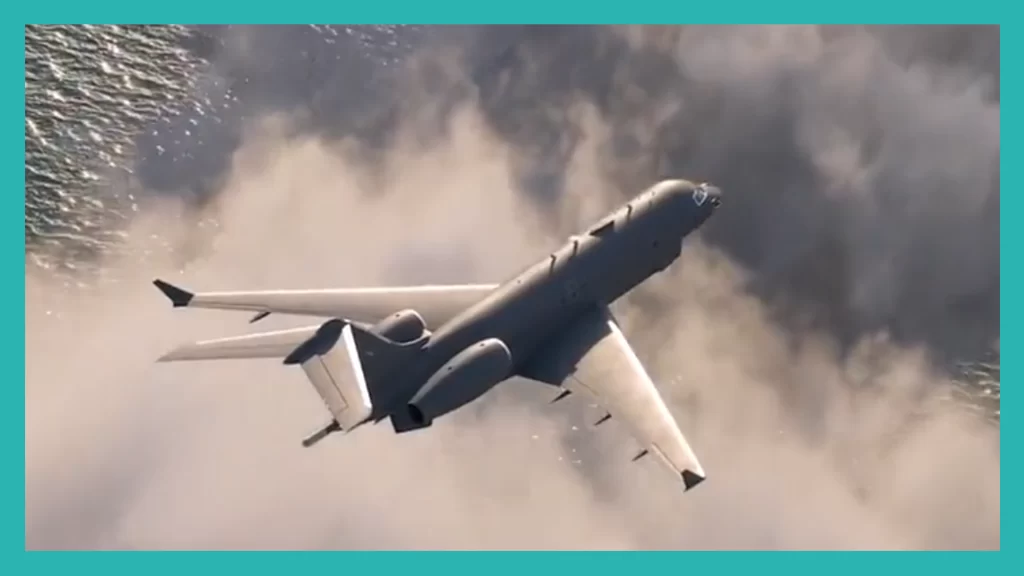
In contrast, the next two options – i.e., the Sea Sultan and the P-6 – leverage commercially available VVIP jets and, in turn, modify them for the MPA role. Interestingly, the idea likely came from Saab, which had offered the Swordfish MPA, a modification suite applied onto the Bombardier Global Express 6000. Saab had marketed the Swordfish as a lower cost, more accessible alternative to the P-8A.

Quwa Plus

Don't Stop Here. Unlock the Rest of this Analysis Immediately

To read the rest of this deep dive -- including the honest assessments and comparative analyses that Quwa Plus members rely on -- you need access.

Join Today

USD $29.99/Year