203Views 0Comments
Monthly Defense News Recap – September 2022 Quwa Premium
The U.S. State Department Approves Maintenance Package for Pakistan’s F-16s
On 07 September 2022, the U.S. State Department greenlit a $450 million U.S. sustainment package for the Pakistan Air Force’s (PAF) F-16 fleet.
According to the Defense Security Cooperation Agency’s (DSCA) press release, the package is more of a “consolidation” of previous F-16 support programs (similar to a $125 million U.S. program in 2019).
Instead of releasing multiple smaller programs, the Government of Pakistan and U.S. State Department decided to consolidate the upcoming sustainment contracts into one package.
Thus, the now consolidated F-16 support program covers many areas, including structural integrity work, support of electronic subsystems, engine repair support, ground support equipment (GSE) calibration and assistance, technical documentation support, and other lines of work.
This package does not involve any net-new aircraft, equipment, or capability additions. It is not an upgrade package, nor a follow-on acquisition program. Simply, this program is an amalgamation of existing and/or upcoming contracts for sustaining the PAF’s existing fleet of 75-odd F-16C/D Block-52+, F-16A/B Block-15 Mid-Life Update (MLU), and Block-15 Air Defence Fighter (ADF) aircraft.
In fact, with the PAF now inducting two separate so-called 4+/4.5-generation fighter platforms – i.e., the J-10CE and the JF-17 Block-III – it is unlikely to have enough fiscal resources left for new F-16s, or, for that matter, a significant upgrade of its newer Block-52+. If anything, the PAF’s primary focus would be to keep its existing F-16 fleet running and, potentially, acquire additional used Block-15 or Block-25/32 airframes, as it already has the support infrastructure to maintain those specific variants.
However, in terms of adding net-new air warfare capabilities, the PAF will likely procure more J-10CE and JF-17 Block-IIIs through the 2020s and early 2030s. From that point, the PAF is likely hoping to have access to a next-generation fighter aircraft (NGFA) from the mid-2030s to, ultimately, replace its F-16s.
Turkey Looks to Revive Pakistani T129 ATAK Deal Using Indigenous Engines
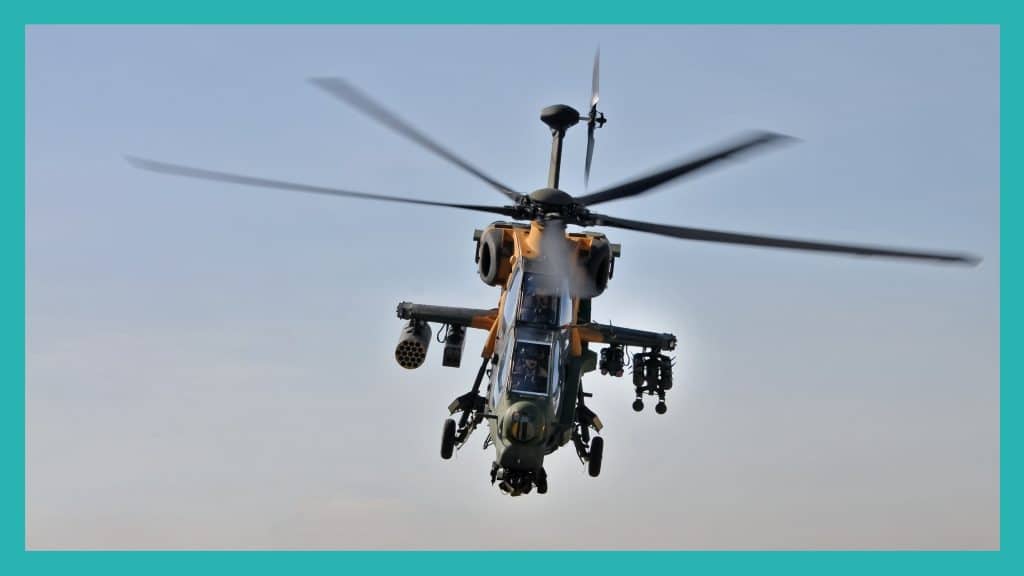
The President of Turkey’s Defense Industries (SSB), Dr. İsmail Demir, reportedly stated that Turkey is now in talks with Pakistan to revive the T129 ATAK attack helicopter program.
However, unlike the original $1.5 billion U.S. contract signed in 2018, this potentially revived program will center on Turkey’s indigenous turboshaft engines, i.e., the TEI TS1400.
In May 2022, the General Manager of Tusaş Engine Industries (TEI), Mahmut Faruk Akşit, said that TEI was nearing the point it would be ready to test-fly the TS1400. The TEI TS1400 offers an output of 1,570 shp, which is actually 100 shp higher than the original requirement of the homegrown engine.
The Pakistani T129 deal fell through because Turkey was unable to secure re-export licenses from the U.S. for the CTS800 turboshaft engines, which currently power the T129. Following a series of delays, Pakistan had agreed to extend Turkey’s delivery window by another year in 2020.
While numerous reports and official statements suggested that Pakistan was acquiring the China’s Z-10ME attack helicopter, it was unclear if Pakistan had entirely abandoned the T129.
The Pakistan Army’s (PA) original attack helicopter program had centered on two platforms: the heavier, 8-9-ton Bell AH-1Z Viper, and the lighter, 5-ton T129 ATAK. With a strong emphasis on operability in hot-temperature, desert environments, it seemed that the Z-10ME was emerging as an alternative for the AH-1Z. However, with the T129, it seemed the PA was looking at a high-endurance, high-altitude system as a complement to the heavier AH-1Z or Z-10ME.
Thus, there was a scenario where the PA could still seek the T129 ATAK, except with an ITAR-free engine. It now seems that Turkey is confident enough to offer said variant, but with its indigenous platform, rather than a third-party engine from the U.K. or France.
That said, both the Z-10ME and the T129 with Turkish engines would need to undergo testing in Pakistan before the PA selects either. Thus far, there have not been any reports of recent tests in Pakistan involving either of these attack helicopters. However, the requirement(s) still exist.
It is possible that the PA shelved the attack helicopter program until its Chinese and Turkish suppliers were ready to offer revised versions in line with Pakistan’s operational and geo-strategic needs. Until that point, the PA may allocate more funding towards tanks, artillery, and air defence systems instead.
Pakistan Rumoured to be a Buyer of Turkey’s Shallow-Water Attack Submarine
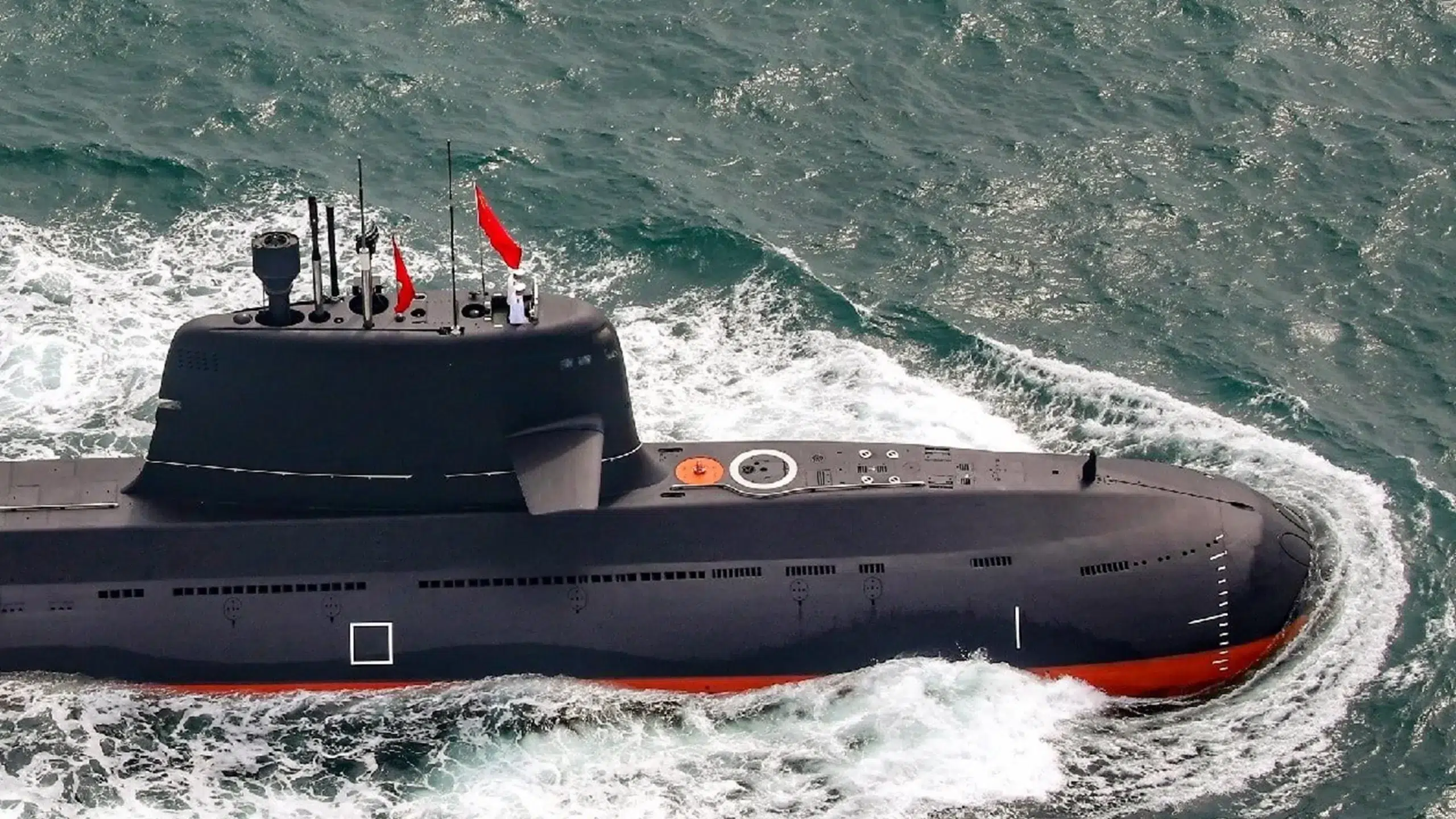
The Pakistan Navy (PN) could be an early customer of Turkey’s shallow-water attack submarine (SWATS), i.e., the STM 500. According to Defence Turkey’s İbrahim Sünnetci, STM is carrying out some redesign and customization work of the STM 500 to adapt to the PN’s requirements.
The current Chief of Naval Staff (CNS), Admiral Muhammad Amjad Khan Niazi revealed that the PN sought a SWATS in January 2021. In February 2022, the PN Chief of Naval Staff for Projects, Vice Admiral Imran Ahmed, also stated that the PN was working on inducting a SWATS. Interestingly, in December 2021, when Karachi Shipyards & Engineering Works (KSEW) cut the steel of the PN’s fifth Hangor (II)-class submarine, the PN itself stated it will induct a SWATS.
Thus, all indicators suggest that the PN approved a specific SWATS design for procurement and, basically, the program was active. However, it was unclear which vendor ultimately won the PN SWATS contract.
If Defence Turkey’s reporting is accurate, it would appear that Turkey’s STM basically won the PN contract through its STM 500 design. This would not be surprising as Turkey had been involved in the PN’s SWATS program since at least 2016.
Originally, the PN spoke to STM about refurbishing its legacy Cosmos MG110 miniature submarines. However, after a review, the PN concluded that refurbishing the MG110s was not a cost-effective route. Following that review, STM invited the PN to design a new submarine “from scratch.” In other words, STM was basically working with the PN on the SWATS since the very beginning of the program.
According to STM, the STM 500 will have an overall length of 42 metres and a top speed of over 18 knots. Its displacement (submerged) would be 540 tons.
In terms of capabilities, the STM 500 will be powered by twin diesel generators with lithium-ion batteries. However, STM said the end-user can configure the STM 500 with an optional air-independent propulsion (AIP) system, though it did not mention the type of AIPs available. It will also be capable of supporting an electronic support measures (ESM) suite, which could offer some electronic intelligence (ELINT) capability.
The STM 500 design will have four torpedo tubes, which can carry 533 mm heavyweight torpedoes and/or anti-ship cruising missiles (ASCM). Finally, the STM 500 will have a complete combat management system (CMS) with navigation radar, optronic equipment, torpedo countermeasures, and sonars.
The PN did not disclose the required capabilities or specifications of its SWATS. However, Quwa was told that the PN sought a design with a displacement of around 700 tons. Moreover, the PN wanted the SWATS to have an AIP system, an ESM, and a capability to deploy swimmer-delivery vehicles (SDV).
In addition, the PN would likely want the SWATS to possess a credible anti-ship warfare (AShW) and anti-submarine warfare (ASW) capabilities as well. This would enable the PN to use the SWATS as a supporting anti-access and area-denial (A2/AD) asset near or within Pakistan’s littoral environment.