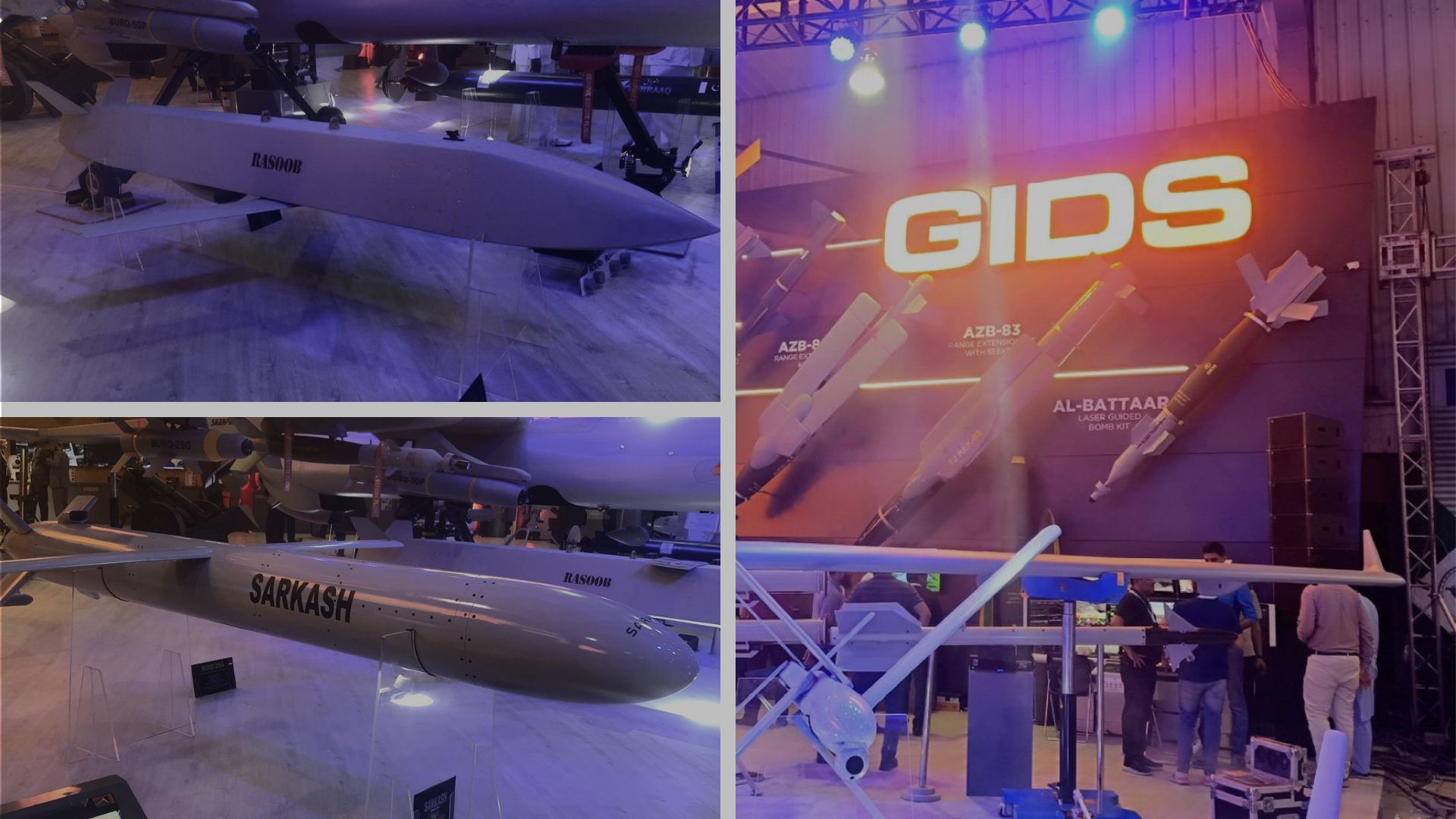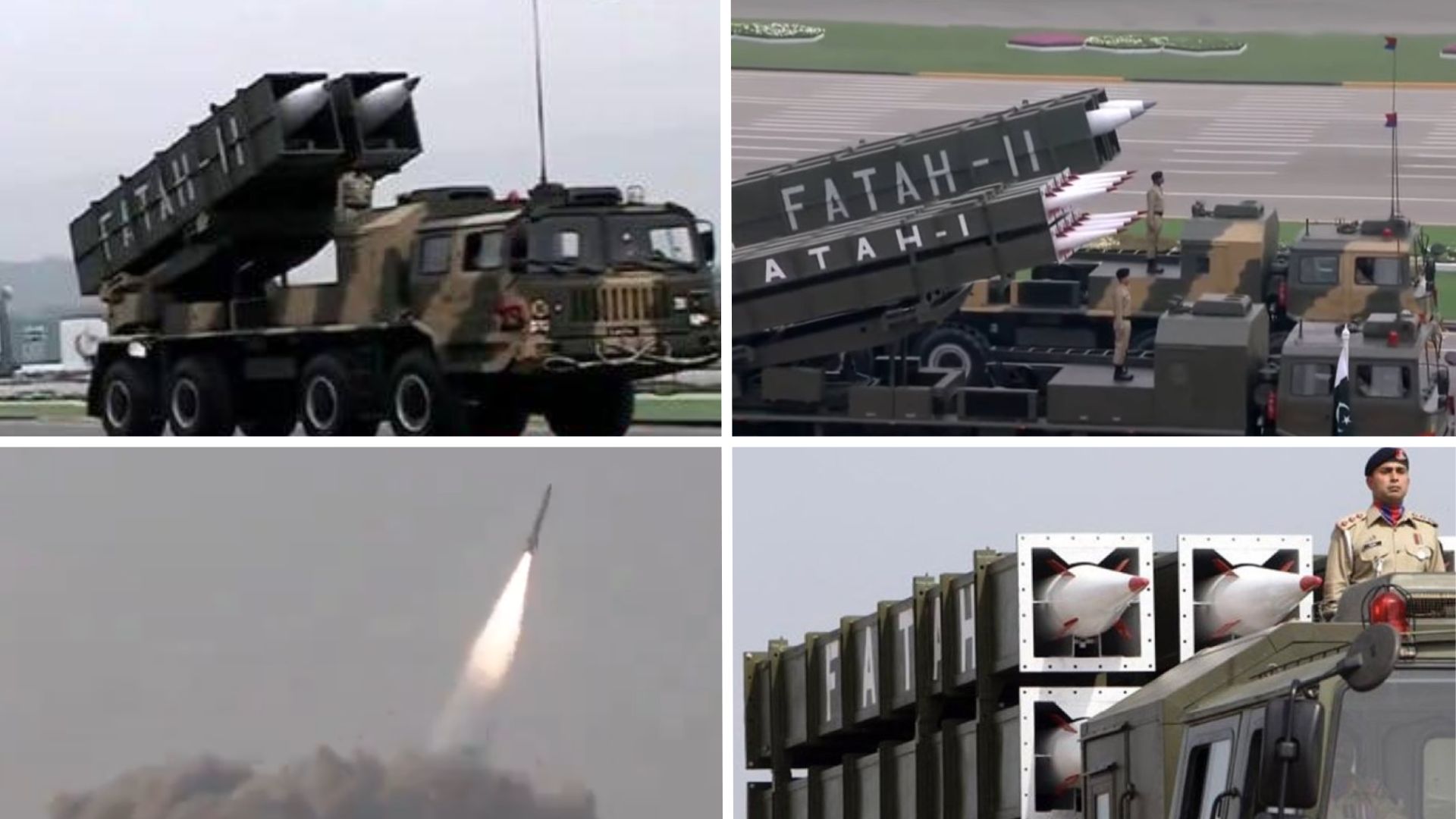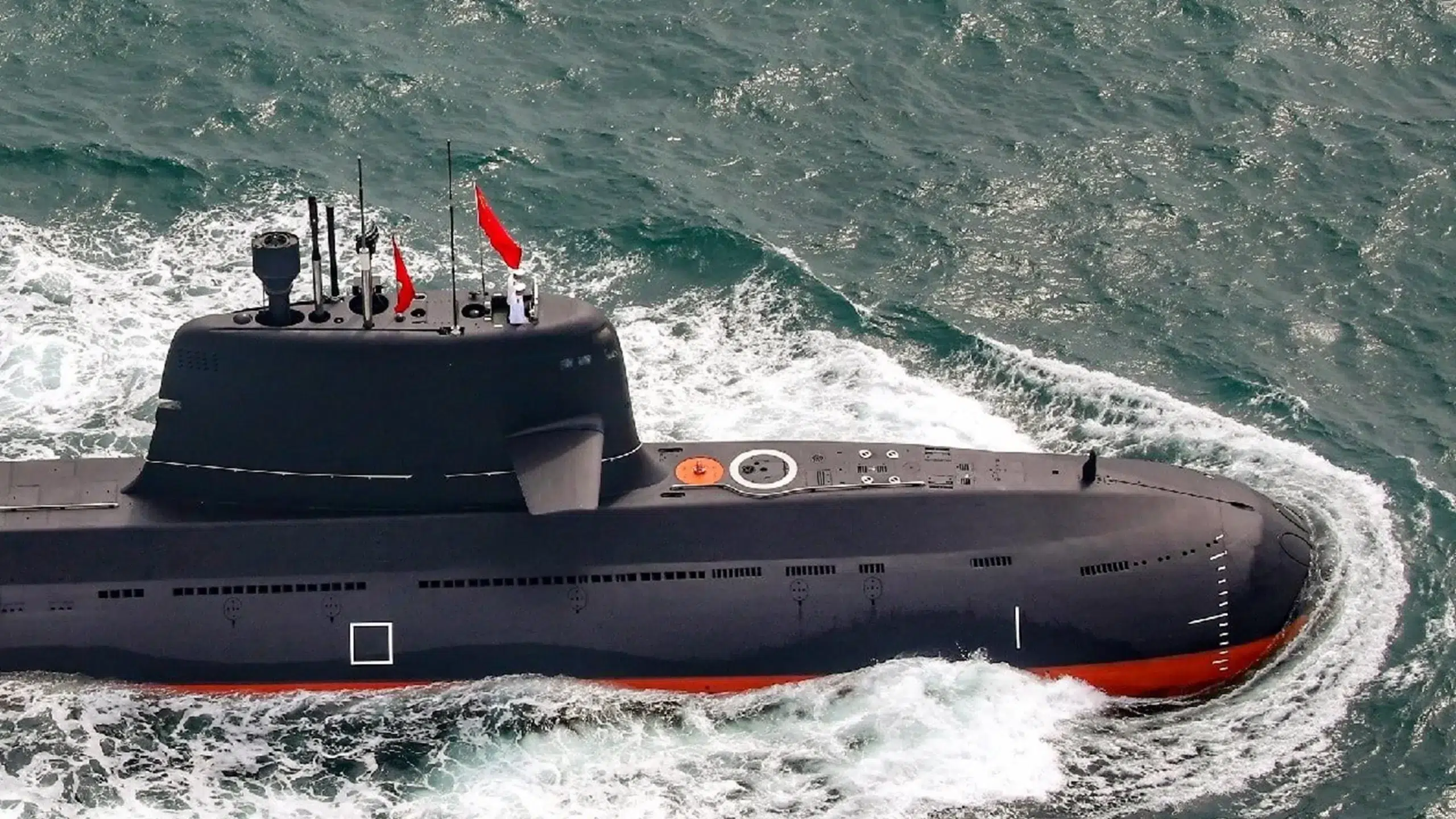

Turkey has achieved a major milestone with its indigenous Hürjet trainer and is now working towards flying its first indigenously designed and developed jet fighter. Pakistan is progressing in its efforts to design and build original naval solutions. India’s Project 75 submarine continues to make waves with both a new ship and a plan to integrate an indigenous air-independent propulsion (AIP) system.
Turkish Aerospace Carries Out Test Run of Hürjet’s Engine
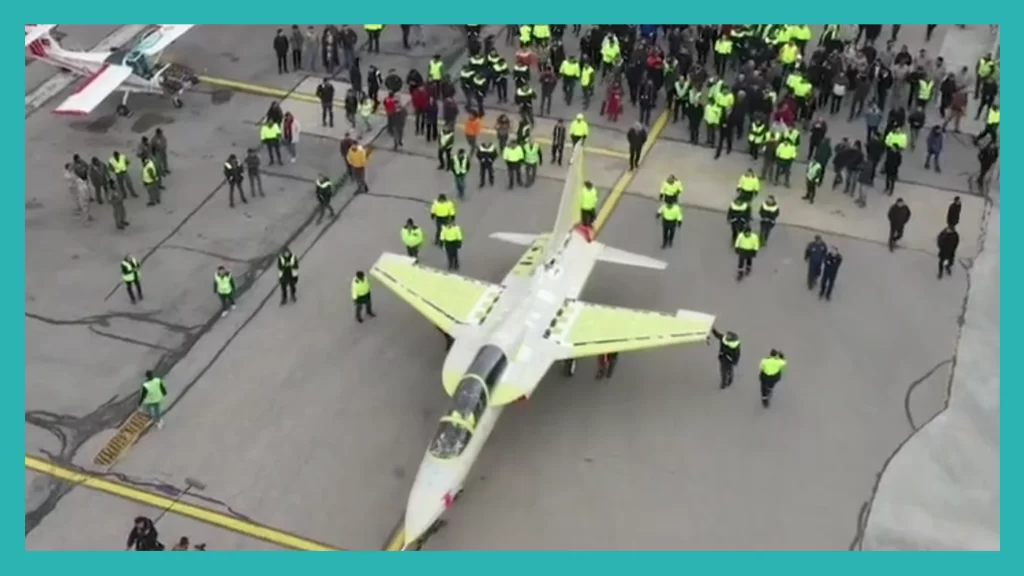
On 02 February, Turkish Aerospace / Türk Havacılık ve Uzay Sanayi A.Ş. (TAI) announced that it successfully carried out the test-engine run of its Hürjet trainer. According to TAI, the test was a major milestone and that the Hürjet is nearing its maiden test flight, which is scheduled to take place in March of this year.
The TAI Hürjet is a next-generation lead-in fighter trainer (LIFT) and lightweight multirole combat aircraft. Commissioned by Turkey’s Presidency of Defense Industries (SSB) in 2017, the Hürjet was envisaged as a successor for Turkey’s aging T-37s in the advanced training and fighter conversion roles.
In terms of design, the Hürjet is comparable to the Korea Aerospace Industries (KAI) T-50. In fact, both the Hürjet and the T-50 share the same turbofan model, i.e., the GE F404. Like the T-50, TAI is also developing the Hürjet as a lightweight fighter capable of deploying air-to-air and air-to-surface munitions.
While primarily designed for the Turkish Air Force, the SSB and TAI have also marketed the Hürjet overseas to potential export markets, especially those already engaged with the Turkish defence industry in other areas, like Malaysia, Azerbaijan, Pakistan, and others.
In 2022, TAI had homed in on Malaysia as its launch customer for the Hürjet outside of Turkey. However, the Malaysian Air Force favoured the KAI T-50. Thus, TAI is still seeking its first export user of the Hürjet.
While accelerating its development, the GE F404 could be slowing the Hürjet’s exportability, especially in countries that are sensitive to ITAR restrictions (i.e., U.S. regulatory input). Basically, the market is already flush with trainers and fighters powered by Western engines and subsystems – e.g., the T-50, Tejas, JAS-39 Gripen, and the Hürjet. Each one of the Western-oriented potential buyers of the Hürjet can opt from other – and more mature – solutions. The unique value proposition of the Hürjet does not stand out.
Thus, the main gap (which is arguably closing thanks to solutions like the JF-17 Block-3 and J-10CE) is the market of ITAR-free solutions. However, Turkey would have to secure and integrate an ITAR-free engine to support this market. Currently, this is not on Turkey’s foreseeable roadmap.
That said, export was likely not the primary goal of the Hürjet. Rather, the Turkish Air Force needed a new advanced/fighter-conversion trainer. Moreover, the SSB wanted to nurture TAI’s aircraft design capacity, especially in terms of advanced fast jets. The lessons learned during the Hürjet project went into the more advanced and capable MMU/TFX next-generation fighter aircraft (NGFA).
Overall, the Hürjet is also a long-term program. Its development will not end once Turkey inducts it; rather, the platform will evolve. Turkey is heavily investing in gas turbines and other inputs for turbofan engines so, in time, it may eventually produce an improved Hürjet for the ITAR-free market.
Don't Stop Here. Unlock the Rest of this Analysis Immediately
To read the rest of this deep dive -- including the honest assessments and comparative analyses that Quwa Plus members rely on -- you need access.