
In September, Ukraine announced that it was undertaking counteroffensive operations across its southern areas. Thus far, those operations have culminated in the recovery of key territory, notably Kharkiv, which had been under Russian occupation since the early stages of this war.
There is no doubt that Ukraine’s reclamation push is geo-politically significant. This is the first-time today’s world is seeing a country reverse the military occupation of another country through a conventional war. It is unclear if Ukraine will succeed, but its current push is not an event to ignore or overlook.
But in its fight, Ukraine is also writing a playbook of how other countries might employ their conventional warfare capabilities, especially against a larger and better-equipped foe.
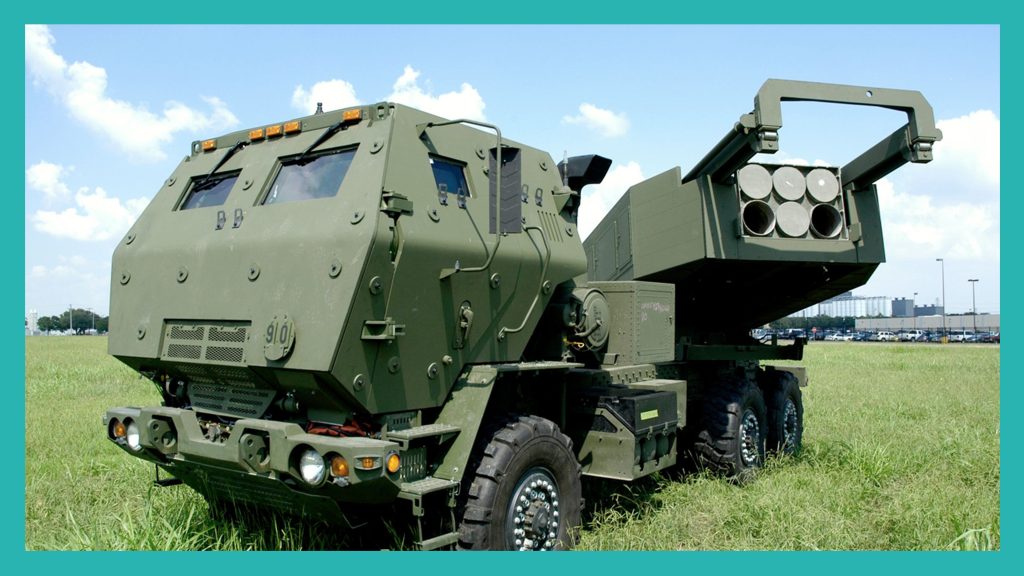
One of the key assets Ukraine has been using in its bid to reclaim territory has been the U.S-supplied M142 High Mobility Artillery Rocket System (HIMARS). While a multiple launch rocket system (MLRS) at its core, the HIMARS is functionally a stand-off range precision-strike asset.
Background: HIMARS
The end-user can configure the HIMARS with different types of guided rockets. Its load-out can comprise of either six 227 mm rockets or a single 610 mm rocket.
The go-to for the 227 mm option is the Guided Multiple Launch Rocket System (GMLRS), which offers a range of 92 km. The solution for the 610 mm option is the Army Tactical Missile System (ATACMS), which has a range of up to 300 km. There is also an intermediary option in the 150 km-range GMLRS-ER.
Both the GMLRS and ATACMS leverage GPS-aided inertial navigation system (INS) guidance suites. These rockets are effective against fixed installations. However, it seems the U.S. is making efforts to add a real-time targeting capability, e.g., connecting the F-35 Lightning II sensor feed to the HIMARS.
The HIMARS runs with a crew of three operators. Once the HIMARS expends its rocket pod, the crew can replace the cannister pod (either of six GMLRS or one ATACMS) in four minutes or less.
Finally, the HIMARS can under a “shoot-and-scoot” maneuver by relocating to a different location after it expends its rocket cannister. The HIMARS’ base platform is the five-ton Family of Medium Tactical Vehicles (FMTV), the mainstay logistics vehicle of the U.S. Army.
Analysis: Ukraine’s Experience Using the HIMARS
According to Gen. Mark Milley, the Chairman of the U.S. Joint Chiefs of Staff, Ukraine has successfully hit more than 400 targets using the HIMARS, and to “devastating effect.”
Don't Stop Here. Unlock the Rest of this Analysis Immediately
To read the rest of this deep dive -- including the honest assessments and comparative analyses that Quwa Plus members rely on -- you need access.