Author Profile: Usman Ansari is a journalist specializing in defence issues and presently based in Pakistan. He is Pakistan Correspondent for the US media group Defense News, and Chief Analyst for the British naval news monthly Warships – International Fleet Review. He has a BA in International History and International Politics, and MA in Global Security, both from Keele University, UK.
By Usman Ansari
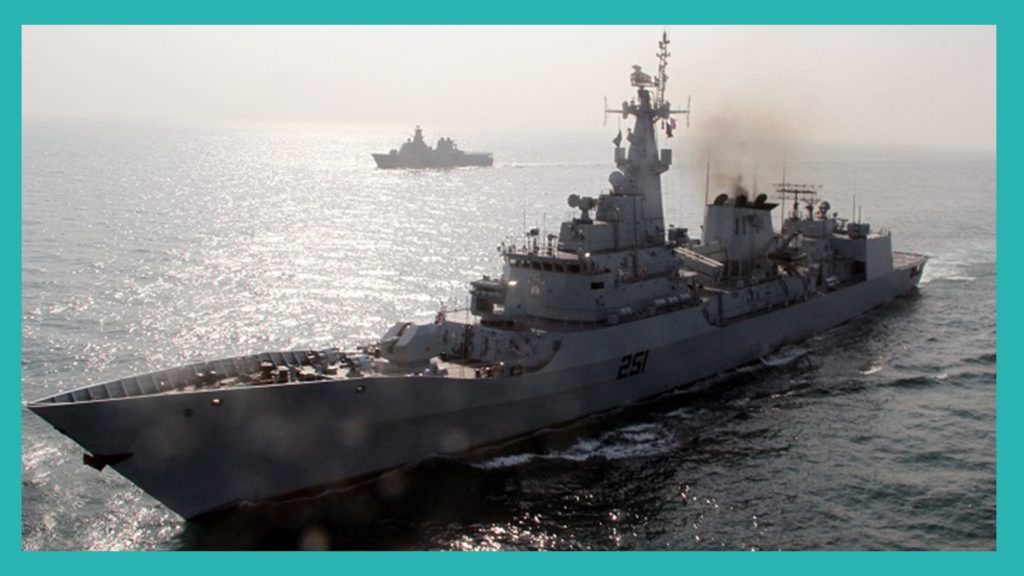
The Pakistan Navy (PN) operates in a dense missile and electronic warfare (EW) threat environment, but ongoing obsolescence issues limit the effectiveness of its frontline warships in performing their primary territorial defence role.
The main shortcomings of Pakistani warships are their ineffective defences against aerial threats, especially the current generation of stealthy sub-sonic and supersonic anti-ship missiles. Presently, these missiles may overwhelm Pakistani warship defences if fired in salvo.
Pakistani frigates are presently equipped with six or eight round surface-to-air missile (SAM) launchers. These launchers have no reloads, and though potentially capable against single inbound threats, these SAMs are dependent on launcher orientation. This in itself supposes the ship will not first need to manoeuvre to allow the launcher to be brought to bear, which would reduce the engagement and reaction time against an incoming target that may arrive before this can be achieved.
Present close-in-weapon-system (CIWS) types – of which there are three different systems in service with a fourth to follow – are also limited in the coverage they provide due to their physical position. Like most such systems, they may also need more than one burst to bring down a threat, and in general, the end-user should view them as the final line of defence against a single threat penetrating all other defences.
Alongside the development of advanced combat management systems (CMS) – such as the Aegis –
Western reactions to advanced (including supersonic) missile threats led to the development of a spate of new SAMs. These include, among others, the RIM-162 Evolved Sea Sparrow (ESSM), RIM-116 Rolling Airframe Missile (RAM) Point Defence Missile System (PDMS), Aster missile family, Sea Ceptor, plus improvements to existing CIWS such as the Phalanx Block-1B, and new guided and/or programmable ammunition.
For financial and geopolitical reasons, Pakistan has only been able to upgrade its CIWS platforms and replace legacy soft kill systems with more modern equivalents.
While this is inadequate in terms of ship defence, the PN partially mitigated the deficit by extending the range of its anti-ship capabilities. In terms of the latter, the Harbah and Zarb anti-ship cruising missiles (ASCM) will play a leading role in the PN’s long-range anti-ship capabilities.
Don't Stop Here. Unlock the Rest of this Analysis Immediately
To read the rest of this deep dive -- including the honest assessments and comparative analyses that Quwa Plus members rely on -- you need access.