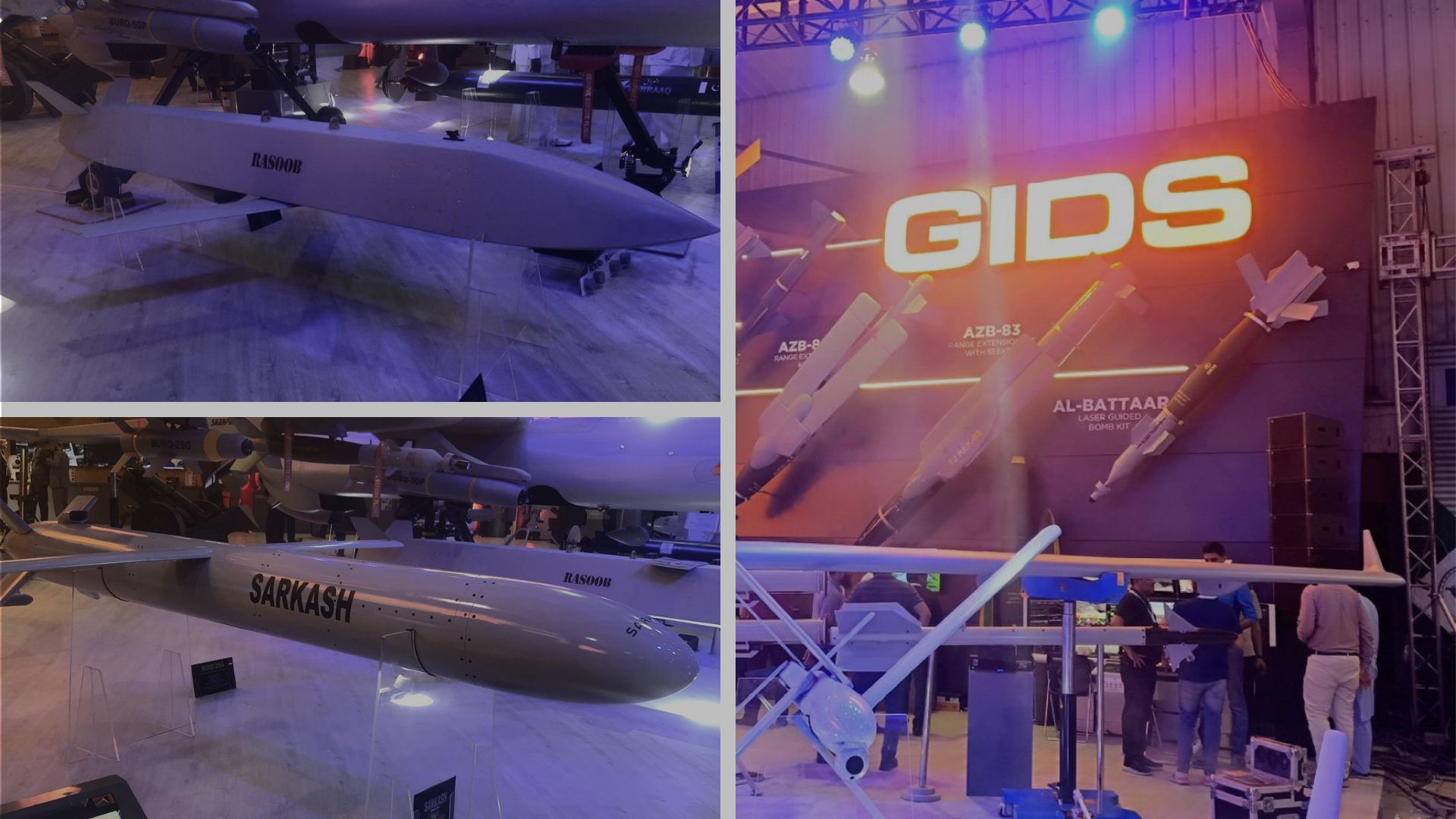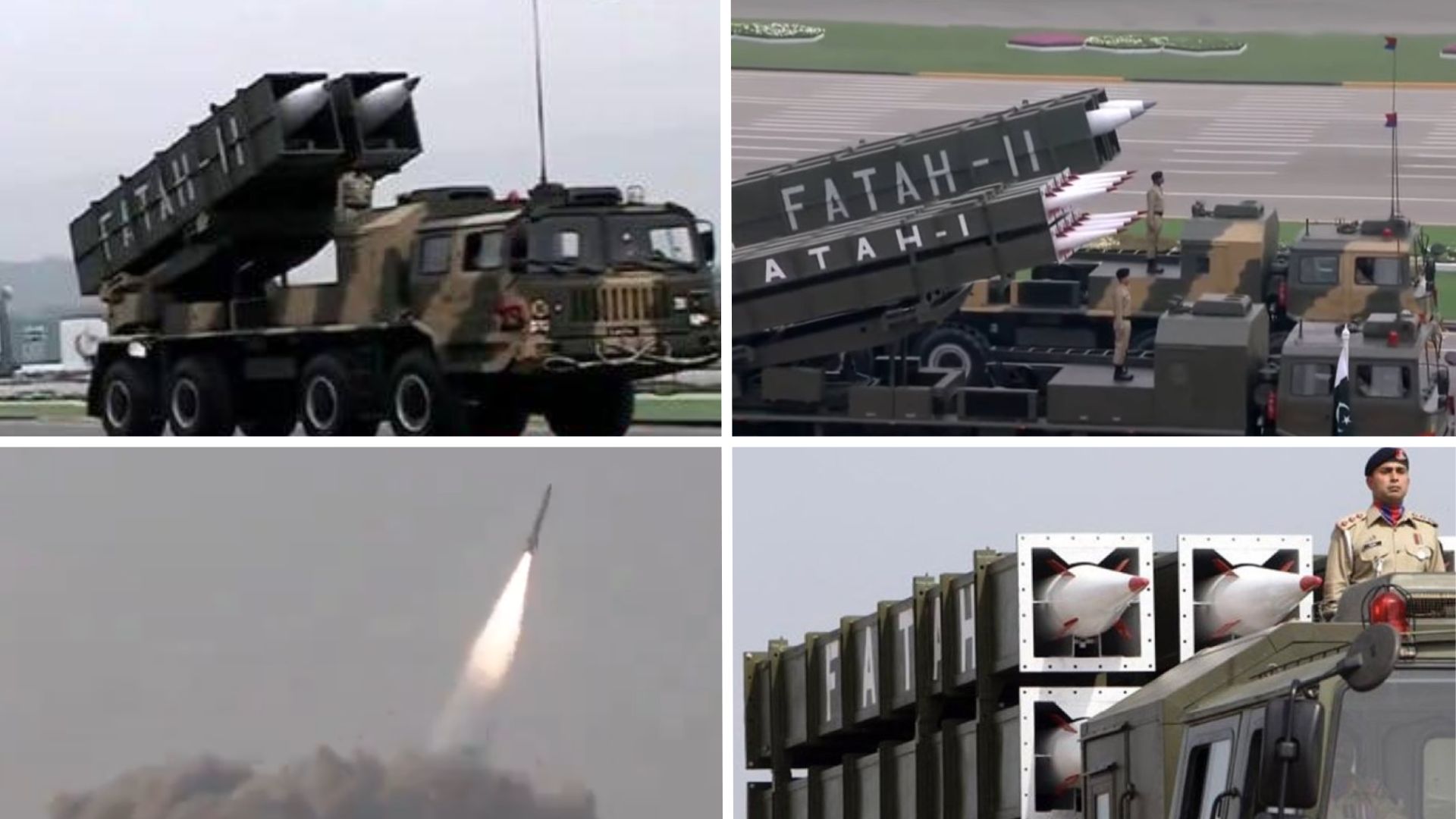

In its response to the Indian Air Force’s (IAF) attempted air strikes on Balakot, the Pakistan Air Force (PAF) response – designated “Swift Retort” – centered on the delivery of long-range situational awareness, long-range air-to-air missile (LRAAM) deployment, electronic countermeasures (ECM), and stand-off weapon (SOW) strikes. For the PAF, preserving – and ultimately, upgrading — these four capabilities are critical for it to demonstrate a conventional deterrence stature. For Pakistan to deter future Balakot-type intrusions in the future, establishing conventional deterrence – especially through air power – is vital.
The PAF certainly has a long-term roadmap for enhancing the aforementioned domains. For example, the PAF wants a fifth-generation fighter aircraft (FGFA). It is hoping for a twin-engine design to ensure that it can deploy heavy payloads at long ranges. The intended outcome is to both replace the Mirage III/5 in the strike role, and greatly improve upon the offensive value currently provided by the Mirages. However, the FGFA is a long-term endeavour. The PAF stated it is looking at a maiden test flight in 2028, which in Quwa’s earlier assessment would be impossible unless Pakistan is rolling its FGFA efforts with those of Turkey or China. In any case, the FGFA will not factor into the PAF’s plans until sometime in the 2030s.
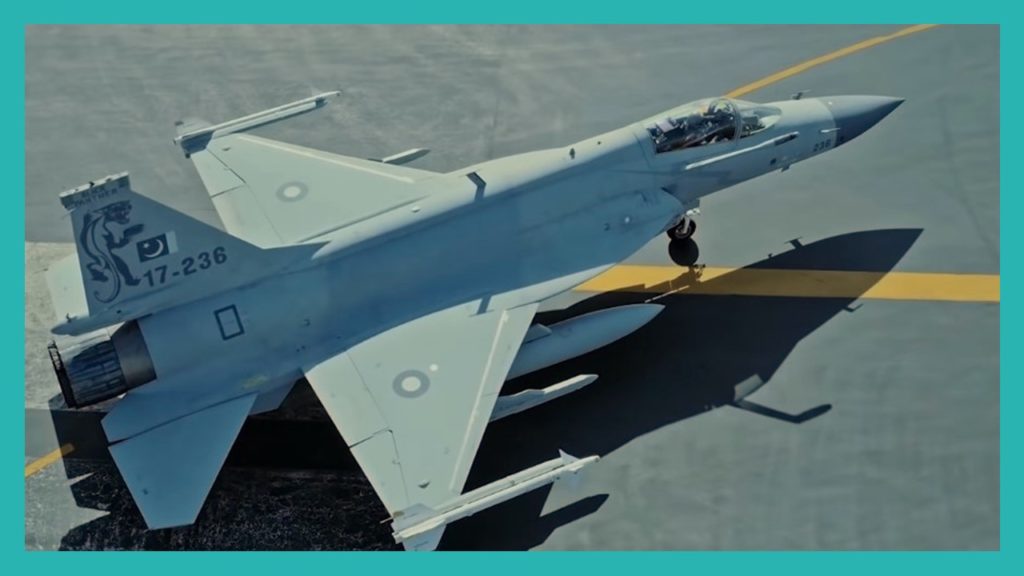
Thus, the PAF still has to look at how to improve its “first shoot” air-to-air capability, SOW inventory, long-range situational awareness, and ECM in the short-term. In this respect, the PAF leadership had signalled an interest in buying another fighter type off-the-shelf. However, the most impactful improvements would occur at a fleet-wide level, i.e., through the JF-17, the PAF’s workhorse multi-role fighter. The PAF is clearly working towards improving the capabilities of its JF-17 fleet across the four key domains.
Long-Range Air-to-Air Capability
With the forthcoming JF-17 Block-III, the PAF is introducing the KLJ-7A active electronically-scanned array (AESA) radar to its fleet. The KLJ-7A reportedly offers a maximum range of 170 km against current fighter-sized targets, which may translate to a radar cross-section (RCS) of 5m2.[1] The PAF will certainly pursue a new LRAAM to take advantage of the range improvement over the current KLJ-7V2. However, by setting up an assembly line to produce the KLJ-7A domestically, it seems that the PAF is also planning to retrofit its older Block-II and possibly Block-I fighters with the AESA radar.[2]
Currently, the PAF has 30 Block-IIIs on order. However, it also ordered 26 dual-seat JF-17Bs and outlined that it will upgrade those fighters with the KLJ-7A as well. If the PAF commits to the full 50-aircraft Block-III order, it could potentially build a fleet of up to 188 (i.e., Block-I, Block-II, Block-III and B) AESA-equipped fighters. In the short-term, the PAF could be aiming to maintain relative parity with the IAF in terms of at least having as many AESA radar-equipped fighters in its fleet. Upgrading the JF-17s would be the shortest and cost-effective avenue for achieving that outcome. If the PAF opts for additional JF-17s, this number could cross 200 by 2030, which is a relatively sizable force.
Quwa Plus
Go Beyond the Headlines on Pakistan’s Defence and Security.
Quwa Plus gives you deeper reporting, briefings, and analysis on Pakistan’s defence programs, foreign policy, national security, and regional strategy. Follow the developments that matter to professionals, analysts, and serious readers tracking Pakistan’s security landscape.
Join ($29.99/Year) Already a subscriber?Sign in