Quwa Premium

Analysis: The JF-17’s Unique Value Proposition on the Market Plus

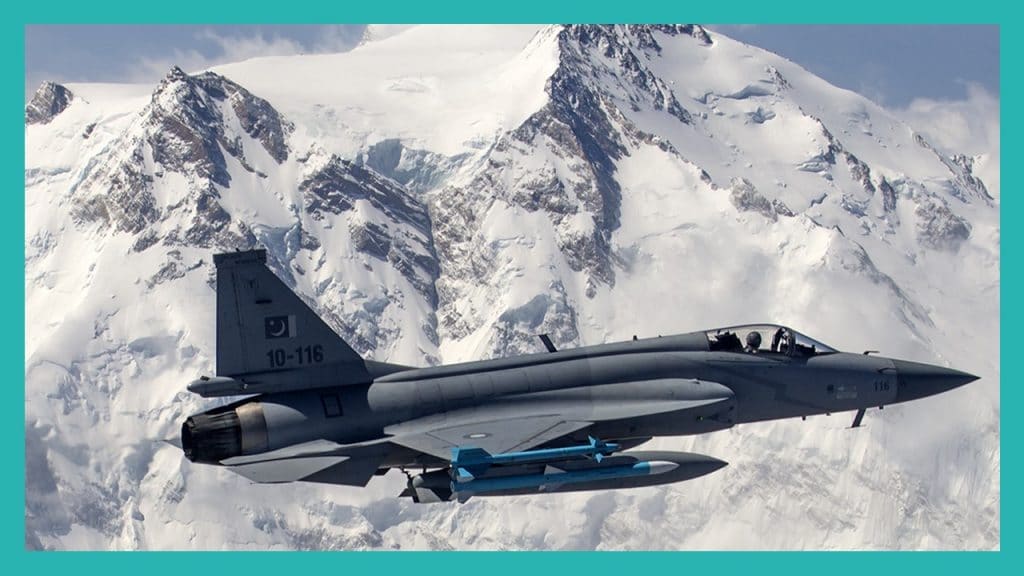
As the JF-17 seemingly closes in on its third export sale (to Argentina), this article explores why more countries may seek the Sino-Pak multi-role fighter.

Argentina’s draft budget requested $664 million USD for the purchase of 12 new multi-role aircraft. The Argentine Air Force has yet to make a final decision, but the JF-17 is still among the aircraft (among five) Buenos Aires is considering. Pakistan had also been marketing the JF-17 to Azerbaijan and Malaysia, and reports also emerged of Iraq showing interest, but these have yet to be verified.

That said, the uptick in overseas interest in the JF-17 would not be surprising. The multirole fighter is now evolving past its identity as a ‘low-cost option’ into a rare – if not unique – combat asset.

The JF-17 Block-3 is driving the growth through its incorporation of an active electronically scanned array (AESA) radar, an integrated electronic countermeasures (ECM) suite, a helmet-mounted display and sight (HMD/S), and plethora of new air-to-air and air-to-surface munitions.

While there are numerous high-cost Western aircraft on the market on offer (theoretically) with these capabilities, the options that offer as much as the JF-17 Block-3 without ITAR (International Traffic in Arms Regulations) inputs narrow down to three or four aircraft from China and Russia.

These alternatives include the J-10CE, MiG-35 and the Su-35 – though the latter two may not include as many as the same types of electronics (such as a modern HMD/S) as the JF-17 Block-III and J-10CE. Oddly, the JF-17’s ‘biggest’ direct competitor from a budget-sensitive, ITAR-free perspective is the J-10CE. But in that scenario, the JF-17 still costs less and offers a service record in multiple countries (Pakistan, Myanmar, and Nigeria), while the J-10CE’s export record is only just scratching the surface.

JF-17 Block-3: Burgeoning Capability

The JF-17 Block-3 will be among the Pakistan Air Force’s (PAF) new qualitative drivers. This basically means that the Block-3 will introduce new technologies to the PAF combat aircraft fleet.

Chief among these gains is the induction of an AESA radar, which will boost the PAF’s electronic counter-countermeasures (ECCM) capabilities. ECCM is a means to protect one’s own radars from falling victim to enemy ECM techniques – such as radar-spoofing – and triggering electronic warfare (EW) instruments, such as enemy radar warning receivers (RWR). AESA radars achieve these capabilities through their large numbers (i.e., around 1,000) transmit/receive modules (TRM), which basically function as small individual radars, each with their own frequency and ability to change frequencies with each pulse.

Combined with an integrated ECM suite, which will probably incorporate a digital radio frequency memory (DRFM)-based radar jamming system for spoofing enemy radars, the Block-3 is a credible asset for use in contested air environments. Finally, with the PAF in close proximity to a combat scenario (it is only two or so years out from its last confrontation with the Indian Air Force), one can also expect a serious focus on iterative improvements to the electronics suite to ensure effectiveness and survivability.

The eventual addition of an HMD/S (the PAF said that Chinese and Pakistani companies are now working on an original model) and high off-boresight air-to-air missile (HOBS) will help with within-visual-range or dogfighting situations (on top of ECM-based radar jamming).

However, defensibility is not the only improvement in the Block-3. Its AESA radar – i.e., Nanjing Research Institute of Electronics Technology (NRIET) KLJ-7A – will also offer a maximum range of 170 km for “fighter-sized targets.” This may be the range of targets with a radar cross-section (RCS) of 3m2. The PAF may pair this with the newly revealed PL-15E, the export version of the PL-15 beyond-visual-range air-to-air missile (BVRAAM). The PL-15E offers a stated range of 145 km, well exceeding the reported 70-100 km range of the SD-10. The PL-15E’s range also works within the target detection range of the KLJ-7A.

Quwa Plus

Don't Stop Here. Unlock the Rest of this Analysis Immediately

To read the rest of this deep dive -- including the honest assessments and comparative analyses that Quwa Plus members rely on -- you need access.

Join Today

USD $29.99/Year