
Youtube
X-twitter
Linkedin
Spotify
Rss
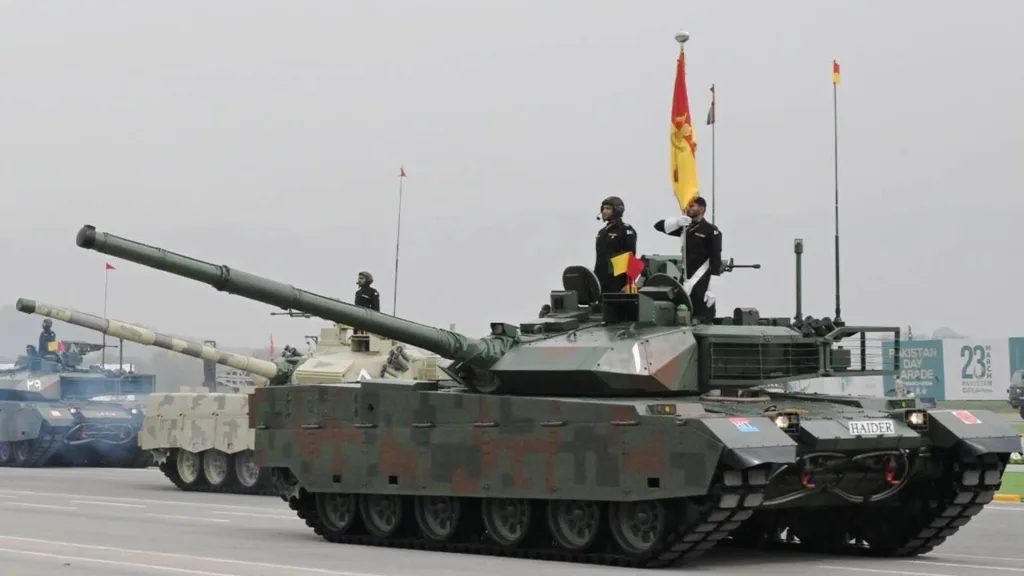
On 11 June 2025, the Government of Pakistan revealed its upcoming budget for the fiscal year of 2025 to 2026, under which it proposed a near 20% increase to the country’s defence budget.
This increase will raise the defence budget to 2.55 trillion Pakistani rupees (PKR) – or USD $9 billion – from PKR 2.12 trillion in the fiscal year of 2024-2025 (or USD $7.64 billion).
The federal government’s budget for 2025-2026 decreased by 6.7% compared to 2024-2025 (around USD $62.45 billion), resulting in defence assuming a greater share of this year’s budget compared to that of the previous year.
In terms of spending priorities, $2.99 billion will go into employee-related expenses (e.g., wages); $2.48 billion will be spent on operating expenses (e.g., fuel, training, etc.); $2.34 billion into new procurement, and $1.19 billion into civil works (e.g., infrastructure maintenance).
It is unclear how much each of the tri-services will receive from this budget. In 2024-2025, the Army received about 47.5% of the budget, while the Pakistan Air Force (PAF) and Pakistan Navy (PN) got about 21.3% and 10.8%, respectively. The remainder from last year went into an area designated as “inter-services organizations,”
It should be noted that the stated defence budget does not include pensions, which are allocated in a separate pool set at PKR 742 billion, or $2.6 billion.
Get access to this article and all other Quwa content today.
Click Here
However, the decreases in defence or defence-adjacent spending in the PSDP is marginal when seen in real values. The SPD’s budget in the PSDP declined by $65.93 million, while the defence production spending was reduced by $7 million. The biggest real decline was in SUPARCO’s budget, which saw a drop from $231.59 million in 2024-2025 to $19.12 million in 2025-2026.
Examining the PSDP budget helps determine whether the defence budget was increased in actual real terms or if defence-related funding from other areas were merged into the formal defence budget. The defence-related spending in the PSDP has certainly decreased, but the decline does not entirely match or correspond to the increase being seen in the defence budget.
Don't Stop Here. Unlock the Rest of this Analysis Immediately
To read the rest of this deep dive -- including the honest assessments and comparative analyses that Quwa Plus members rely on -- you need access.