Youtube
X-twitter
Linkedin
Spotify
Rss
In Pakistan’s proposed fiscal budget for 2025-2026, the Space and Upper Atmosphere Research Commission (SUPARCO) saw a 91.7% decrease in its year-over-year (YoY) allocation compared to the previous year, with the Public Sector Development Programme (PDSP) provisioning $19.5 million USD (compared to $235 million USD in 2024-2025).
Get access to this article and all other Quwa content today.
Click Here
In other words, the PDSP allocations may not fully account for the actual depth of SUPARCO’s work, which likely involves supporting the R&D efforts of other strategic, defence-oriented organizations, such as the National Engineering and Scientific Commission (NESCOM).
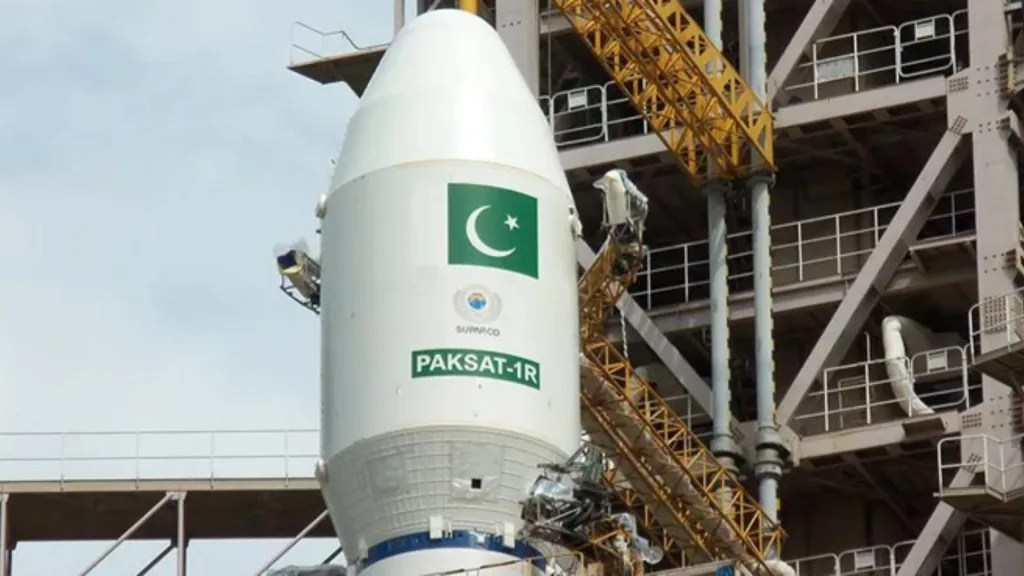
The largest SUPARCO line item in 2024-2025 was the deployment of PakSat-MM1, a new geostationary communications satellite designed for broadcasting and internet connectivity services. It was launched on May 30, 2024, and declared fully operational on September 18, 2024.
Since 2020, there had been numerous mentions within the PDSP (and small-scale funding for studies) about building a spaceport (ostensibly for satellite launch vehicles or SLV) and a ‘Pakistan Space Centre’ for developing and manufacturing satellites domestically. However, actual funding for these marque initiatives has largely been limited and, given the inherent dual-civilian and military nature of these programs, might also be more opaque as they would involve inputs from NESCOM.
Overall, SUPARCO’s budget in the PDSP increasingly – if not entirely – reflects its core scientific mission, with spending organized under the following areas:
- $5.36 M towards the Space Centre initiative.
- $4.49 M for building Deep Space Astronomical Observatories
- $4.24 M into the PRSS-O2 program
- $2.12M towards the PakSat-MM1R
- $1.41M for the Pakistan Lunar Exploration Rover (PLEXR)
Any surge in YoY spending would indicate the procurement of a new off-the-shelf satellite. The next satellites in the procurement pipeline could include the PakSat 2 and second-generation Pakistan Remote Sensing Optronic Satellite (PRSS-O2), both of which received funding for feasibility studies in 2024-2025 and 2025-2026, respectively.
However, while there is undoubtedly potential for military use, these (and other planned) satellites have a civilian-centric role. Moreover, each of the Pakistani military’s tri-services will increasingly rely on satellites for communications, intelligence, and guidance purposes.
Their expanding bandwidth requirements and feature demands will prompt Pakistan to invest in dedicated military satellites. This could also take on urgency given that satellite-based imaging intelligence (IMINT), tactically relevant monitoring and surveillance, and post-battle damage assessments (BDA) were essential elements for cataloging high-value targets, engaging them, and demonstrating success.
Don't Stop Here. Unlock the Rest of this Analysis Immediately
To read the rest of this deep dive -- including the honest assessments and comparative analyses that Quwa Plus members rely on -- you need access.