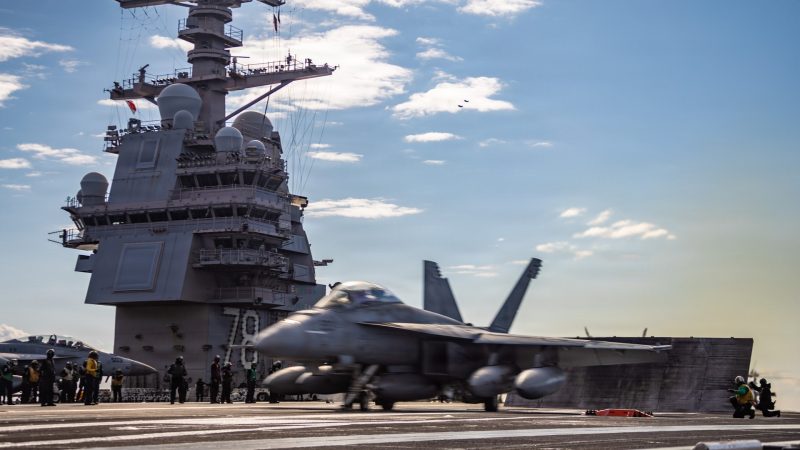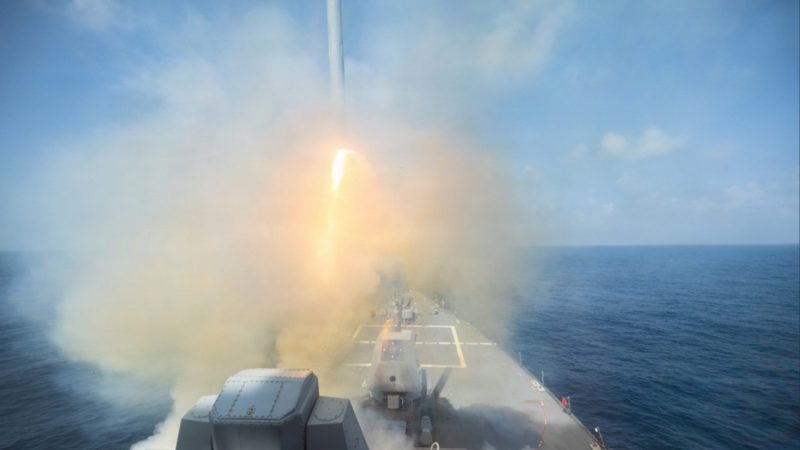

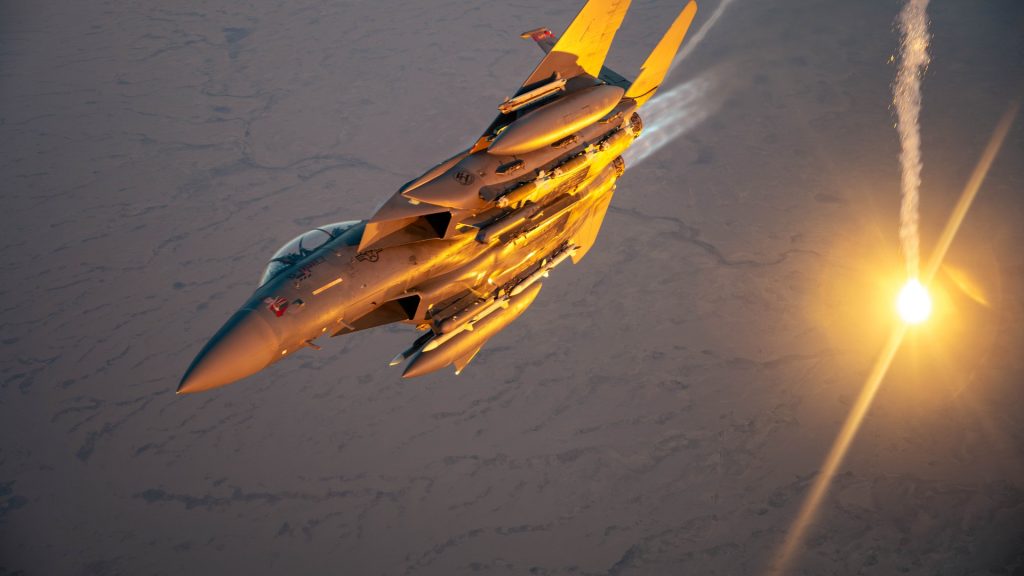
US Central Command (CENTCOM) says it has carried out more than 3,000 airstrikes against Iranian military positions in the first week of Operation Epic Fury, a US-led air campaign launched against the Islamic Revolutionary Guard Corps (IRGC), air defence sites, ballistic missile facilities, and naval assets across Iran.
According to CENTCOM, the strikes have achieved full US air dominance over Iranian airspace and produced a 95% reduction in Iranian drone and missile launches. Independent verification of these figures has not been available.
Israeli defence officials claim that joint US-Israeli operations have destroyed 80% of Iran’s air defence systems and 60% of its ballistic missile launchers, enabling intensified bombing sorties over Tehran and other previously defended areas. US officials say operations are now expanding deeper into Iranian territory, with no munitions shortages reported.
The campaign has reportedly caused significant damage to nuclear-related infrastructure, though neither CENTCOM nor Israeli officials have publicly confirmed which specific sites have been struck.
Strait of Hormuz and Naval Operations
A key stated objective of Operation Epic Fury is the neutralisation of any Iranian threat to the Strait of Hormuz – the maritime chokepoint through which roughly 20% of global oil shipments transit.
US officials say strikes have targeted shore-based anti-ship systems and IRGC Navy fast-attack craft bases. However, there are no confirmed reports of Iranian naval vessel sinkings in available reporting as of 7 March.
US Policy and Defence Production
President Trump has demanded Iran’s unconditional surrender as a precondition for any diplomatic engagement, rejecting all offers of third-party mediation.
The White House says the US is quadrupling weapons production in partnership with contractors such as Lockheed Martin to sustain a prolonged campaign. This production surge accompanies a proposed $1.5 trillion defence budget – what would be the largest in US history if passed by Congress.
Pentagon officials have affirmed that the US commitment to the campaign is open-ended.
Iranian Response and Regional Effects
Iranian forces have reportedly launched drones and ballistic missiles at Israeli targets and struck a US military installation in Kuwait, with some reports citing Russian intelligence-sharing in support of Iranian targeting.
Iranian air-raid responses have triggered sirens in multiple Israeli cities, though the frequency and scale of Iranian launches appear to be declining as the US suppression campaign continues.
According to regional media reports, Iran’s senior military and political leadership has been significantly degraded. Surviving officials have reportedly signalled openness to third-party mediation, but Washington has shown no willingness to engage.
As of one week into the campaign, reporting from 6–7 March indicates rapid degradation of Iranian military capabilities but no movement toward a political resolution.
Notes & Comments
The claims emerging from the first week of Operation Epic Fury are striking in scale – 3,000-plus strikes, 95% suppression of launches, 80% of air defences destroyed – but they are, critically, claims from the belligerent parties themselves. CENTCOM and Israeli defence officials are the primary sources for virtually all operational figures circulating in international media. Independent battle damage assessment has not been available, and the fog of war applies as much to this campaign as to any other.
That said, the broad trajectory is probably directionally accurate even if the specific percentages deserve scepticism. The US and Israel possess overwhelming air power relative to Iran’s ageing air defence network – a mix of Russian-origin S-300PMU2 systems, domestically produced Bavar-373 batteries, and older HAWK and Rapier-era systems. Achieving air dominance over Iran within a week is militarily plausible given the force ratios involved.
The more analytically interesting question is what air dominance buys Washington in the absence of a political strategy. One can see the Pentagon’s ‘open-ended commitment’ language and the $1.5 trillion budget proposal as signals that the US is preparing for a campaign of attrition rather than a decisive strike sequence. However, air campaigns have historically struggled to compel unconditional surrender – the stated US objective – without a credible ground threat or a willing negotiating partner.
In this vein, Iran’s reported openness to mediation and Washington’s simultaneous rejection of talks suggests a widening gap between military progress and diplomatic resolution. The destruction of 60% of Iran’s missile launchers – if accurate – represents a generational setback to Iran’s conventional deterrence posture, but it does not address the proxy networks, asymmetric capabilities, or the nuclear question that will outlast any air campaign.
The Strait of Hormuz dimension deserves close attention. The absence of confirmed ship sinkings suggests the US may be deliberately calibrating its naval operations to degrade Iranian capability without triggering the kind of maritime incident that would spike global oil prices. One could see this as an indication that Washington is conscious of the economic blowback risk, even as it pursues maximal military objectives on land and in the air.
For the broader region, the first week of Operation Epic Fury has demonstrated the capacity of the US-Israeli military partnership to dismantle a mid-tier air defence network at speed. What it has not demonstrated is a theory of victory beyond continued bombardment – and that gap will define the coming weeks.