GE Signs Deal with India’s HAL to Co-Produce F414 Engines
General Electric (GE) Aerospace announced that it signed a memorandum-of-understanding (MoU) with Hindustan Aeronautics Limited (HAL) to co-produce GE’s F414 turbofan engine in India.
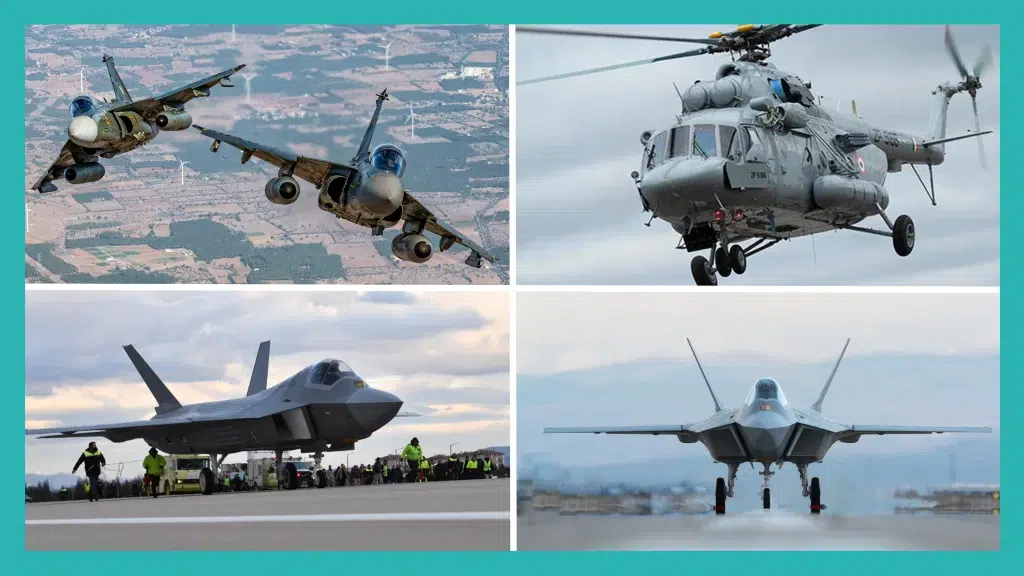
The focal point of the MoU was to support HAL’s Tejas Mk2, a greatly improved variant of the Tejas offering more range, greater payload, reduced radar cross-section (RCS), and improved electronics, such as sensors and electronic warfare (EW) suite, among many other changes.
This MoU builds on GE and HAL’s existing partnership, which is centered on the supply of F404 engines for the Tejas Mk1 and Mk1A. Thus far, GE has supplied 75 F404s, and another 99 engines are on order for the Indian Air Force (IAF), which has 83 Tejas Mk1As on order.
The MoU was signed during Indian Prime Minister Narendra Modi’s official state visit to the United States, a key event aimed at enhancing bilateral relations between the two allies. In fact, aerospace programs are playing a key role in driving India-U.S. bilateral ties through India’s acquisition of big-ticket American fixed and rotary-wing aircraft, like the C-130J-30, C-17, P-8I, AH-64E and MH-60R.
While supplying engines for the Tejas Mk2 is the main priority, the push to manufacture the F414 turbofan engine in India feeds into a long-term strategic vision on the part of both New Delhi and Washington. The F414-INS6, for example, is slated to power HAL’s Advanced Medium Combat Aircraft (AMCA), a dual-engine next-generation fighter aircraft (NGFA). Moreover, Boeing is also marketing the F/A-18E/F Super Hornet to the Indian Navy (IN) for the latter’s carrier-borne fighter requirement.
As these programs materialize, there is a significant value in manufacturing the F414 in India. First, as the bulk of the IAF and IN’s future aircraft rely on the engine, it is in India’s security interests to localize the F-414’s supply channel. Second, localization can help reduce costs by diverting the defence spend (intended for the engines) to the local economy, thus reducing hard/foreign-currency outflows while also supporting local employment, talent development, and other benefits.
For the U.S., on the other hand, enabling India to manufacture the F414 helps Washington deepen its ties in India across the military and defence industry realms. Strong connections of this nature could help Washington get New Delhi’s support, particularly on issues that can affect India’s security interests (like complying with U.S. sanctions on Russia). Of course, it also helps promote programs like the Super Hornet (which uses the GE F414) to India as well as bid to power other Indian programs, like drones.
That said, GE is not the only player seeking to build on India’s aircraft engine manufacturing potential. The French defence giant, Safran, is also aiming to expand its investment in India. Undoubtedly, programs like the potential F414 production line and Safran’s investments will feed into India’s wider defence ecosystem, reinforcing the country’s existing work on gas turbines and other critical aero-engine technologies.
Russian Supply Shortfalls Creating Gaps for Customers
As Russia focuses on replacing the equipment it is losing in Ukraine, the countries that rely on Moscow for arms are finding it difficult to keep their major weapon systems online.
Don't Stop Here. Unlock the Rest of this Analysis Immediately
To read the rest of this deep dive -- including the honest assessments and comparative analyses that Quwa Plus members rely on -- you need access.