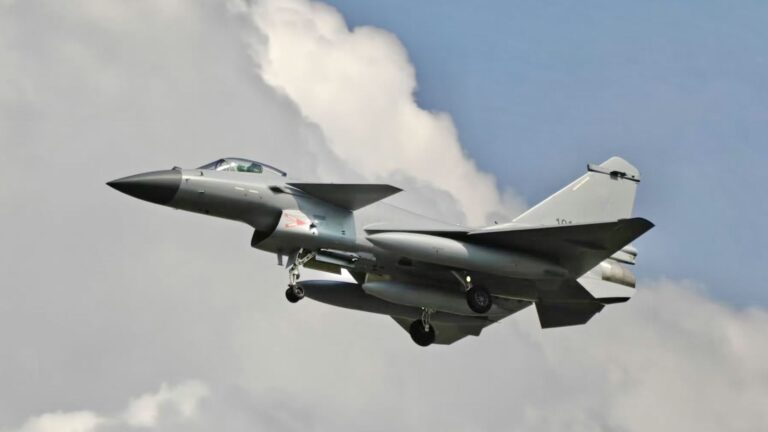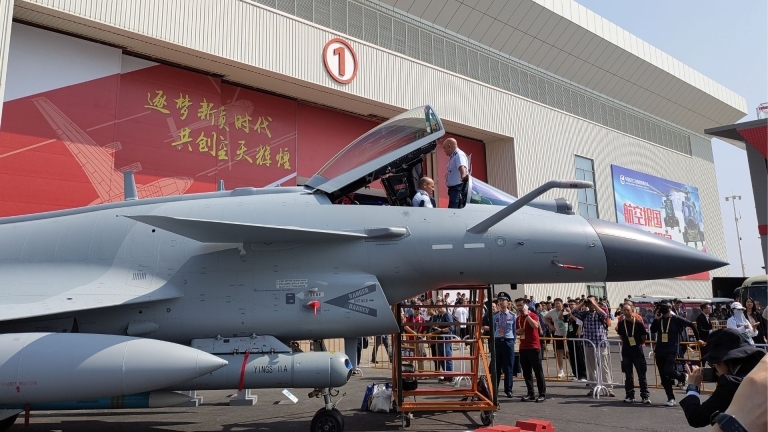

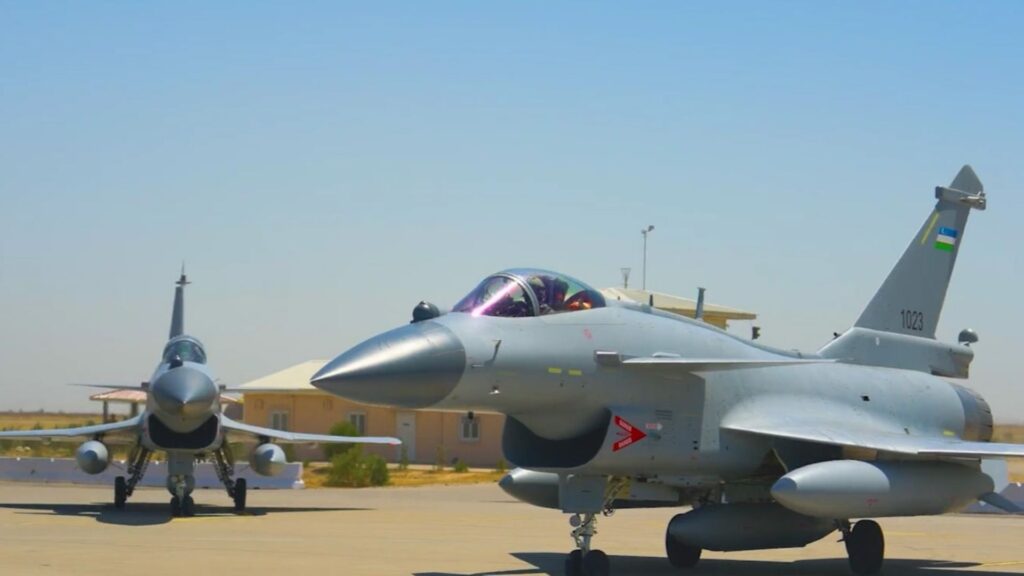
Uzbekistan publicly showed its Chengdu J-10CE multirole fighters for the first time in a state television feature aired on O’zbekiston 24 around 28 August 2026.
The presidential office released official footage of the aircraft on 30 August as part of coverage marking the 35th anniversary of Uzbek independence, with at least six airframes visible in the broadcast.
That makes Uzbekistan the second export operator of the type after the Pakistan Air Force (PAF), which inducted 20 aircraft and employed them during the May 2025 conflict with India.
The feature showed the fighters arriving at their base under a water cannon salute, each carrying three external fuel tanks – i.e., two underwing and one on the centreline. One airframe carrying the serial 1020 had been photographed undergoing testing at Chengdu before delivery, with additional aircraft in the 101x range subsequently reported.
Reporting has settled on a figure of 24 aircraft, though that number has not been stated officially by the Uzbek government. Analysts have estimated that the J-10CEs were procured at unit costs of USD 40 to 50 million.
The reported basing at Karshi-Khanabad in southern Uzbekistan is likewise unconfirmed by Uzbek authorities, with Tashkent established only as the arrival point for the delivery flights.
No weapons have been shown with the aircraft either, though a package built around the PL-10 short-range, PL-12 medium-range and PL-15 beyond-visual-range air-to-air missiles is assumed.
Uzbekistan is also the only Central Asian state that buys Chinese big-ticket systems at scale, having inducted a range of Chinese air defence systems through the 2010s – so the sale extends an existing supplier relationship rather than opening a new one.
Bangladesh is negotiating for 20 to 24 aircraft and Indonesia is reviewing terms for as many as 42, a combined pipeline that would extend the J-10CE production run well into the 2030s.
Quwa Pro – Defence Market Intelligence
See Where Defence Demand and Technology Are Moving Next
Track procurement priorities across Pakistan, the Gulf and wider MENA, and Central Europe. Follow emerging vendors, drones, AI, C-UAS, and affordable precision weapons, and see how lessons from today’s conflicts are reshaping military requirements and market opportunities.
Featured & Trusted By