
In 2021, Quwa wrote an article inferring that Pakistan will likely adopt a loitering munitions strategy. Nearly four years later, it is evident that Pakistan is acquiring a wide range of loitering munitions and, that too with a strong emphasis on domestic production through in-house programs and partnerships with a number of foreign original equipment manufacturers (OEM). In other words, Pakistan has a substantive – or perhaps an ambitious – loitering munitions program under way.
The Russia-Ukraine War drew attention to the value of loitering munitions – alongside drones, conventional ballistic missiles, and surface-to-air missiles (SAM). However, the potential utility of loitering munitions was apparent before that conflict. They offered low cost means of undertaking precision strikes, even at longer ranges. For example, the Iranian Shahed-136 may cost around $50,000 USD per unit to manufacture, yet the drone is able to ferry a 50 kg warhead up to a reported range of 2,500 km. It is not as large as Tomahawk- sized cruise missiles, but a 50 kg warhead against the right target (e.g., a radar) can generate a very high return on investment in a conflict. However, the Shahed-136 represents one end of the loitering munitions spectrum, perhaps closer to the middle-to-high-end. There are also a growing array of smaller munitions – some the size of hand-grenades – that can elevate the end-user’s tactical attack capabilities in a myriad of scenarios, be it in conventional conflict or asymmetrical warfare.
That said, irrespective of the formfactor, range, payload, or guidance options, a loitering munition will offer one universally critical benefit – flexibility. A loitering munition does not require a costly or complex launch platform, like an aircraft or surface warship (though it can leverage one if need be). In fact, some loitering munitions can be deployed from the palm of the operator, and some larger munitions can take off from a runway. And where launchers are required, the systems can be relatively simple catapults and multi-tube launchers, which are relatively low cost and scalable to deploy in large numbers.
There are drawbacks, however. Loitering munitions generally lack the range, payload, and speed/cruising combinations of larger cruise missiles and precision-guided bombs (PGB). In addition, loitering munitions could be susceptible to certain countermeasures, such as directed energy weapons (DEW). Some could point to Israel’s effective use of a multi-layered air defence system as proof that a mass loitering munition attack could be thwarted. However, there are caveats with that argument. First, few – if any – countries are equipped with as dense an air defence system as Israel (owing to its relatively tight geography). Pakistan’s principal adversary is India, and it is likely that Pakistan will uncover more vulnerabilities in its neighbour’s coverage to leverage the value of loitering munitions, especially in scenarios like cross-border skirmishes. Second, Pakistan will use loitering munitions in concert with cruise missiles, gliding PGBs, tactical ballistic missiles, and other munitions, hence giving it more options to engage multi-layered air defences.
Stay up to date with the latest Pakistani defence news with reliable research and accurate forecasting
Click Here
However, the KaGeM V3 probably represents the upper-end of Pakistan’s loitering munitions inventory, an asset reserved for long-range cross-border strikes. The PAF could also employ KaGeM V3 in a composite strike formation as a decoy or dual-surveillance and attack weapon. Indeed, the KaGeM V3 could even be a step towards developing a decoy drone for electronic attack (EA), like the Turkish Aerospace (TA) Super Şimşek attritable decoy UAV. Overall, the KaGeM V3 is unique amidst Pakistan’s other loitering munitions.
2. NASTP YiHA-III
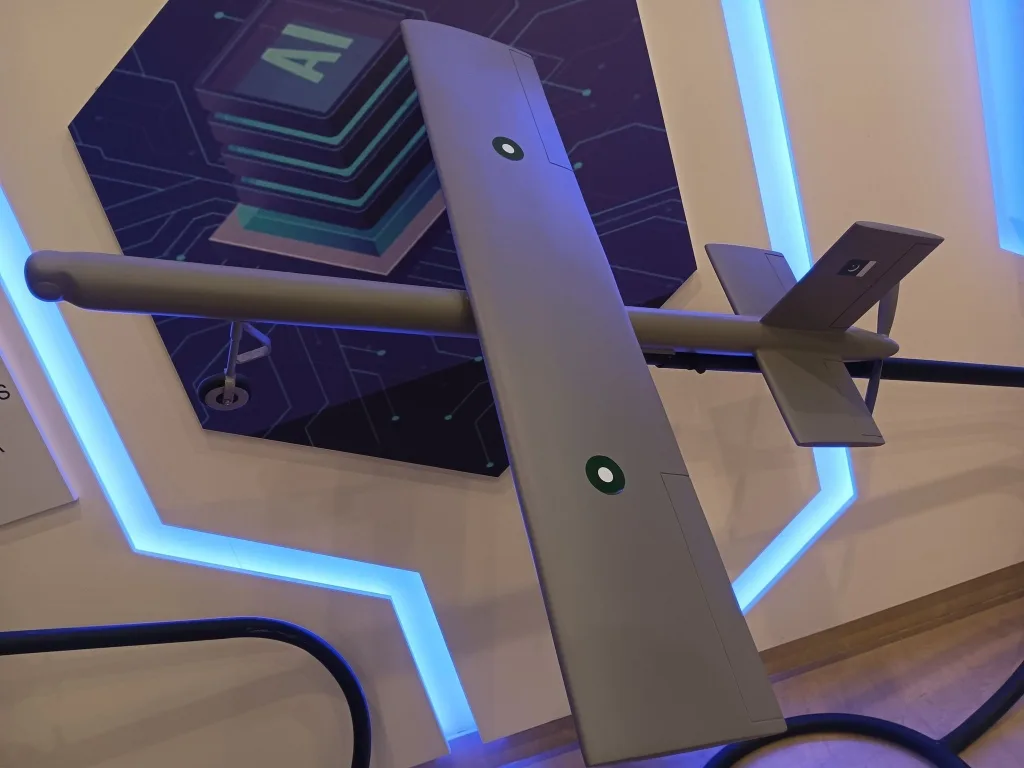
NASTP-Baykar YiHA-III Loitering Munition: Photo source: @zspcl via X
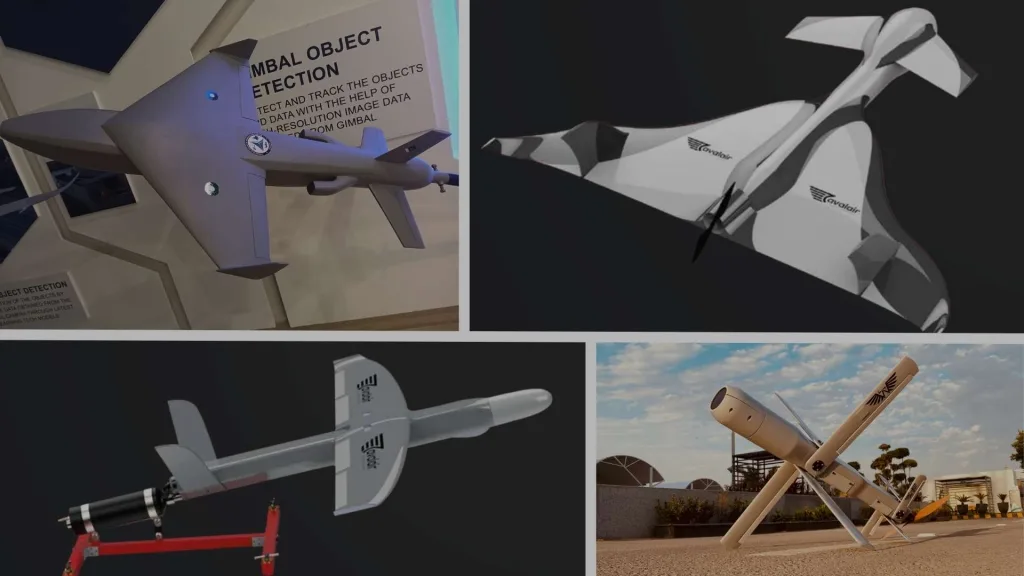
The YiHA-III is another joint-venture between NASTP and Baykar. The end-user can launch the YiHA-III from a runway, which negates the need for specialized launch equipment. It seems that the YiHA-III was developed to undertake swarm attacks. Its payload, range, and endurance were not disclosed.
3. NASTP Dark Angel II
The Dark Angel-II appears to be a licence-built variant of a NORINCO or CASC loitering munition sourced from China. Like the YiHA-III, the Dark Angel II will likely be used as a swarm system, but can be launched from a multi-tube launcher. The Dark Angel II leverages a sensor turret, likely equipped with an infrared or electro-optical system, for targeting. Its range, payload, and endurance were not disclosed.
Don't Stop Here. Unlock the Rest of this Analysis Immediately
To read the rest of this deep dive -- including the honest assessments and comparative analyses that Quwa Plus members rely on -- you need access.