Building on the success of lightweight tactical fighters like the F-5-series, Mirage III/5, Mirage F-1, MiG-21, and others, aircraft original equipment manufacturers (OEM) began developing successor platforms for a new generation. These new fighters would retain the core advantages of their predecessors, especially low acquisition costs and scalability, but with far better performance and new technologies. However, most of these new projects never made it past studies and prototypes as the majority of the OEMs and their home governments opted to rally their resources behind clean-sheet medium-weight fighters, such as the F-16, Mirage 2000, and MiG-29. In turn, these low-cost, lightweight fighter projects did not catch on.
However, one fighter almost had a shot: the Northrop F-20 Tigershark. Chance would have it that though it acquired the General Dynamics F-16, which it had aggressively sought, the Pakistan Air Force (PAF) was still in need of an even lower cost multirole fighter. In the early 1980s, the PAF viewed the F-16 as a genuine next-generation high-performance fighter, but it was too expensive to buy in enough numbers to supplant the Shenyang F-6. The F-6 was a Chinese variant of the MiG-19 and, by the 1980s, it had formed the bulk of the PAF’s fighter fleet, complementing the more capable – but also aging – Dassault Mirage III/5.
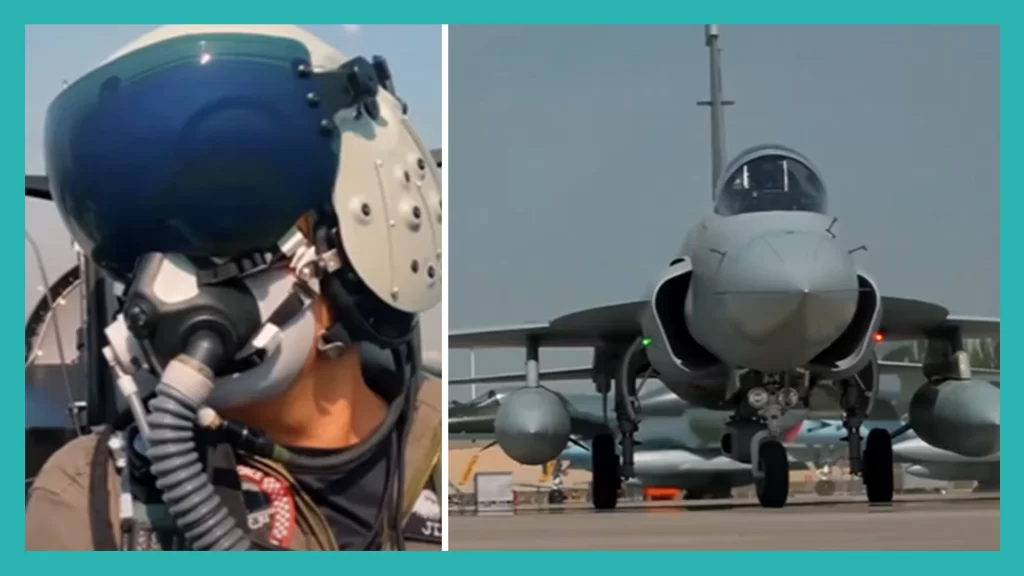
PAF Air Headquarters (AHQ) wanted to disseminate the technologies and capabilities of the F-16 across its entire fighter fleet. This would include a modern multi-mode radar and avionics suite with head-up display (HUD), hands-on-throttle-and-stick (HOTAS), self-defensive electronics suite with a radar warning receiver (RWR), targeting pod integration, and so on. Sound familiar? Indeed, these were the same requirements that drove the PAF to support the JF-17 Thunder program.
Basically, there were multiple scenarios in the 1980s that could have resulted in the PAF acquiring a JF-17-type capability much sooner. One of these scenarios was the F-20. There is an informative account about how the PAF evaluated the F-20 from one of the personnel sent to America to assess the fighter in 1984 – Air Vice Marshal (then Group Captain) Abbass Mirza. Due to a lack of wider market traction and Northrop losing two of its three prototypes, the F-20 did not work out; however, the PAF stuck with the idea and, in turn, helped bring it to life through its current workhorse fighter, the JF-17.
Northrop F-20 Tigershark
While an evolution of the Northrop F-5E Tiger II, which had seen a significant production run and wide-scale adoption around the world, the F-20 was a different and, as importantly, superior fighter.
It leveraged the new GE F404 turbofan engine (which also powered the F/A-18 Hornet), giving the F-20 a thrust-to-weight ratio of 1.13, a top speed of over Mach 2, and initial climb rate of 16,100 m a minute.
The F-20 was powered by the AN/APG-67 radar, which offered many cutting-edge features, such as track-while-scan (TWS) for 10 targets, the ability to detect fighter-sized targets at up to 74 km, ground mapping, synthetic aperture radar (SAR) imaging, and sea-surface tracking, among others.
It was equipped with the AN/APG-67 radar, which was loaded with cutting-edge features, like track-while-scan (TWS) for up to 10 targets, the ability to detect fighter-sized targets at up to 74 km, synthetic aperture radar (SAR) imaging, ground-mapping, the ability to track moving targets on the ground and sea, to name a few. This was paired with a cockpit comprising of HUD, HOTAS, and multifunction displays, giving the F-20 a truly state-of-the-art electronics suite for its time.
Though an evolution of the Tiger, the Tigershark incorporated a number of key changes in its airframe. For example, it leveraged more composite materials, like fiberglass. Northrop also reworked the leading-edge extensions (LEX), enlarged the horizontal stabilizer, and introduced a fly-by-wire flight control system (FCS) to improve its maneuverability to a point where it was comparable to the F-16.
Finally, Northrop was also working to configure the F-20 with a line-up of modern munitions, including the AIM-120 beyond-visual-range air-to-air missile (BVRAAM) and Harpoon anti-ship missile (AShM). The F-16 was not configured with these munitions until towards the end of the 1980s.
Don't Stop Here. Unlock the Rest of this Analysis Immediately
To read the rest of this deep dive -- including the honest assessments and comparative analyses that Quwa Plus members rely on -- you need access.