Iran Reportedly Signs Deal to Buy Su-35SE and Mi28NME
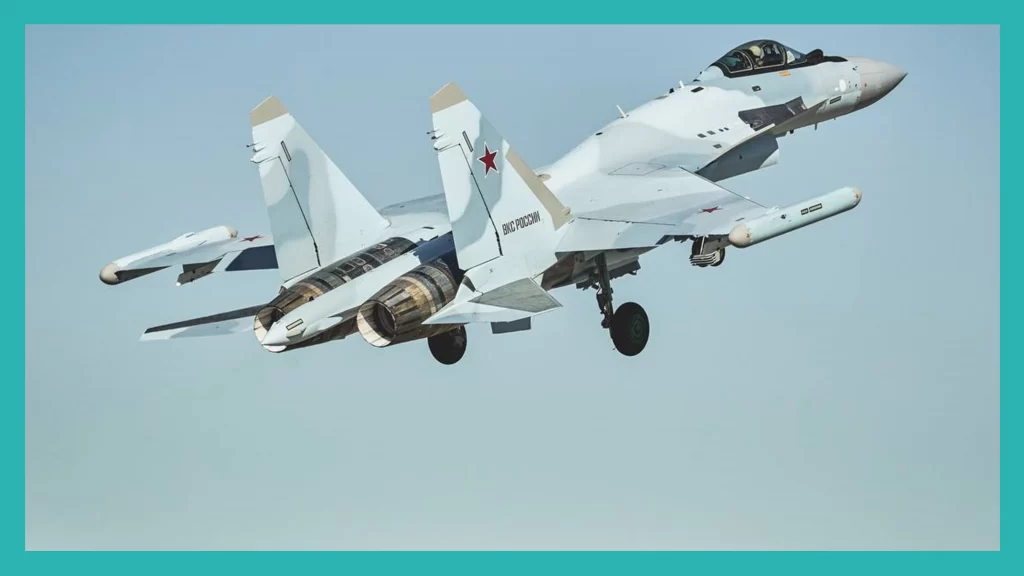
On 28 November 2023, Iran’s defence minister, Brigadier General Mohammad Reza Gharaei Ashtiani, announced that Tehran signed a deal with Russia for the purchase of Su-35SE Flanker-E fighter aircraft, Mi-28NME Havoc attack helicopters, and Yak-130 trainers.
The Islamic Republic of Iran Air Force (IRIAF) will take possession of the Su-35SEs and Yak-130s, while the Islamic Revolutionary Guard Corps (IRGC) will procure the Mi-28NMEs. Iran did not disclose the numbers nor delivery timelines. Moreover, Russia has yet to comment or confirm the matter.
The contract was reportedly signed following a visit by Russia’s defence minister, Sergey Shoigu, earlier in the fall in September. Shoigu met with the Iranian government to secure weapon systems for its ongoing war in Ukraine. Some reports claim that Tehran may supply Fateh-110 and Zolfaghar ballistic missiles.
Previously, a Russian fighter deal to Iran was thought to have been in limbo due to disagreements over the munitions package, technology transfer, and other matters. However, both Tehran and Moscow have dire requirements, with the former soldiering through an obsolete fighter fleet (largely dating back to the Shah) and the latter seeking to sustain its war effort with reliable munition and ammunition supplies. Thus, some type of sale was a matter of time, but will it be a strong enough bridge to weather long term cooperation?
Iran certainly needs help for revitalizing its airpower. The IRIAF, in particular, stands to benefit the most as the bulk of its fleet comprises of legacy US-origin fighters from the 1970s, like the F-14 Tomcat. Unable to reliably source new fighters, Iran focused its resources towards improving its integrated air defence system (IADS) on land, with advanced long-range surface-to-air missiles (SAM) – like the Sayyad-4 and Sayyad-4B – being key breakthroughs. In parallel, Tehran built its offensive strike element through a growing array of ballistic missiles, with, potentially, hypersonic missiles joining its arsenal.
To insert a long-range, high-performance fighter with a sizable payload capacity, powerful radar, and long-range air-to-air and air-to-surface munitions into this equation would be significant. Defensively, Iran will have an adept air superiority asset to pair with its dense SAM coverage, providing airspace denial capacity from both the ground and the air. Of course, numbers would be key, which may open the door to prolonged cooperation between Tehran and Moscow, even after Russia concludes its war in Ukraine.
The U.S. sanctions regime may push many of Russia’s traditional arms buyers, like Algeria, away. Thus, the Russians will need a strong customer base that can operate outside of such pressures. Iran would be ideal; it has a need for large numbers of advance fighters and, aside from Russia, no willing suppliers. Moreover, its natural resource wealth and latent industrial capacity could help it finance high-value contracts. Thus, one can see Iran pursue not only the Su-35, but potentially, the MiG-35 and an original program to build out its medium and lightweight fighter cadres, respectively.
France Reportedly Planning to Offer Rafale Fighters to Central Asian States
French media reports claim that Dassault Aviation is marketing its Rafale fighter aircraft to several Central Asian states, potentially Kazakhstan and Uzbekistan. A sale to either one – especially Kazakhstan, which is traditionally close to Russia – would not only be a significant boon for Dassault, but a breakthrough in the expansion of Western Europe’s security relationships in one of Russia’s key frontiers/border regions.
Uzbekistan has already begun procuring European military equipment, such as four Airbus C-295W light-weight airlifters as well as 11 H125M Fennec and 15 H215M Cougar helicopters. With each of these aircraft types drawing on the French industry, one can see why Paris is interested in expanding its engagement in Central Asia. This is region with vast carbon resources, agricultural output, and industrial competency; so, for Paris, a big-ticket fighter sale could open a significant market with commercial and geo-security gains.
Don't Stop Here. Unlock the Rest of this Analysis Immediately
To read the rest of this deep dive -- including the honest assessments and comparative analyses that Quwa Plus members rely on -- you need access.