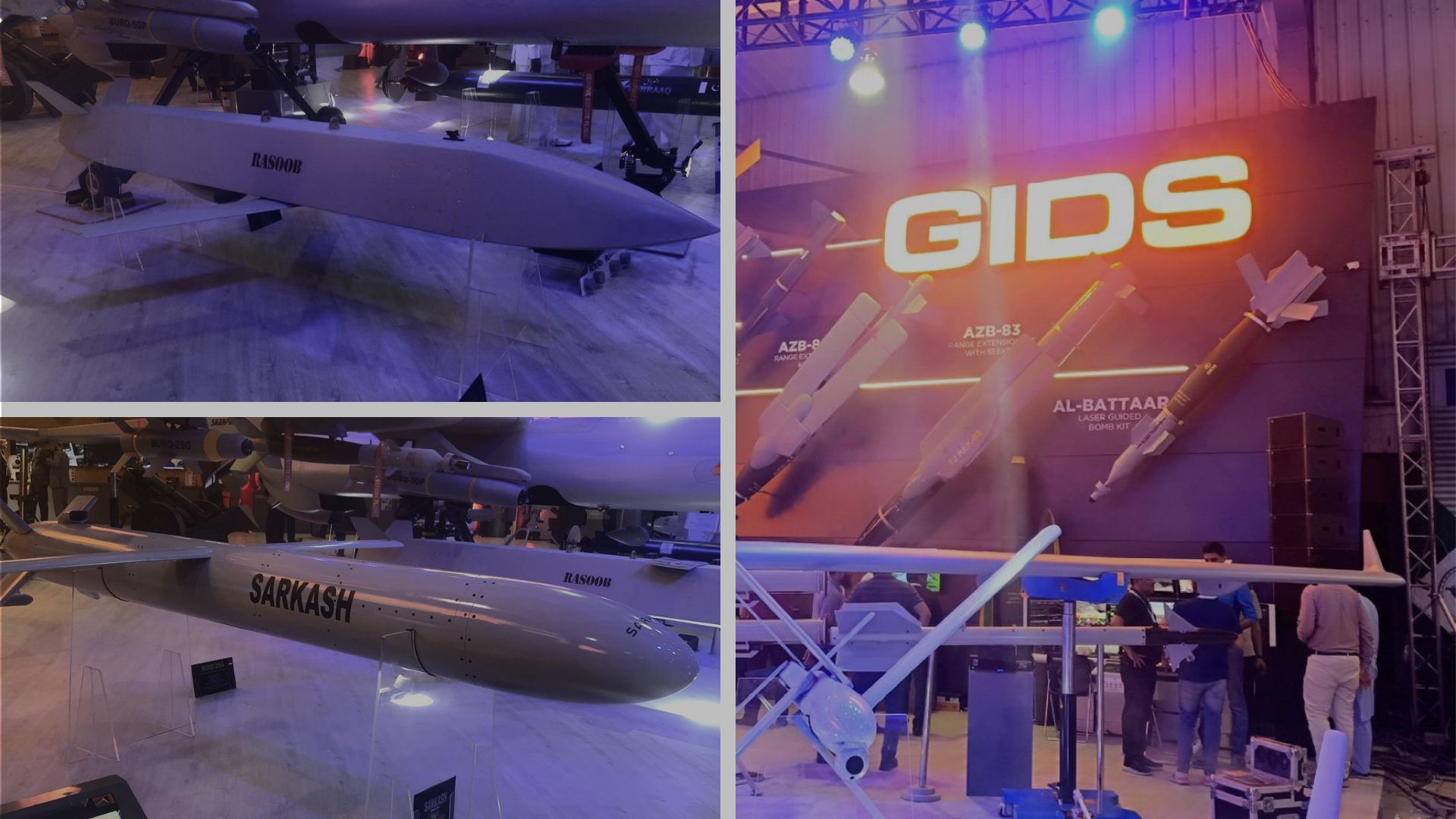

In May, GIDS (Global Industrial and Defence Solutions) revealed a number of new projects currently under development in Pakistan, notably two new surface-to-air missile (SAM) systems. These are the “LOMADS” and the “E-SHROADS” – the latter also has the designation of “FAAZ-SL.”
GIDS stated that the solutions it revealed in its future roadmap are currently under development and will “soon” join its product portfolio. GIDS did not disclose when these projects started, nor did it offer specific details regarding availability. However, considering GIDS’ primary role of marketing and exporting Pakistani defence products, the reveal of the future roadmap likely carries weight. GIDS is aiming to garner interest in these programs from potential foreign buyers or investors, so these projects are likely substantive, if not viable from a production standpoint. Moreover, these projects are being managed by Pakistan’s larger and more established state-owned-enterprises (SOE), such as NESCOM.
That said, though GIDS is trying to generate interest from the market, each of these projects likely reflects a domestic requirement. Thus, it would not be surprising if the LOMADS and FAAZ-SL are being driven by the future air defence needs of the Pakistan Air Force (PAF), for example. For its part, GIDS is simply just a commercial arm; it does not define project requirements or drive them to completion. Rather, the PAF, the Pakistan Army (PA), or Pakistan Navy (PN) define requirements and, in turn, task the likes of the NESCOM, Air Weapons Complex (AWC) and others to handle development.
Basically, while GIDS was given the greenlight to market the LOMADS et.al, these programs were (and still are) driven by the armed forces. Hence, they reflect the direction of Pakistan’s defence procurement plans in the coming years just as much as its defence commercial interests.
A Future Image of Pakistan’s Air Defence Environment?
According to GIDS, the LOMADS will range a range of 7 km to 100 km, and an altitude coverage of 30 m to 20 km. The LOMADS’ missile will have a maximum speed of Mach 5 and, in turn, engage targets flying from Mach 0.1 to Mach 3. Overall, the system will have the capacity to engage 12 targets simultaneously.
Previously, Pakistan had used the term “LOMADS” as the acronym for “low-to-medium-range air defence system.” However, the stated range of the product would take it into the realm of a long-range SAM, such as the HQ-9/P. Traditionally, ‘LOMADS’ would have referred to a 25-60 km-range system, like the LY-80 and Spada 2000-Plus. Thus, this one detail could indicate that the PAF has adjusted how it defines range for its SAMs; moving forward, “long-range” could refer to a SAM with a range of over 100 km.
For the PAF, the LOMADS could be its play to replace the Spada 2000-Plus. In fact, last year, Quwa inferred that the PAF could pursue a new medium-range SAM with an active radar-homing (ARH) seeker. Not only does LOMADS point in that direction, but it adds to it by extending the range of the PAF’s wider air defence environment, and by a substantial margin from the Spada 2000-Plus (which has a range of 25 km).
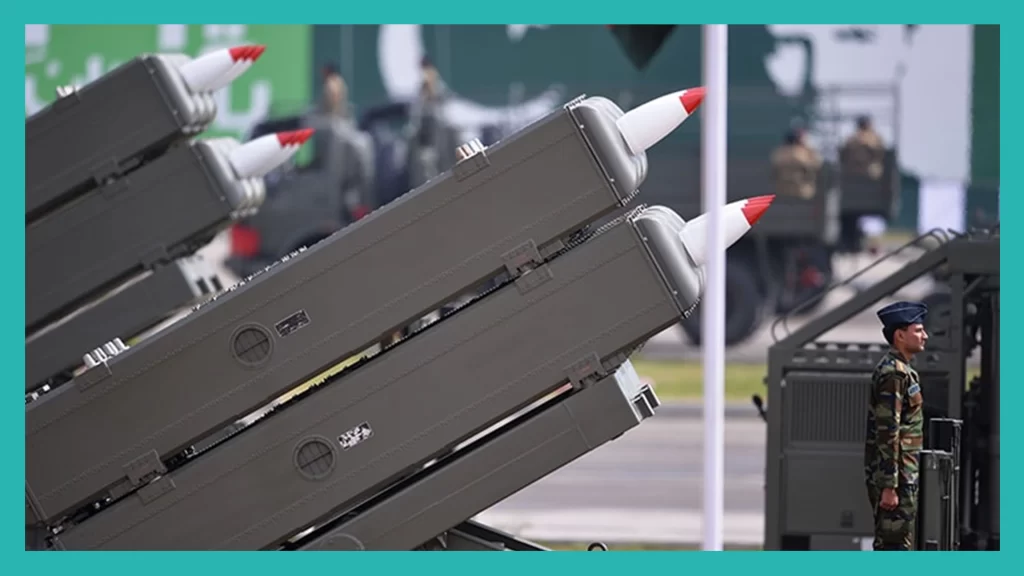
It is not known if the LOMADS is an original project or, instead, based on an existing off-the-shelf system. Some analysts have noted that the illustration of the LOMADS bears a resemblance to the NORINCO Sky Dragon 50. Likewise, the two systems have similar, if not identical, capabilities, such as maximum altitude coverage and simultaneous engagement. Finally, the deployment configuration is identical across the two systems, i.e., they both use up to six vehicles capable of launching four missiles each.
Arguably, the sole difference between the Sky Dragon 50 and LOMADS is that the latter offers double the range at 100 km. Thus, the LOMADS could be an upgrade or development of the Sky Dragon 50 with more range and, potentially, compatibility with the PAF’s new gap-filler radars. This configuration would provide the PAF with a combined surveillance and anti-air targeting/engagement capability.
Thus, Pakistan could be funding an upgrade project with the aim of manufacturing the resulting system locally and, potentially, building upon it with its own family of SAMs in the future. Interestingly, the missile unit of the Sky Dragon 50 is the DK-10, which can reportedly be configured vertically too. In other words, the LOMADS project could also be an option for the PN for use on its surface vessels in the future.
Don't Stop Here. Unlock the Rest of this Analysis Immediately
To read the rest of this deep dive -- including the honest assessments and comparative analyses that Quwa Plus members rely on -- you need access.