Türkiye Flies Indigenous Helicopter with Indigenous Engine
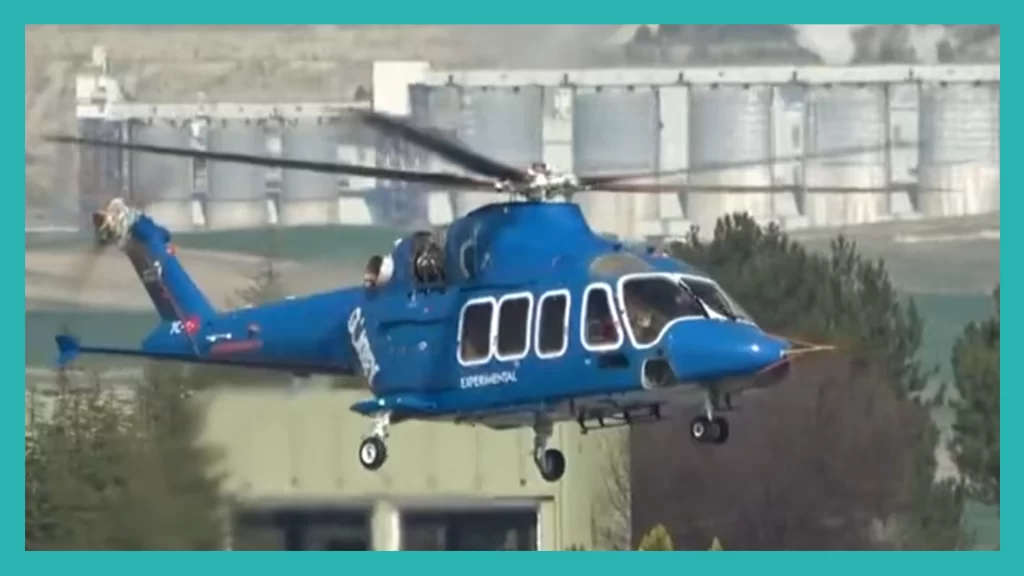
On 22 April, Turkish Aerospace (TUSAŞ) successfully test flew its T625 Gökbey general purpose helicopter with the indigenously developed Turkish Engine Industries (TEI) TS1400 turboshaft engine.
The head of Türkiye’s Defence Industry Agency (SSB), Ismail Demir, announced the achievement on social media, stating that it was “an important milestone in the Turkish defence industry.”
Indeed, this was the first time Türkiye flew both an indigenously developed helicopter powered by a locally designed and produced powerplant. In fact, the feat arguably places Türkiye among a handful of countries now capable of domestically sourcing the most important inputs of a modern rotary-wing aircraft.
The SSB started the TS1400 program in 2017. Its original goal was to wrap up initial development by 2019 and, in turn, test fly the engine in 2023. Development of the TS1400 is to conclude by 2024 or 2025, with the engine entering full-scale production by that point. From there, Türkiye envisions developing engines with higher thrust ratings so as to support its larger helicopter programs, like the T929 and T925.
The SSB is also aiming to rejuvenate the stalled T129 ATAK deal with Pakistan through the TS1400. Though signed in 2018, the sale of the 30 attack helicopters was derailed due to Washington’s reluctance to release export permits for the LHTEC CTS-800 turboshaft engines, which currently power the ATAK. These engines are bound by ITAR restrictions due to the use of various American-origin technologies.
On paper, the TS1400 offers similar thrust to the CTS-800 at 1,570 shp (compared to the 1,563 shp of the CTS-800). However, for Pakistan to accept a TS1400-powered ATAK, it would need to test the helicopter in its own environment to gauge the aircraft’s hot-and-high performance. The originally configured ATAK had excelled in Pakistan’s hot-temperature and high-altitude operating theaters.
That said, Pakistan likely has an incentive to revive the T129 program if and when the engine matter is fully sorted. Islamabad had signed the contract under the condition of a Turkish government-backed financing program. Thus, the deal did not necessarily require Pakistan to pay upfront to start production as Türkiye’s government at the time took responsibility for it. Potentially, the worst outcome for Pakistan had been the delay in actually acquiring the helicopters, but not a loss of payment money.
Moreover, Türkiye’s apparent push to re-engine T129 also implies that it has shelved the T629, which was supposed to be the attack helicopter version of the T625. This approach makes sense in that Türkiye could re-use all of its existing production infrastructure of the T129 so as to control costs and accelerate timelines to supply an ITAR-free attack helicopter. That said, Türkiye could rework its T629 work in other ways, such as by producing an unmanned attack helicopter to complement the T929.
Türkiye Delivers First Indigenously Upgraded F-16s
On 18 May, Turkish Aerospace (TUSAŞ) delivered the first batch of upgraded F-16C/D Block-30 fighters to the Turkish Air Force. Though domestically upgrading F-16s is not new for Türkiye, indigenously designing and implementing the configuration – i.e., “Özgür” – is a significant milestone.
In effect, Türkiye now has its own analogous counterpart to the Lockheed Martin F-16V upgrade available for both F-16A/B and F-16C/D aircraft. Currently, the Turkish Air Force is aiming to upgrade 35 of its older F-16C/D Block-30s through the Özgür upgrade program.
Don't Stop Here. Unlock the Rest of this Analysis Immediately
To read the rest of this deep dive -- including the honest assessments and comparative analyses that Quwa Plus members rely on -- you need access.