
With a new Chief of Air Staff (CAS) – Air Chief Marshal (ACM) Zaheer Ahmad Babar Sidhu – at the helm of the Pakistan Air Force (PAF), the service arm is looking ahead to its modernization pipeline for the 2020s.
JF-17 Block-III
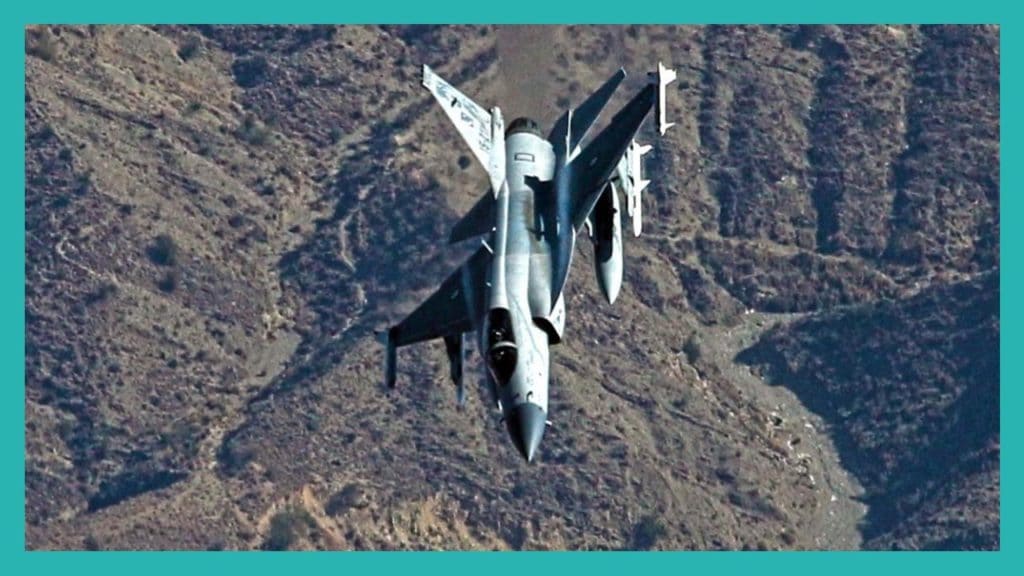
Having delivered 26 dual-seat JF-17B aircraft to the PAF, Pakistan Aeronautical Complex’s (PAC) Aircraft Manufacturing Factory (AMF) is focusing on the JF-17 Block-III. The Block-III is the most significant update to the platform to-date, and for the PAF, it will deliver a range of new technologies to its fleet.
The most important new subsystem the PAF is expecting is the active electronically scanned array (AESA) radar. The PAF selected an air-cooled version of the Chinese KLJ-7A radar, which reportedly offers a range of 170 km against ‘fighter-sized targets.’ It can also track up to 15 targets at the same time and engage as many as four aircraft at once. However, the unique added benefit of an AESA radar comes from its 1,000+ transmit/receive modules (TRM), which allow for improved defensibility against enemy radar jamming.
The PAF will integrate a new set of long-range air-to-air missiles (LRAAM) to the Block-III. However, it has not disclosed the make, model, or specifications of these new LRAAM. Though there have been rumours of the PAF using the PL-15, Quwa was told that other Chinese LRAAMs were under consideration as well. In fact, one source told Quwa that the PAF will likely pair an evolution of the SD-10 (i.e., with longer range, improved seeker, and new electronic counter-countermeasures) to the Block-III. However, that does not preclude the possibility of the PAF adding other LRAAMs so as to maintain diversity in its inventory.
In addition to a new LRAAM, the PAF is still focused on adding a high off-boresight air-to-air missile (HOBS AAM) capability to the JF-17. This will see the integration of a helmet-mounted display and sight (HMD/S), which the PAF is now pursuing through an original design involving Pakistani and Chinese companies.[1] The shift to an original solution could be a sign that off-the-shelf HMD/S solutions were inaccessible. While an original solution will cost more, it frees the PAF to define the features and specifications from the onset.
Interestingly, the PAF has only committed to an order of 30 Block-IIIs (out of the 50 it required). This may be a result of re-allocating funding to the JF-17B (which is fundamentally a Block-III without the AESA radar and final subsystems). However, the PAF was open-ended about its commitment to the Block-III in that it may order the final 20 aircraft once the first tranche of 30 aircraft near competition. The PAF was open to adding 12 Block-IIs on top of its original order of 50 aircraft, for example.
Lead-in-Fighter-Trainer (LIFT)
The previous CAS, ACM Mujahid Anwar Khan, had outlined that the PAF required a new LIFT to bridge the gap between the K-8 and the JF-17B. The PAF had evaluated the L-15, M-346 and T-50. It is unclear if the PAF is still interested in a dedicated LIFT as it has not announced a final selection.
Ultimately, the decision to acquire a LIFT will depend on funding availability and whether the PAF sees the JF-17B as too valuable a combat asset to spare for training new pilots. The PAF is looking to integrate the KLJ-7A to the JF-17B, and thus far, the PAF is looking at the JF-17B with the same lens as the F-16B, i.e., a combat-ready conversion asset. Thus, the PAF could still acquire a dedicated LIFT.
However, that dedicated LIFT could come in the form of a specially-configured JF-17B. The PAF has started marketing the JF-17B as a LIFT to the Middle East. Thus, the PAF could opt for additional JF-17B units once the cost of the subsystems and other inputs drop. The PAF may also wait for other options (e.g., Hurjet).
Air Defence Ground Environment (ADGE) Updates
In February 2021, ACM Mujahid Anwar Khan reportedly told ARY News that the PAF is expecting a new air defence system in 2021. It is unclear what the ex-CAS was alluding to, though it could be the induction or operationalization of new gap-filler radars (to replace the Mobile Pulse-Doppler Radars) or a new surface-to-air missile (SAM) system. New gap-filler radars were a long-standing requirement and, in 2017, the PAF signed a $130 million US contract with an unknown supplier for 10 such radars.
Don't Stop Here. Unlock the Rest of this Analysis Immediately
To read the rest of this deep dive -- including the honest assessments and comparative analyses that Quwa Plus members rely on -- you need access.