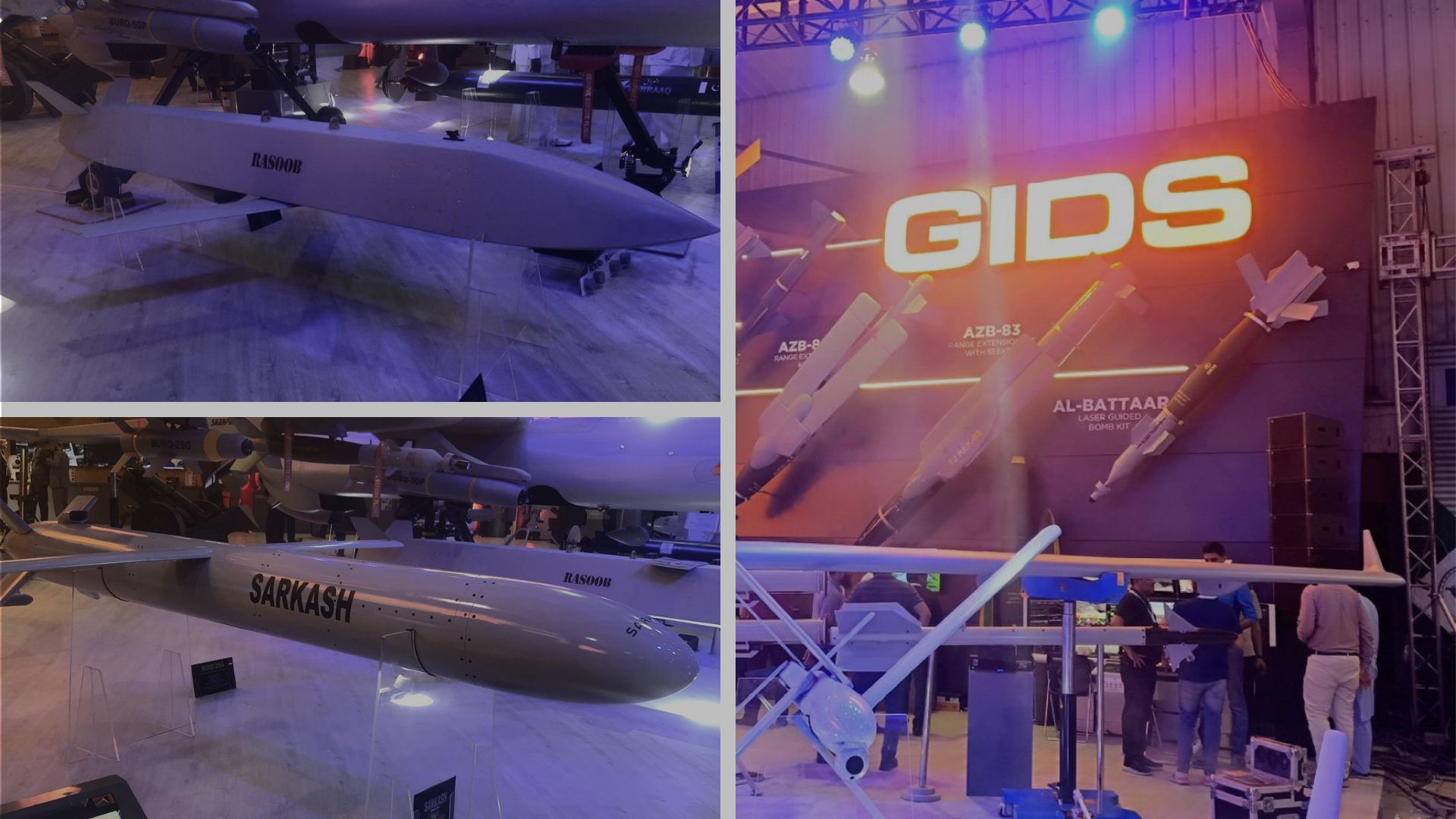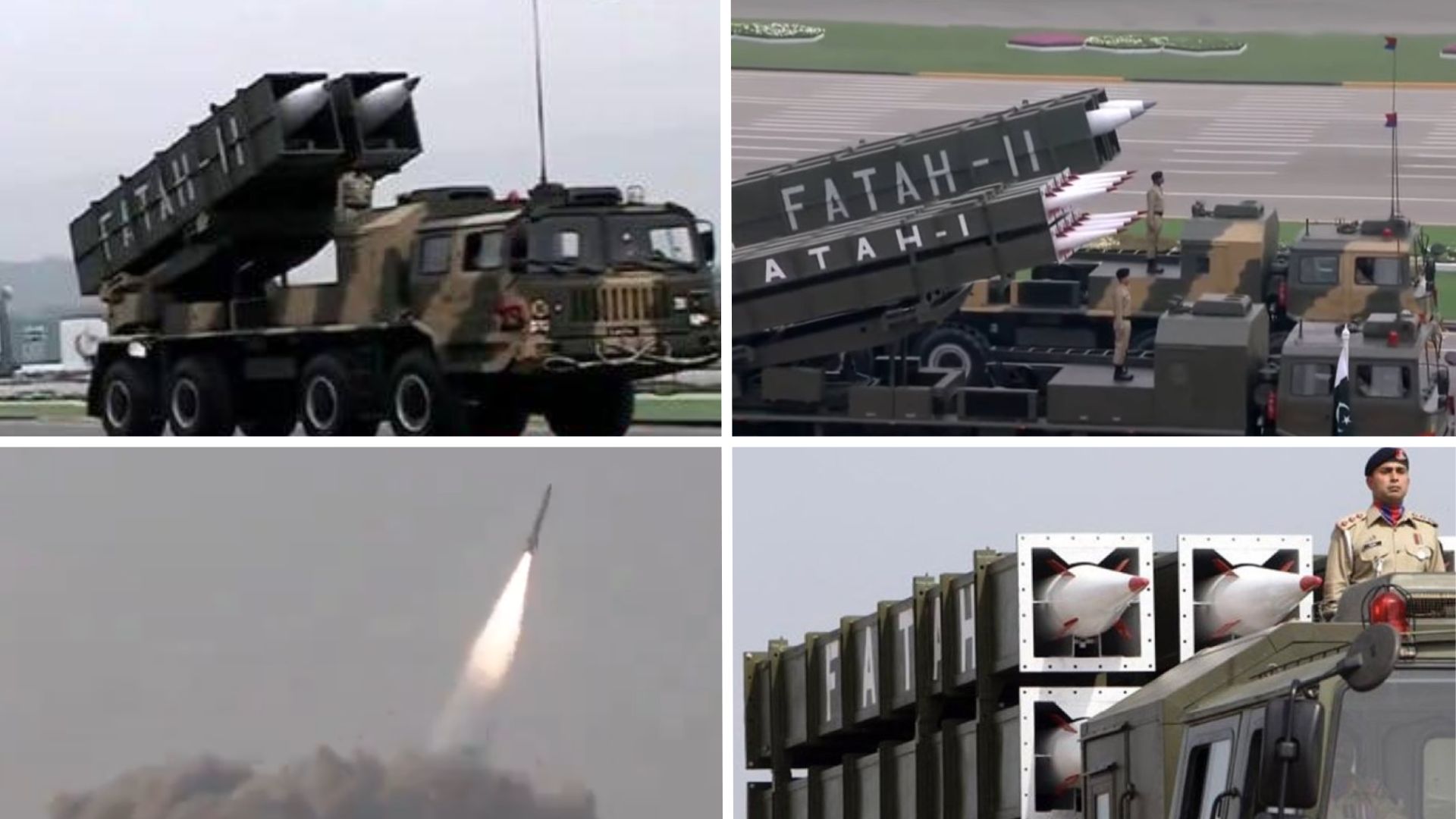

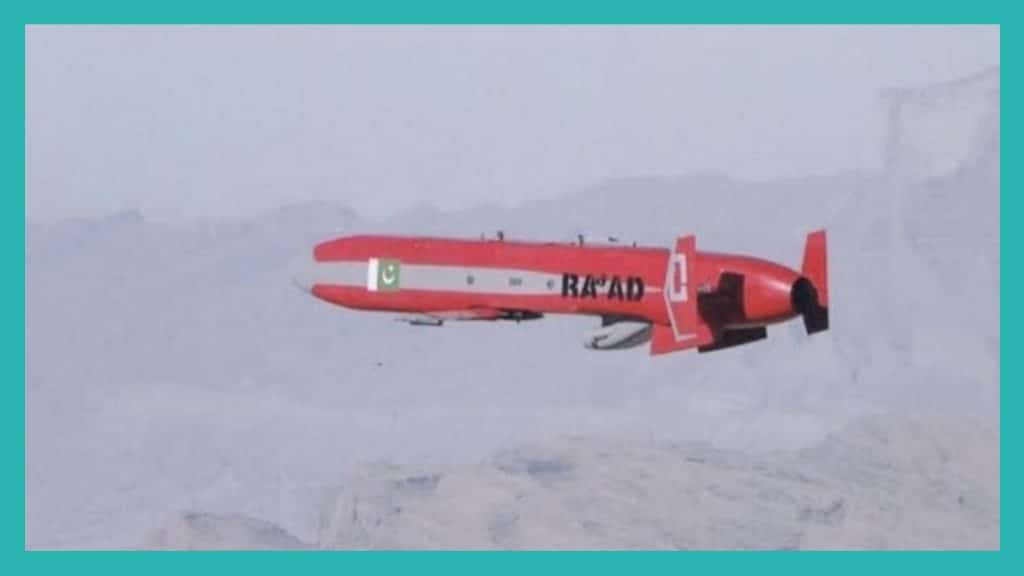
The Ra’ad-series of air-launched cruise missiles (ALCM) form the lynchpin of the Pakistan Air Force’s (PAF) airborne nuclear deterrence posture. The launch variant of the Ra’ad was revealed in 2007 with a range of 350 km. It is currently deployed from the Mirage III/5, which, in turn, are the PAF’s mainstay long-range strike-capable fighter aircraft thanks to their compatibility with several stand-off range weapons (SOW).
In February 2020, the PAF announced that it test-fired the Ra’ad-2 ALCM. The new variant offers a stated range of 600 km and is deployable against targets “on land and at sea.” Interestingly, though the PAF will likely deploy the Ra’ad-2 from the Mirage III/5, Pakistan made several design changes to the missile that may make it compatible with other platforms. The most noticeable change is the new tailstock with uses an “X”-shaped design instead of the original Ra’ad’s protruding horizontal stabilizers.
In other words, the Ra’ad-2 seems to be more compact, which may allow the JF-17 to carry an ALCM under each wing. This change would be an important one as it would allow the PAF to use its deterrence element from many more fighters than its Mirages and, more importantly, guarantee continuity of nuclear attack capability if the Mirages become inoperable due to age. Finally, the longer-range coverage of the Ra’ad-2 also offsets the inherent range limitations of lightweight fighters such as the Mirage III/5 and JF-17.
In the current context of “minimum deterrence,” the PAF – and Pakistan’s defence planners as a whole – may be satisfied with their present airborne attack posture. Certainly, there is a long-standing gap in the way of a long-range conventional attack capability. The PAF sought this capability since the 1970s when it inquired about acquiring 110 Ling-Temco-Vought (LTV) A-7 Corsair II. Unfortunately, acquiring a suitable aircraft for the role has proven elusive for the PAF, thus forcing it to use SOWs from the Mirage III/5.
Project Azm, which is Pakistan’s next-generation fighter program, is an attempt at resolving this platform limitation. The stated design attributes of the aircraft – i.e., twin-engine – point towards a larger platform than the PAF’s current mainstay fighters. However, the apparent reference points of interest to the PAF, such as the YF-23, may allude to a heavyweight design in the category of the Flanker or Eagle. If this is the route, the PAF is clearly working towards a credible long-range strike-capable aircraft.
Observers of Project Azm have noted that the PAF embarked on a difficult road in terms of delivering its next-generation requirements. In fact, even if the PAF relies on foreign critical inputs such as engines and electronics, it would still need to build significant in-house capacity in key domains, such as flight control systems, among others. However, these capacities would only speak to the baseline, and as one can see, the baseline is quite high in terms of cost and complexity.
Now, by raising that baseline to cover a potentially large twin-engine design, the PAF has set an ambitious bar for its next-generation fighter. In turn, it has also set a much higher requirement in terms of cost and time. Though its plans can change, the PAF is currently set on delivering an in-house designed fighter, not an off-the-shelf solution. The Chief of Air Staff (CAS) of the PAF, Air Chief Marshal (ACM) Mujahid Anwar Khan, said that Project Azm would not be a factor before 2030.[1] However, one can realistically expect that the next-generation fighter will not be a factor well into the 2030s, if not around 2040 (if the PAF sticks to driving development through in-house capacity building and technologies).
Basically, if Project Azm is by design a high-cost and high-complexity fighter, then it would make sense for the PAF to tie it to a niche requirement set. It is an important requirement, but not essential at this time because current solutions for strike (i.e., Mirage III/5s with SOWs) are “good enough.”
Moreover, if Project Azm is not a mainstay multi-role fighter (like the JF-17), then it is free from design requirements focusing on low acquisition costs and earlier availability. The latter factors would result in feature omissions and, as one Quwa article explored, a scaling-back of indigenous development. Granted, this approach would open the door to off-the-shelf acquisitions to resolve interim requirements.
Thus, a niche requirement fighter could fit with a 15-20-year development roadmap. It would result in a conventional strike fighter that could supplant both the F-16 and Mirage III/5 as the PAF’s offensive ‘edge.’
Don't Stop Here. Unlock the Rest of this Analysis Immediately
To read the rest of this deep dive -- including the honest assessments and comparative analyses that Quwa Plus members rely on -- you need access.