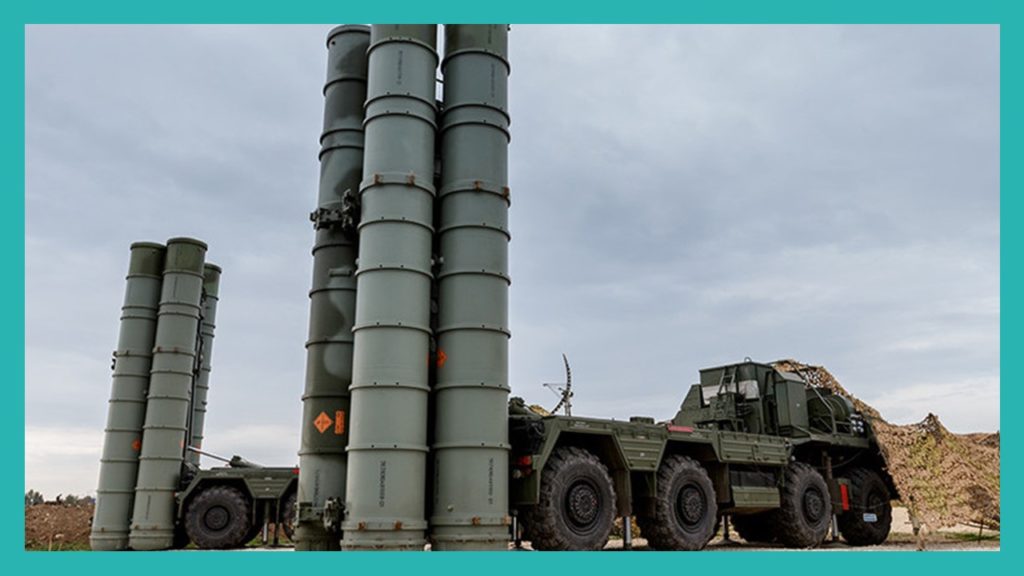
As examined in an earlier Quwa Premium article, India’s acquisition of the S-400 and its wider air defence modernization roadmap will make offensive operations more difficult for Pakistan. Basically, many of the advantages the Pakistan Air Force (PAF) had leveraged in Swift Retort will not be available in the future.
Thus, the PAF will need to revise parts of its approach to long-range attack missions. Key alterations could involve using air-launched cruise missiles (ALCM) for conventional strikes instead of solely relying on glide-based stand-off range weapons (SOW) that require a high launch altitude for maximizing range. Likewise, the PAF could also look at investing in additional dedicated electronic warfare (EW) assets.
In light of a saturated and complex enemy air defence environment, the PAF may need to lead strikes on high-value targets (HVT) with SEAD (suppression of enemy air defence) and DEAD (destruction of enemy air defence) operations. However, to achieve optimal results, the PAF may need support from land forces.
In other words, future SEAD/DEAD operations could require the use of land assets in combination with aircraft, i.e., joint air and land operations by the PAF and the Pakistan Army (PA), respectively.
Using Land Assets to Deter Aggressive SAM Deployment
One of the S-400’s marquee threats lie in the chance of India aggressively deploying it close to the border. In theory, a deployment of that nature could cut into Pakistani airspace, at least enough to hamper high-altitude flights at up to 400 km, i.e., the range of the S-400’s 40N6 surface-to-air missile (SAM).
However, despite that coverage, the PAF could operate fighters at lower altitudes using the S-400’s radar blind spots along the curvature of the Earth. In such a scenario, the utility of gliding SOWs, e.g., the Range Extension Kit (REK) or indigenous REK (IREK), may be limited because they require a higher launch altitude so as to achieve their maximum range (which is 100 km in the case of the REK/IREK).
Instead, the PAF could rely on firing ALCMs at lower altitudes. In this case, an ALCM similar in specifications to the Roketsan Stand-Off Missile (SAM) could offer a range of up to 300 km. While ALCMs could provide a credible means of attack, there might be a way to deter India from aggressively deploying the S-400.
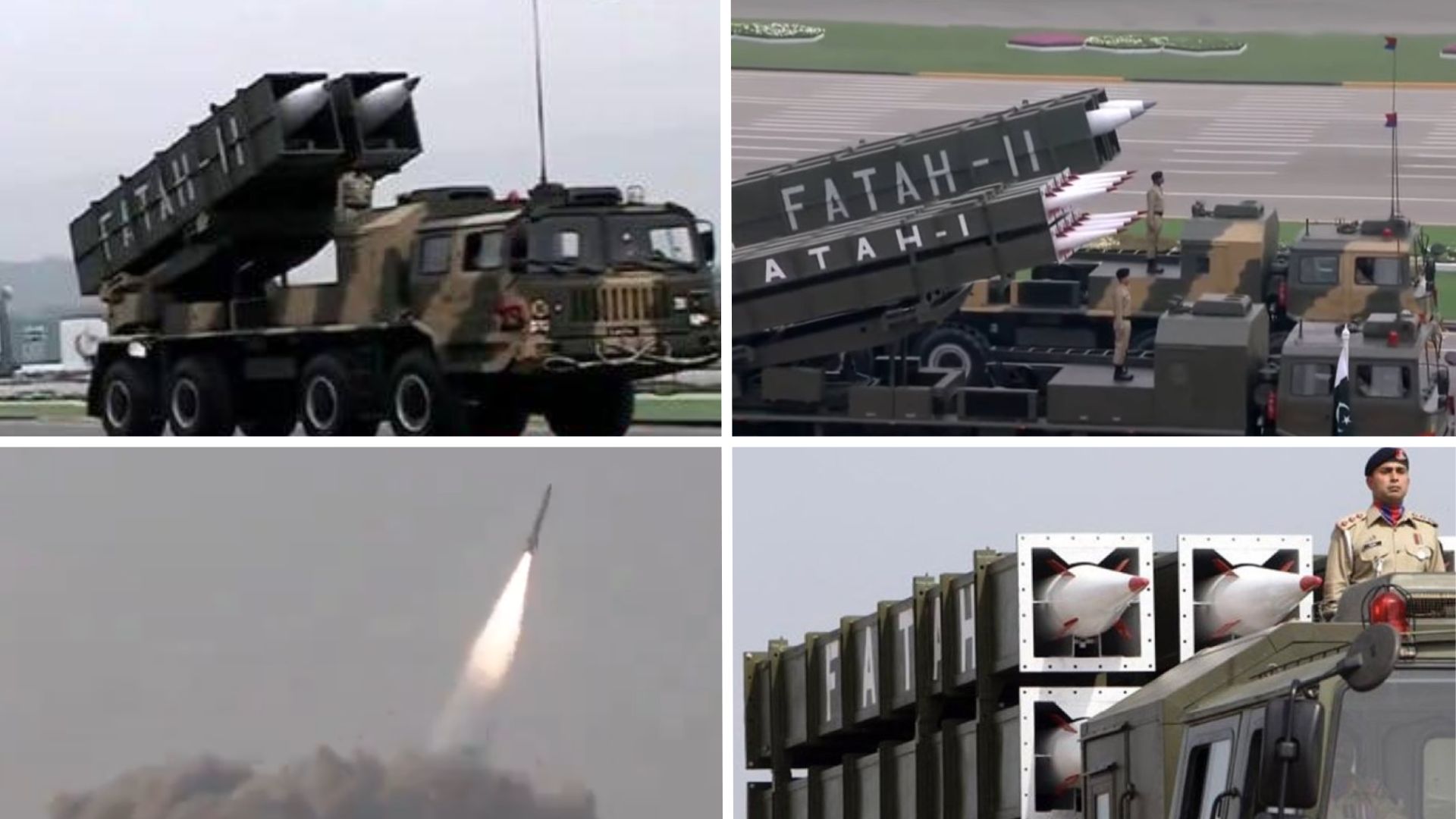
This solution could be to deploy long-range artillery — namely MLRS (multiple launch rocket systems) using INS/GPS-guided rockets, V-LAP (velocity-enhanced artillery projectile) shells, and tactical ballistic missiles (TBM). Basically, these artillery assets can offer a means to threaten nearby air defence deployments.
The challenge, however, is identifying the location of the air defence system. This would need at least two capabilities: first, a means to pervasively monitor probable deployment areas and track movement during peacetime, and second, a means to locate the radar and/or firing units in conflict-time.
Pakistan can acquire the first capability – i.e., pervasive monitoring – through image intelligence (IMINT). It can, in theory, use the newly launched Pakistan Remote Sensing Satellite (PRSS-O1), which is equipped with an electro-optical (EO) system. In 2017, then Chairman of SUPARCO (Space and Upper Atmosphere Commission), Qaiser Anees Khurram, stated that the PRSS-O1 would “make Pakistan self-reliant in multi-spectral imaging.”[1] The PRSS-O1 was originally supposed to carry a synthetic aperture radar (SAR) payload as well, but it is unclear if was the case by launch time. SAR would enable the satellite to use radio waves to capture imagery of the surface and visualize topology. SAR could come in a later satellite.
Don't Stop Here. Unlock the Rest of this Analysis Immediately
To read the rest of this deep dive -- including the honest assessments and comparative analyses that Quwa Plus members rely on -- you need access.