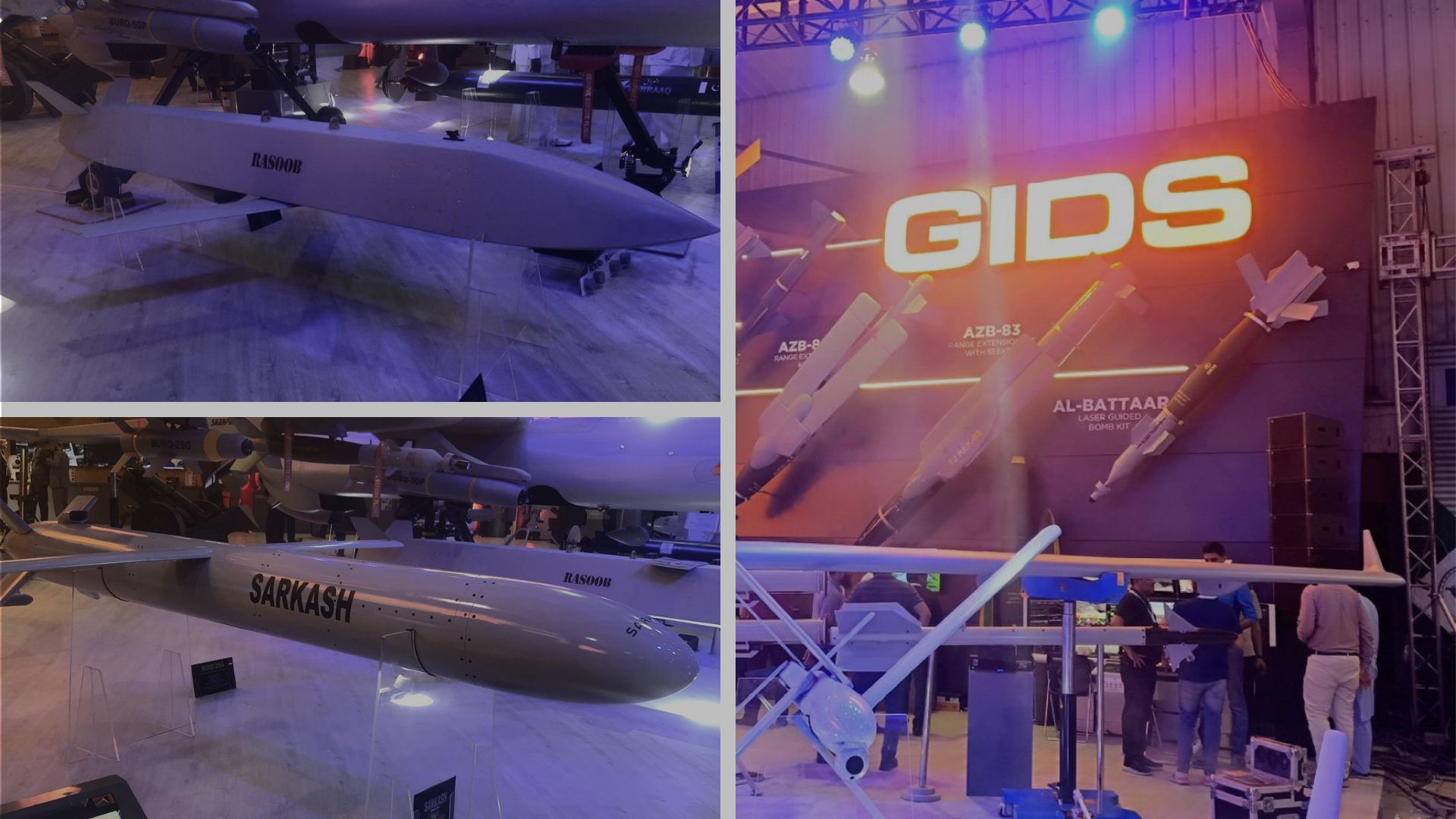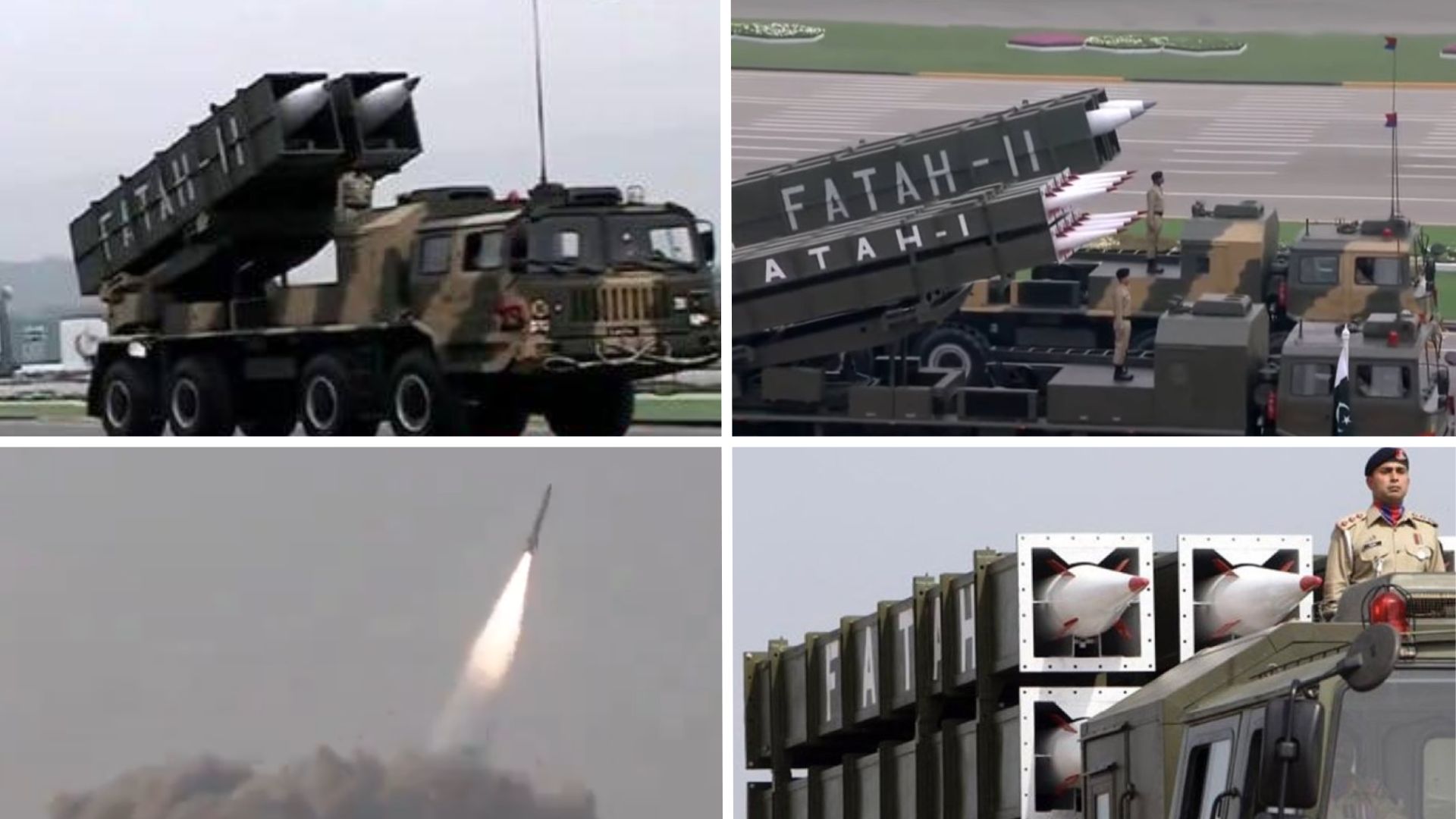

Quwa was fortunate to attend and cover the 2018 International Defence Exhibition and Seminar (IDEAS) on the 28th and 29th of November. This is the first of many articles Quwa will publish regarding IDEAS, this will be joined by a series of thematic reports discussing overall trends and issues we had observed at IDEAS (e.g., how Pakistan is steering its defence production, opportunities for the aviation industry, etc). This is also the first of Quwa’s original news reporting, i.e., first-hand information.
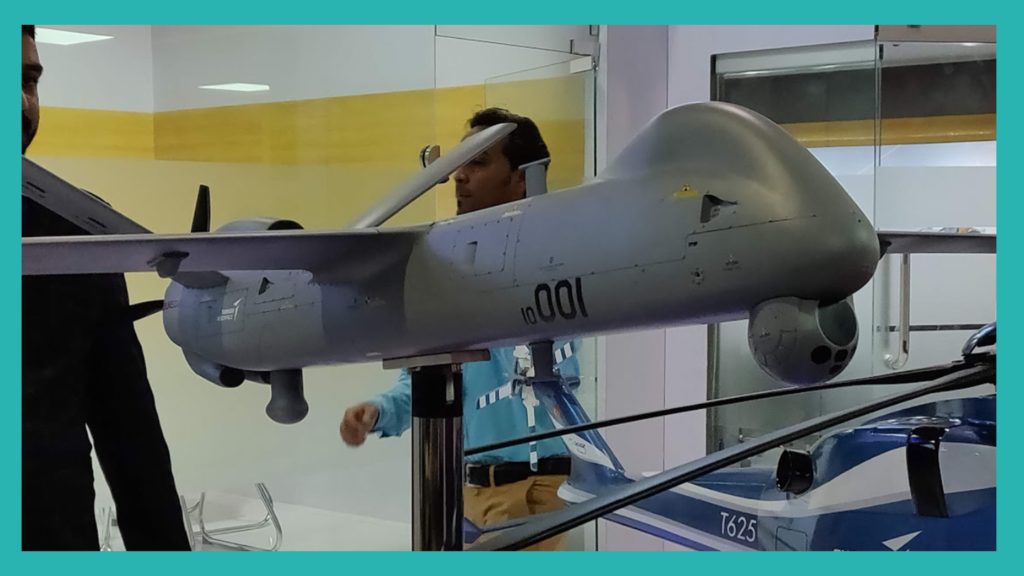
At the 2018 International Defence Exhibition and Seminar (IDEAS), which was held in 27-30 November in Karachi, Turkish Aerospace confirmed to Quwa that the Pakistan Navy is interested in the Anka-S and has begun negotiations for the medium-altitude, long-endurance (MALE) unmanned aerial vehicle (UAV).
Inducted by the Turkish Armed Forces (TAF) in 2018, the Anka-S is a satellite-communications (SATCOM)-equipped variant of the Anka MALE UAV, which had first flown in December 2010.
The Anka-S has an endurance of 24 hours and – when using a line-of-sight (LoS) radio data-link – a range of 200 km. It has a service ceiling of 30,000 ft and is capable of carrying 200 kg in electro-optical (EO) and infrared (IR) equipment and/or precision-guided air-to-surface munitions.
Its ordnance options include the Roketsan UMTAS anti-tank guided missile (ATGM), Roketsan CİRİT laser-guided air-to-surface rocket, and the Roketsan MAM-L (a miniature air-to-ground missile). In the TSK, the Anka-S uses the Aselsan Common Aperture Targeting System (CATS) as its EO/IR turret; the CATS provides the Anka-S with laser-target designation/illumination capabilities.
Turkish Aerospace could not reveal the potential size or scope of the Navy’s Anka-S interest, but the Navy’s intention is to use a MALE UAV for intelligence, surveillance and reconnaissance (ISR) operations over the seas. The Pakistan Navy would not comment on the deal, but a source told Quwa that the Navy’s enhanced maritime patrol duties (e.g., Regional Maritime Patrols) would make maximum use of added ISR capacity.
Turkish Aerospace also believes that its chances of inking a contract with Pakistan are strong, especially following the Pakistan Army’s purchase of 30 T129 ATAK attack helicopters. The company representative told Quwa that the armed forces were “impressed” by Turkey’s ground-attack advancements.
Analysis
The Pakistan Navy’s interest in the Anka-S alludes to both enhanced ISR coverage and SATCOM usage for beyond line-of-sight (BLoS) connectivity. This would enable the Navy to operate the Anka-S at long-range, including over-the-horizon range (i.e., beyond 200 to 280 km).
Thanks to the Anka-S’ endurance of 24 hours, the Navy could maintain pervasive ISR coverage at-sea more cost-effectively than with the maritime patrol aircraft or with the Air Force’s airborne early warning and control (AEW&C) aircraft. Moreover, AEW&C and MPA are intended for specific combat missions, not just ISR, so a dedicated ISR asset that is cheaper to operate – and is more dispensable – makes sense.
Don't Stop Here. Unlock the Rest of this Analysis Immediately
To read the rest of this deep dive -- including the honest assessments and comparative analyses that Quwa Plus members rely on -- you need access.