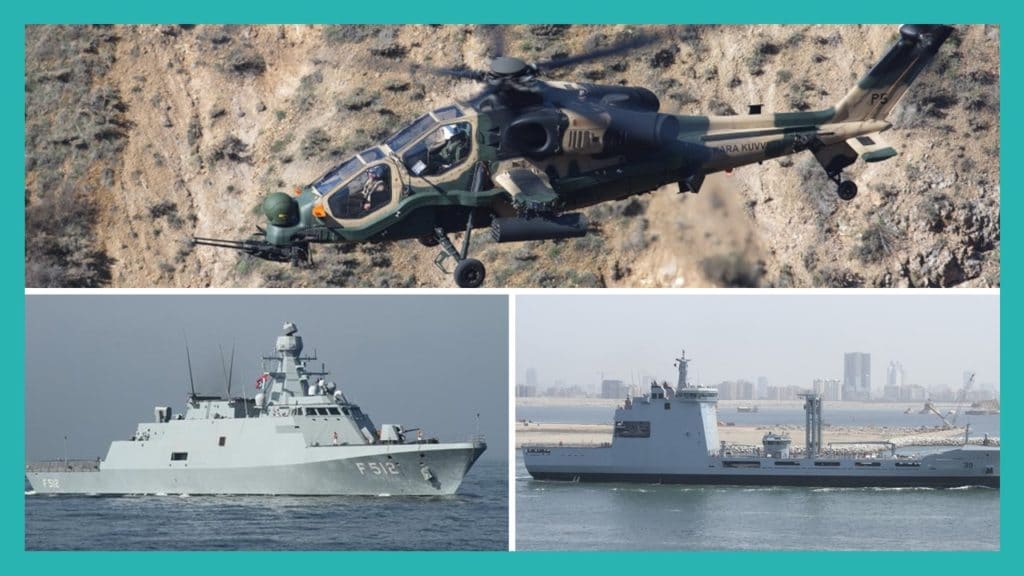
Since 2016, Turkey has booked nearly $3 billion US in big-ticket defence sales to Pakistan, with sold items ranging from 30 Turkish Aerospace T129 ATAK attack helicopters, four MILGEM Ada corvettes, a mid-life subsystems upgrade for Pakistan’s three Agosta 90B submarines to spate of smaller projects.[1][2][3] Through these programs, Turkey has cemented its position as one of Pakistan’s leading arms suppliers, second only to China and, in turn, effectively coming ahead of the US and Western Europe.
However, could Pakistan’s trust in the Turkish defence industry (quantifiable in $3 billion US worth of big-ticket expenditure) extend to more than just off-the-shelf procurement? With China, not only has Pakistan been able to secure capable big-ticket systems – such as the Type 054A frigate and Hangor (II) submarine – but it is able to develop strategically valuable conventional and deterrence capabilities.
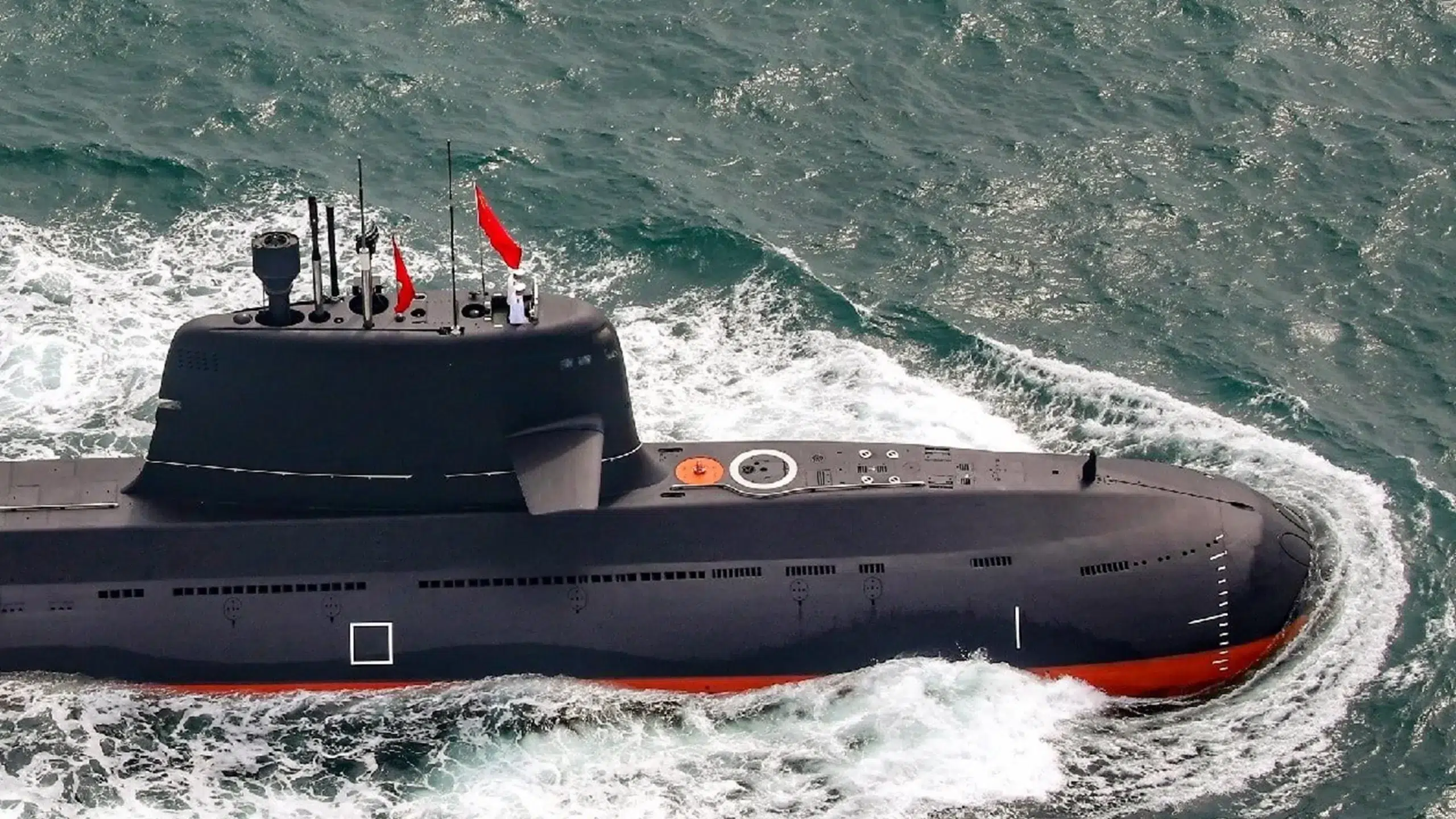
Be it the Hangor (II) submarine, instrumented weapons test range or space satellite procurement, China is evidently equipping Pakistan to both develop and deploy land-attack cruise missiles (LACM). There is no scope for such access in the US or Western Europe. Rather, the US both rejects and, in fact, works to obstruct Pakistan’s efforts in strategically sensitive domains through sanctions and embargoes.[4]
Thus, it would be erroneous to expect Turkish-Pakistani defence ties to match in equivalence to those of China and Pakistan. However, there are more to Pakistan’s defence needs to simply strategically valuable capabilities, such as a myriad of tactical scenarios, such anti-submarine warfare (ASW) or close air support (CAS), where high-quality weapon systems could be sought.
Turkey is Supplying Mainstay Assets
Of the signs that Pakistan is taking Turkey seriously is the fact that it is now relying on the Turks to supply mainstay assets, i.e. weapon systems that are to drive the majority of operational roles in their respective domains. For example, the T129 is slated to be the Pakistan Army Aviation Corps’ (PAA) mainstay attack helicopter by supplanting the legacy AH-1F/S from frontline use.[5] From counterinsurgency (COIN) missions to conventional anti-armour operations, the PAA will call upon the T129, which means that the T129 will serve an indispensable role. Likewise for the Ada, which will form one-third of the Pakistan Navy’s (PN) 2,000+ ton surface combatant fleet (alongside four Type 054A and four F-22P frigates).
It should be noted that both (i.e. attack helicopters and corvettes) could have been bought from China – i.e. at a lower-cost and, potentially, at no risk of sanctions (compared to the T129 and Ada). However, the Pakistan Army (PA) and PN have opted to not only spend a sizable portion of their respective budgets on Turkish solutions, but have opted for Turkish solutions to fulfill tactical – i.e. CAS and ASW – requirements. It is evident that these purchases are not novelties or inconsequential to Pakistan’s defence needs; rather, they are integral (albeit with a contingency in China should trade controls or restrictions arise).
Thus, it appears that Pakistan is sourcing equipment that is essential, but not strategically relevant where the US or Western Europe would be an obstacle. For example, the Hangor submarines under construction at China as slated to deploy submarine launched cruise missiles (SLCM) which – in all likelihood – Pakistan is poised to tip with miniaturized nuclear warheads. Likewise, the new instrumented weapons test-range built at Sonmiani will be used to continue developing those SLCMs. Building upon that, Pakistan could, at least in theory, use a space satellite program to build a target library and, potentially, guide its SLCMs.
Strategically relevant is where China’s support (or at least access to Chinese goods) is essential. However, in Turkey, Pakistan has found a source where it can procure high-quality (i.e. NATO Standard) weapons to help it close specific technology and capability gaps with India. For example, as the Indian Army proceeds with its procurement of K9 Thunder 155mm/52-calibre tracked self-propelled howitzers (SPH), Pakistan is reportedly interested in Turkey’s T-155 Firtina tracked SPH, itself derived from the K9.[6] In terms of the al-Khalid II main battle tank (MBT), “Aselsan could be supplying next-generation electronics for the tank.”[7]
In fact, in January 2016 the Turkish Undersecretariat for Defence Industries (SSB) head, Dr. İsmail Demir, told the Turkish National Assembly that Pakistan expressed interest in the Altay MBT.[8] Of course, it is far from certain if the PA would embrace a heavyweight (60+ ton) MBT such as the Altay, but the Altay does epitomize Turkey’s place to Pakistan. Turkey is an accessible source for numerous NATO Standard defence systems that offer qualitative parity to India’s purchases. Granted, Pakistan’s fiscal constraints will always limit its ability to procure those Turkish arms, but with the Altay (and others), Pakistan need not deal with the pro-Indian lobbying or regulatory challenges found in the US, France, Germany or the UK.
Why Turkey?
It is evident that Turkey offers Pakistan a source for current NATO Standard designs without (or at least as much of) the regulatory hurdles Pakistan tends to face in London, Paris, Berlin or Washington. However, there are other factors as well, not least the fact that Turkey enables Western vendors to engage Pakistan without as much risk to losing their commercial prospects in India. For example, the German-owned firm Hensoldt is supplying optronic sensors and pulse-Doppler radars for the PN’s Agosta 90B submarines through STM, the lead-contractor of the upgrade program.[9][10] However, in tandem with Turkey’s defence industry development, these vendors are shifting their intellectual property (IP) to Turkey. In turn, Turkey is poised to manufacture – and export – original designs that will, albeit indirectly, benefit those vendors.
Don't Stop Here. Unlock the Rest of this Analysis Immediately
To read the rest of this deep dive -- including the honest assessments and comparative analyses that Quwa Plus members rely on -- you need access.