
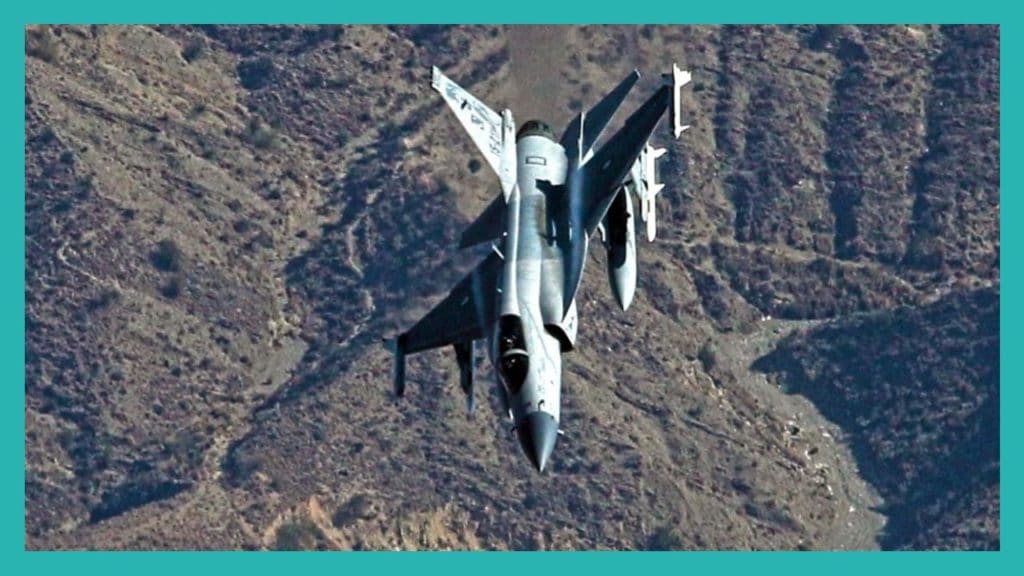
In the sidelines of Defence Services Asia (DSA) 2018, a marquee defence exhibition that took place in Kuala Lumpur in Malaysia in April 16-19, Pakistan Aeronautical Complex (PAC) officials told IHS Jane’s that it had “primary level talks” with Malaysian officials about selling JF-17 Thunder multi-role fighters to meet the Royal Malaysian Air Force’s (RMAF) requirement for a single-engine fighter.[1] Of course, the caveat sitting in this news is that the RMAF has yet to formally include the JF-17 as part of its actual evaluation process, much less beginning contractual negotiations (confirmed to Jane’s by PAF itself).[2]
In effect, the RMAF is likely a prospective customer rather than a substantive lead approaching PAC, but a look at the RMAF’s fighter bid does raise several questions about Pakistan’s capacity to properly pursue certain fighter programs – i.e. those requiring commercial offsets, transfer-of-technology (ToT) and/or a partnership involving commercial activity (related to the JF-17 and/or PAC). The issue is not PAC’s (and by extension, the Aviation Industry Corporation of China: AVIC’s) ability to practically undertake such steps, but its ability to negotiate customer expectations while maintaining its own interests.
According to PAC (via Jane’s), the provision of ToT to enable for local maintenance, repair and overhaul (MRO) and parts manufacturing is a component of the RMAF fighter bid.[3] Besides entertaining those, one should also expect Lockheed Martin, Saab and Korea Aerospace Industries (KAI) to have credible loan/line-of-credit mechanisms available to Kuala Lumpur as well. However, as Malaysia has multiple modernization priorities – each involving big-ticket items (e.g. twin-engine fighters, maritime patrol aircraft, etc) – there could be a need to control fiscal spending on defence.
It is on this basis that PAC likely senses an opportunity to sell the JF-17, but its traction will be contingent on how well it packages the idea of low acquisition and life-cycle costs with an attractive support package with industry inputs. AVIC, by virtue of being an equity partner in the JF-17 program, is also a factor – i.e. it can potentially offer credit to Malaysia should it procure the JF-17 (and/or other Chinese equipment).
For PAC, the question is whether it can move beyond the loss of potential long-term support work (e.g. undertaking MRO of RMAF planes in Pakistan) and convert an industry package into a revenue source.
Why Export?
Despite attaching the importance of exporting the Thunder in its narratives, commercial endeavours (in regards to the JF-17) have not been a priority of the PAF. This was plainly evident in the PAF sitting on the development of a twin-seat variant (i.e. JF-17B) until 2016; the PAF did not require it for its own needs. In effect, the core of past and current JF-17 activities center on fulfilling the requirements of the PAF. In fact, one can even (albeit cynically) ascribe the JF-17B to this notion since it possesses some significant changes that are relevant to the Block-III, i.e. the three-axis fly-by-wire (FBW) digital flight control system. In other words, the PAF can begin evaluating new subsystems for the Block-III.
Ultimately, PAC functions as an arm of the PAF (to undertake maintenance and facilitate procurement) – i.e. not a commercial enterprise analogous to AVIC. However, this is not unique to the PAF, the Army and Navy’s properties – i.e. Heavy Industries Taxila and Karachi Shipyard & Engineering Works, respectively – are primarily geared to support local requirements, with commercial activities being supplementary.
But none of that changes the reality that raising PAC et. al has been a costly course, and with Pakistan’s long-term economic status uncertain, the question of whether this overhead can be converted into means for acquiring hard/foreign-currency (especially for the stressed public exchequer) is relevant – if not for long-term economic prosperity, then to help support future armed forces procurements for certain.
JF-17 to Malaysia?
Reports of the RMAF seeking a new single-engine multi-role fighter (to complement its longer-ranged Su-30 and F/A-18D) emerged in November 2017.[4] The rationale to ‘break’ from the RMAF’s traditional line-up of twin-engine, medium-to-heavyweight multi-role fighters was to control cost (amid the downturn in the Malaysian economy).[5] Thus, the RMAF is reportedly seeking a lightweight multi-role fighter with “full air-to-air and a full air-to-ground capability” along with the capacity to serve as a lead-in fighter-trainer (LIFT) platform.[6] It must also be ready for full operational clearance (FOC) by 2021-2022.[7]
For PAC, the optimal offering should be the JF-17 Block-III as it fulfils more of the core criteria expected of modern fighters – i.e. a fully digital flight control system – along with substantive subsystems, i.e. active electronically-scanned array (AESA) radar and helmet-mounted display and sight (HMD/S) system. Along with marketing the JF-17’s lower acquisition and life-cycle costs, PAC could also be creative by positioning Malaysia’s existing experience with the Klimov RD-33 turbofan (via its MiG-29 fleet) as commonality with the JF-17’s RD-93. In fact, PAC could also consider adding an optional buffer (e.g. $350-500 million US) on top of the JF-17’s stated price for customization work for the RMAF.
Don't Stop Here. Unlock the Rest of this Analysis Immediately
To read the rest of this deep dive -- including the honest assessments and comparative analyses that Quwa Plus members rely on -- you need access.