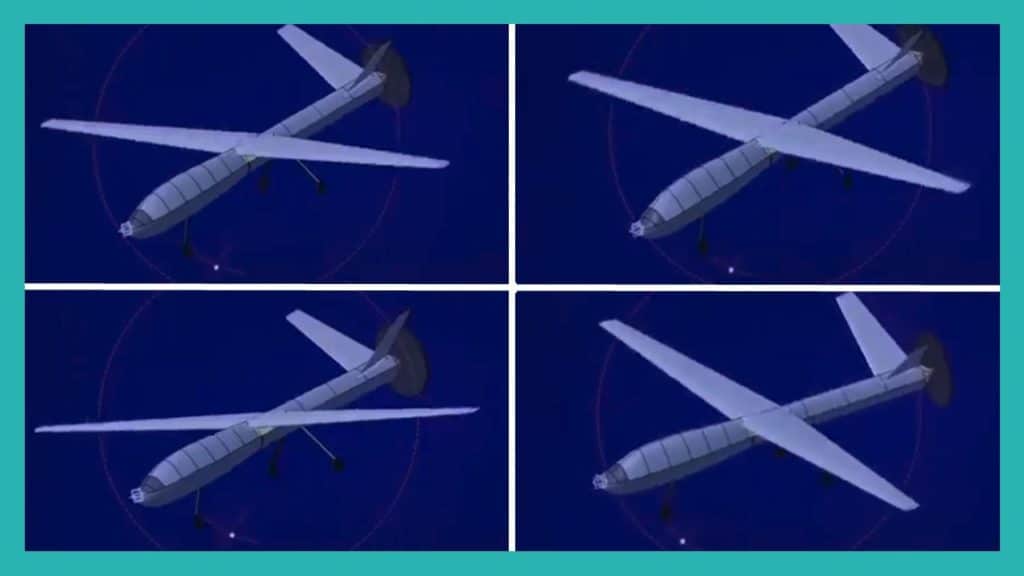
Pakistan is expanding its unmanned aerial vehicle (UAV) fleet through the procurement of new medium-altitude long-endurance (MALE) drones, most notably with Project Azm (resolve), under which a MALE UAV is being developed along with a fifth-generation fighter (FGF) for the Pakistan Air Force (PAF). Along with Project Azm, the PAF has also been testing – since at least 2016 – a Chengdu Aircraft Industry Group (CAIG) Wing Loong. On January 05 the Center for the Study of the Drone at Bard College identified a Wing Loong at PAF Base M.M. Alam in Mianwali in November 2017.[1] In December 2017, Dawn News reported that the Project Azm MALE UAV will enter production in 18 months.[2]
In general, UAVs allow militaries to undertake long-duration intelligence, surveillance and reconnaissance (ISR) operations and airstrikes without needing to commit costlier manned assets. UAV usage can reduce operational costs while also negating the risk of losing personnel and/or expensive manned systems. UAVs have been a staple in the U.S.’ counterinsurgency (COIN) operations, notably in Iraq and Afghanistan. Due to China’s mastery of and willingness to sell MALE UAV technology, the means to emulate the U.S. in this regard has spread into the hands of other states, especially in the Middle East.
Through Project Azm – and (if unrelated to Project Azm) potentially through the Wing Loong – Pakistan is working to expand its use of drones in order to better fulfil its national security requirements. This article outlines the improvements MALE UAVs offer over Pakistan’s current UAV inventory along with an analysis of how Pakistan can leverage potential long-term areas of development, such as geostationary Earth orbit communications satellites, to maximize its UAV usage. The article concludes with an overview of potential opportunities for domestic and overseas industry firms interested in engaging Pakistan’s drone program.
Overall, the availability of a MALE UAV will (in part) enable Pakistan to impose constant ISR coverage over key areas of national security interest, such as border management and surveying infrastructure projects. Given the high-risk security environment of Pakistan’s geo-political surroundings, the incentive to build and sustain persistent ISR is in place. If there is a genuine drive to construct a UAV manufacturing base through Project Azm, the capabilities of Pakistan’s drones – and resultant ability for a sustained ISR presence – should grow through the long-term. For Pakistan, this would amount to a major shift from its tactically-driven drone usage (e.g. supporting COIN campaigns).
Pakistan’s UAVs
Pakistan’s mainstay UAVs for ISR comprise of the Leonardo Falco and the domestically sourced Shahpar, which is produced by Global Industrial & Defence Solutions (GIDS). The Falco and Shahpar have maximum take-off weights (MTOW) of 490 kg and 480 kg, respectively, along with payload capacities of 70 kg and 50 kg, respectively.[3],[4] Neither the Falco or Shahpar were meant to deploy live ordnance. Instead, Pakistan has been using these drones for ISR. For example, the PAF has been using the Falco for ISR as part of its COIN operations in Pakistan’s Federally Administered Tribal Areas (FATA). Deployed in that theatre in 2010 or 2011, the PAF had relied on the Falco for ground-surveillance, leveraging the drone’s ability to take-off and land from unprepared airfields and 8 to 14-hour flight endurance.[5] Interestingly, the PAF reportedly has had mixed results using the Falco, with some of the Falco drones crashing due to failures in the data-link control/connection.[6] The PAF reportedly opted to use its own ground control station (GCS) to operate the Falco instead of procuring Leonardo’s GCS for the Falco.[7] While evidently problematic for controlling the Falco, this information could indicate that Pakistan has data-link programs other than the tactical data-link (TDL) work for the JF-17 and Mirage III/5 (i.e. Link-17) The experience of using it with the Falco – with the occasional failure – can inform development of an improved version for use on a MALE UAV.
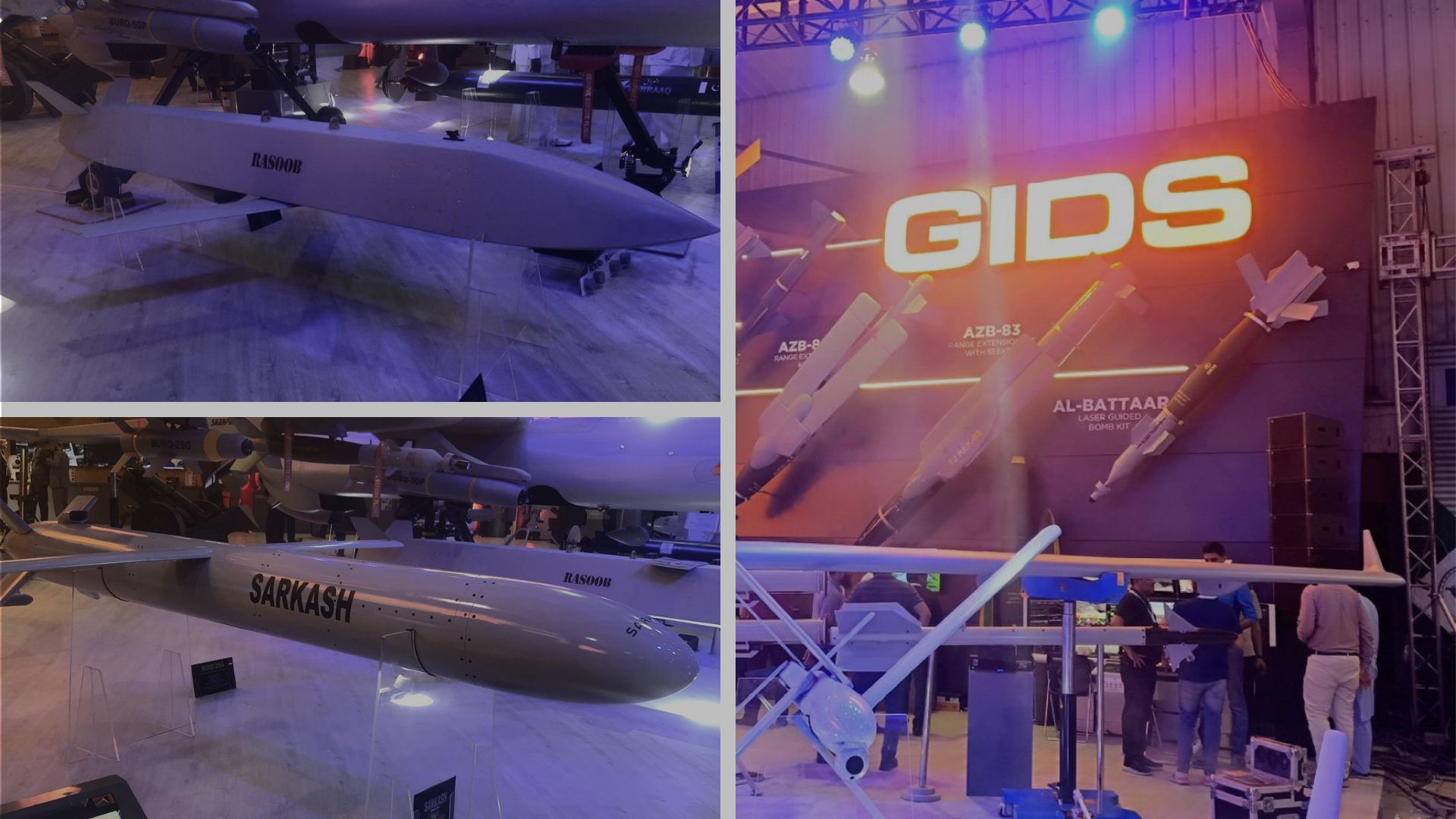
In terms of attack drones, Pakistan uses the Burraq UAV, which is produced by the National Engineering and Scientific Commission (NESCOM). The Burraq appears to be a licensed version of the China Aerospace Science and Technology Corporation (CASC) CH-3.[8] Official specifications could not be secured, but the CH-3’s mock-ups show it armed with two AR-1 semi-active laser-homing (SALH) air-to-ground missiles (AGM), each weighing 45 kg.[9] If the Burraq/CH-3 uses the GIDS’ Zumr-1 electro-optical (EO) pod,[10] which weighs 30 kg, the payload of the Burraq/CH-3 would be around 120 kg. Confined to two anti-tank guided-missile (ATGM)-class munitions (or four potentially smaller AGM or guided-bombs), the Burraq is geared for targeted attacks against individuals and moving targets, potentially in a time-sensitive targeting (TST) mission. For a drone as lightweight as the Burraq, the close air support (CAS) value would be more limited than an attack helicopter or fixed-wing manned fighter, the latter two having the payload to carry more – and heavier – ordnance. However, in theory, MALE UAVs – especially the CASC CH-5[11] with its payload of 1,200 kg – can emerge to at least augment manned aircraft in CAS missions.
Finally, it currently appears that Pakistan is operating the Burraq, Falco and Shahpar UAVs through line-of-sight (LOS) data-link connectivity. ‘LOS’ refers to the range available the GCS to operate the drone before losing connectivity due to the Earth’s curvature. The original equipment manufacturers (OEM) of the Falco, Shahpar and the CH-3 (i.e. the Aviation Industry Corporation of China: AVIC) each state that the data-link ranges of their respective drones are 200-300 km. The Missile Technology Control Regime (MTCR) prohibits the export of munitions and drones capable of carrying individual payloads of 500 kg or more with ranges of 300 km or more. However, this may have less to do with complying with the MTCR and more with technical limitations of the (likely) very-high-frequency (VHF) or ultra-high-frequency (UHF) radio frequencies being used by the drone GCS. Exceeding 300 km would likely necessitate beyond-line-of-sight (BLOS) communication, in which case satellite communications (SATCOM) would be a factor.
While Pakistan’s public and private sector firms had undertaken drone production through the 1990s and early 2000s, these early designs were primarily very short-range/area-wide surveillance drones (e.g. the Integrated Dynamics Border Eagle) and target-drones. The actual ‘beginning’ of Pakistan’s drone program in the traditional sense (defined by the U.S.’ use of Predator UAVs) began with the Falco – and later – the Shahpar and Burraq. Compared to the Border Eagle (with its three-hour endurance), the Falco et. al could provide Pakistan with sustained ISR coverage for supporting combat operations. The Burraq introduced a new layer by enabling Pakistan to have live ordnance loiter over a target area for an extended time period, raising the effectiveness of TST against individuals (i.e. strategic COIN objectives).
Quwa Plus
Go Beyond the Headlines on Pakistan’s Defence and Security.
Quwa Plus gives you deeper reporting, briefings, and analysis on Pakistan’s defence programs, foreign policy, national security, and regional strategy. Follow the developments that matter to professionals, analysts, and serious readers tracking Pakistan’s security landscape.
Join ($29.99/Year) Already a subscriber?Sign in