Introduction
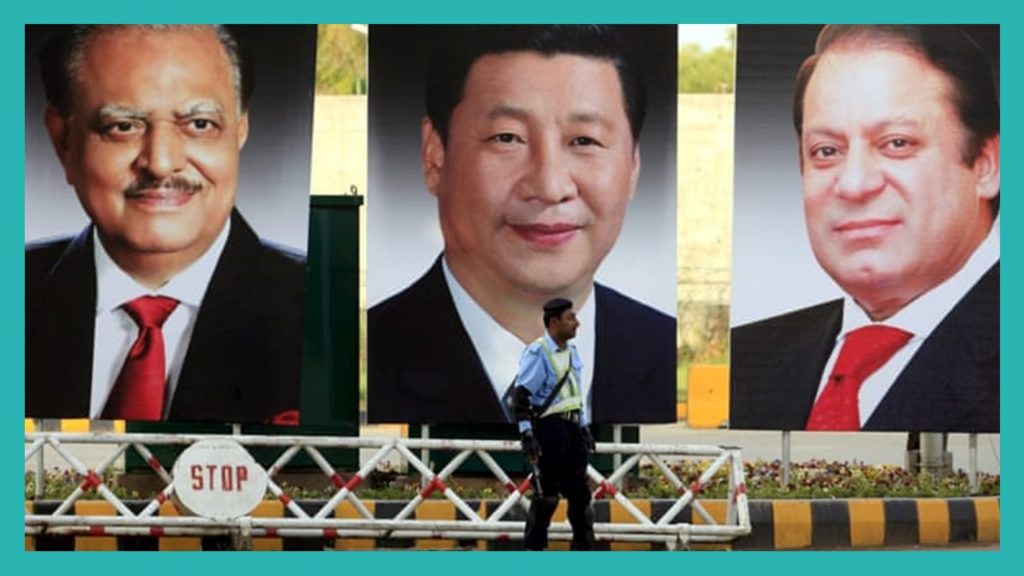
China is a marquee element in Pakistan’s foreign relations landscape since the 1960s, having resulted in a spate of big-ticket defence procurement and, since 2015, significant economic interaction via the China-Pakistan Economic Corridor (CPEC). However, with an apparent – but ultimately, unlikely – contraction of US-Pakistani political and defence ties, there is an overt sense on the part of some pundits that Pakistan could ‘pivot’ to China or that China would enter to fill the void. China certainly has an incentive – CPEC amounts to over $50 billion US in Chinese expenditure (through investments and loans) that needs to be protected. In 2013, Pakistan’s then Prime Minister Nawaz Sharif had described Chinese-Pakistani relations as being “higher than the Himalayas … and sweeter than honey.”[1]
There is no doubt that the bilateral relationship is important to both Pakistan and China, however, it would be wrong to extend that to the notion of an alliance, pact or a relationship akin to the one the US and Pakistan currently maintain. In reality, ‘allies’ and ‘partners’ are different, and at this stage Pakistan might realize that ‘partnerships’ through strong bilateral relations are better than ‘alliances’.
Understanding ‘Alliances’
The term ‘ally’ is used loosely and, occasionally, is used synonymously to describe countries with strong bilateral relations. However, alliances are not necessarily strong bilateral or multi-lateral ties between states, though they can emerge from such times. However, an alliance is fundamentally different in that at its core it is a sharing of resources: specifically, it is the transfer of funding, military services and other benefits (e.g. intelligence) from one country to another country.
The US is the leading example of a state that has fostered strong alliances, most notably the Treater of Mutual Cooperation and Security with the Japanese, North Atlantic Treaty Organization (NATO) with Europe and the Mutual Defence Treaty with South Korea. The outcome of these alliances sees the US raise bases and station important military assets in other countries, which – in the prospect of a conflict – could see those assets protect and support US allies from a shared threat. In alliances, countries put themselves at-risk of an attack and, in turn, the loss of human and material losses. This ‘trade’ can be reciprocal (i.e. providing gains for comparable powers), supplementary (e.g. countries bridging each other’s deficiencies) or one-sided (e.g. the US providing cover to a lesser power against a larger threat).
Alliances between states do not necessitate partnerships (and vice-versa). For example, by way of its NATO membership, Germany is allies with many countries, such as Greece, Romania and others. However, Germany does not maintain particularly strong bilateral ties with any of those countries. Rather, Berlin was quite strict with Athens during the European debt crisis, requiring the latter to implement strong fiscal austerity measures. Likewise, relations between Germany and Turkey have alternated between tenuous and productive, despite the two also being NATO allies. However, the US’ alliances with Canada, Australia, South Korea and Japan are also augmented by strong bilateral relations between the US and those states.
Pakistan and the US are ‘allies.’ This is obvious if one refers to the 1950s, 1960s and 1980s during which the US had provided Pakistan with military aid in a bid to strengthen its position to counteract the Soviet Union. However, the two re-engaged as active allies following 9/11. Yes, bilateral relations are relatively weak, but since 2002, Pakistan has provided military and intelligence services to the US. In-exchange for its services and support, such as providing air and land-access for US/NATO supplies moving into Afghanistan, the US has provided Pakistan with military aid. However, as a reaction to its support for the US entry and presence in Afghanistan, Pakistan sustained heavy repercussions in the way of domestic terrorism. An op-ed in The Express Tribune in September 2017 aptly summarized the overarching reality: “Before 9/11, there was only a single recorded suicide attack in Pakistan’s history. But post 9/11, hundreds of such attacks took place. The US might have had one 9/11 but Pakistan had dozens.”[2]
Despite US aid, there are few Pakistani political leaders – especially today – who would suggest that allying with the US was ‘good’ for Pakistan. In response to President Trump’s tweets and the subsequent freeze in military aid assistance to Pakistan, the Pakistan Foreign Office’s messaging asserted that Pakistan had incurred net-losses from a cost of $120 billion US since 2002-2003.[3] Likewise, the US is certain to consider Pakistan a relatively untrustworthy partner, especially in the fall-out of Operation Neptune Spear in May 2011 (i.e. the Abbottabad or Osama bin Laden Raid). The US has used the matter as a reference point for harping on Pakistan to “do more” against apparent Taliban or so-called ‘Haqqani-network’ sanctuaries in Pakistan.[4] However, despite the contentiousness and claims (by both sides) of being the cost-bearer, this relationship had been an alliance built upon the transfer of military services and support.
The material outcomes of Pakistan’s policymaking vis-à-vis the US are jarring when compared to Pakistan’s policy statements regarding China. In a recent interview, former Pakistani Foreign Minister Hina Rabbani Khar told CNN that China “is [Pakistan’s] regional strategic partner, perhaps the only real strategic partner Pakistan has had … for the last four decades. With them, we have had a complete alignment of interests.”[5] Certainly, there is a strong sense that Pakistan’s bilateral relations with China are of vital importance to Pakistani interests, but despite the continuity – and growth – of these ties, an alliance involving the non-commercial transfer of military services and carriage of active shared enmity is unlikely to emerge.
China’s Sole Alliance
In 1961, China and North Korea signed the ‘Treaty of Friendship, Co-operation and Mutual Assistance.’ This is China’s only formalized alliance wherein it is obliged to “adopt all measures to prevent aggression” for another country. In other words, despite its growth as an economic, political and military power, and despite the pressure it is facing from US-Japanese and US-South Korean alliances, China has not formed a new alliance since 1961.[6] Granted, China has limited options considering the extent of US relationships in the South China Seas or Southeast Asia. Furthermore, China has the option of pairing its global economic activities with military footprints, as evident with its humanitarian assistance and disaster-relief (HADR) base in Djibouti in the Horn of Africa.[7] However, it is premature to view that base as an indicator of China seeking to build alliances (resulting in overseas bases for non-HADR and non-peacekeeping systems and activities). In effect, China’s immediate security doctrine rests upon strengthening the People’s Liberation Army (PLA), which is evident in its procurement and development efforts.
That said, it would be disingenuous to argue that China is isolated. While China has not formed alliances like the US, it has leveraged its economic growth and tandem rise in political stature to strengthen bilateral relations with other countries. Intuitively, some view China’s struggles in the South China Seas as one of China against ‘the West’, but in reality, it is an issue between China, its neighbours and the US. Europe – especially Germany and France – are openly collaborating with China in industrial development, such as the joint-development of turboprop engines for helicopters and joint-manufacturing of diesel engines.[8] [9] These are not token programs considering the potential (albeit, largely downplayed) dual-use value.
Don't Stop Here. Unlock the Rest of this Analysis Immediately
To read the rest of this deep dive -- including the honest assessments and comparative analyses that Quwa Plus members rely on -- you need access.