
Introduction
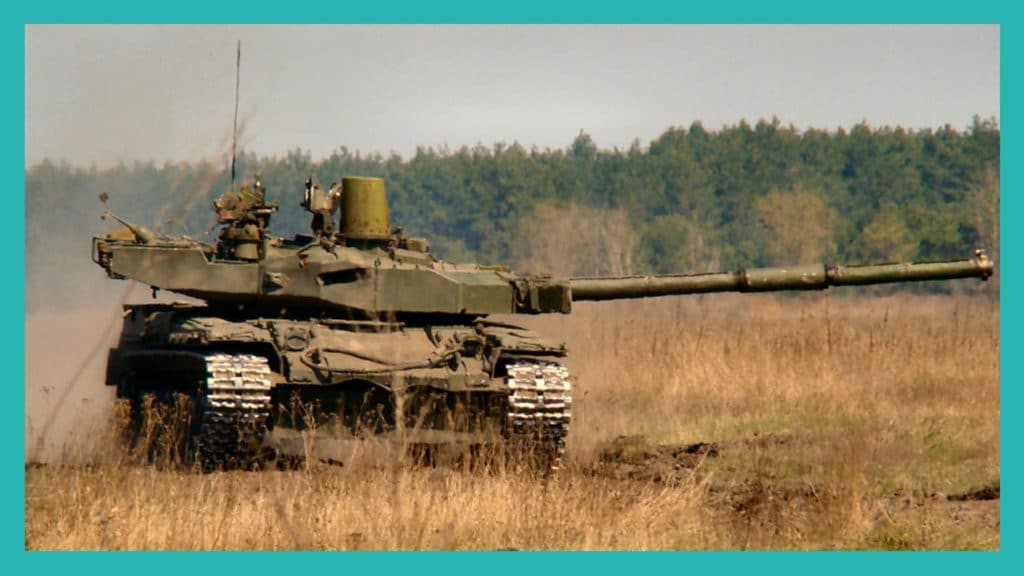
On January 06 photos emerged purporting that a NORINCO VT4 main battle tank (MBT) was in Pakistan, ostensibly for trials for an apparent Pakistan Army bid for an off-the-shelf MBT to augment its growing – albeit slowly – force of Heavy Industries Taxila (HIT) al-Khalid MBTs. Ukraine’s Oplot MBT is expected to compete for this bid, with the Malyshev Factory confirming in August 2017 that an Oplot unit was being prepared for delivery to Pakistan for trials.[1] Details regarding the bid, especially the required number of MBTs, have not been disclosed, but in an interview with the Ukrainian newspaper Delovaya Stolitsa, the Pakistani Ambassador to Ukraine – Major General (retired) Athar Abbas – said Pakistan could procure at least 100 MBTs (in the context of the Oplot trials).[2] However, these details are tentative.
Technically, the VT4 and Oplot possess a series of improvements over HIT’s al-Khalid. In certain terms, this includes electronics through the incorporation of new-generation optronic sights, laser-designators, new battlefield management systems (BMS) and ability to fire anti-tank guided missiles (ATGM). The VT4 and Oplot are also equipped with active protection suites (APS), potentially with hard-kill systems that could provide kinetic defensibility against incoming projectiles. There are likely to be improvements in armour as well, but it is difficult to quantify this as details in this regard are not publicly disclosed. However, with HIT appealing to Pakistan’s Senate Committee on Defence Production about budgetary constraints cutting its al-Khalid annual production output from 50 to 18, Pakistan’s pursuit of an off-the-shelf tank is curious.
There is certainly a sense that Pakistan has many MBTs to replace, which could necessitate both domestic production and imports, but HIT is not even at full-capacity output. Thus, a purchase from China or Ukraine at this stage could be an order being taken away from HIT. However, HIT announced that it was proceeding with the al-Khalid II MBT. Understanding that a substantial upgrade – essentially a new development track – could require years in the way of design, development, testing and qualifications, could this off-the-shelf MBT purchase be a bridge to the al-Khalid II? First, while it would be an unfortunate import, it would see funding diverted to a more advanced platform, whereas procuring additional al-Khalid I – while improving upon the T-59 and T-69 – would be at risk of obsolescence in three to five years. The VT4 and Oplot would not have this issue. Second, leveraging an off-the-shelf purchase to pull technology support for developing the al-Khalid II, accelerating the lead-time ahead of the MBT’s induction. Third, the off-the-shelf purchase could be relatively small as the qualitative gains of a new-generation MBT along with efforts to procure new close air support (CAS) assets (e.g. attack helicopters), guided multiple-launch rocket systems (MLRS) and anti-tank guided missiles (ATGM) could mitigate the need for quantity.
Pursuit of a Next Generation Main Battle Tank
The technological differences – e.g. electronics subsystems such as communications, navigation, optronic sights, etc – notwithstanding, the VT4 and Oplot-M are in the same general weight and power-class as the al-Khalid. The VT4 and Oplot-M are marginally heavier at 52 and 51 tons, respectively, compared to the al-Khalid I’s 46-48 tons. Like the al-Khalid, they are powered by 1,200 hp diesel engines.
While there are limits in terms of the MBT options available to Pakistan, seeing Pakistan narrow the Haider to this weight-class may have also been an issue of operational requirements. Some might be familiar with the widespread recount of why the Pakistan Army eschewed the option of procuring the M1 Abrams from the U.S. in the late 1980s. Weighing 60+ tons, the common narrative was that the M1 (alongside its new variants the M1A1 and M1A2) was ‘too heavy’ for Pakistan’s desert sands, with another account claiming that the M1’s engine did not sustain Pakistan’s hot-temperature environments.
These might have been contributing factors, but the decisive cause was likely the fact that the M1 Abrams was markedly costlier than the T-59 or T-72-inspired T-85IIAP. Besides procurement cost, there is also the issue of maintenance costs (compared to the Chinese T-59) and the general infrastructure in the region not sustaining the M1 Abrams’ weight (e.g. the dearth of suitable static and mobile bridges). Heading the M1 or heavyweight MBT route would have likely necessitated more than just procuring the tank and its maintenance infrastructure. It would have required altering the combat environment – requiring changes to other mechanized assets and infrastructure, such as bridges. Although fiscal limitations are a common story with Pakistan, even India is treading heavyweight (i.e. 60+ ton) MBTs with care – the Arjun Mk. II, while having met the Indian Army’s requirements, is still being bought in relatively limited numbers (118 currently). The Indian Army’s mainstay tanks are the T-72 and T-90-series, with the latter burgeoned into a sizable force with up to 1,000 T-90S in service and 464 T-90MS on order.[3],[4]
However, with airpower now a certain threat to the use of mass armour formations (e.g. the use of cluster guided sub-munitions), the notion that a fewer – i.e. better-protected and possibly better-armed – heavier MBTs operating in a more dispersed fashion could gain prominence in South Asia. While individually costlier to operate, armies shifting to a fewer number of MBTs could find a leaner force more economical and effective than larger formations. The U.S. – with its airpower and precision-guided munitions – has shown how smaller formations of M1A1 Abrams can defeat larger numbers of less-equipped tanks.[5] It is plausible that future offensive operations could shift to relying on fewer – i.e. heavier, better-protected and better-armed – tanks supported by attack helicopters, guided anti-tank missiles and air-launched guided bomblets with top-attack capability (e.g. CBU-97 Sensor Fuzed Weapon and analogous systems). The rationale for such a shift stems from both defensive and offensive causes: Defensively, the utility of moving a larger number of MBTs is diminishing due to enemy airpower and guided weapons. Offensively, one can rely on fewer MBTs by also leveraging airpower and guided weapons. However, it must be noted that a technically more capable and better-protected MBT need not mean a 65+ ton MBT. Pakistan’s new MBTs through the 2020s and onwards could be in the 50-57-ton range, but possess the subsystems and capabilities of heavier Western/NATO-grade MBTs.
Pakistan may not downsize its tank force, but the procurement roadmap of new-built MBTs – be it off-the-shelf or the al-Khalid-series – could be smaller in scale than anticipated. Currently, there is little to suggest that Pakistan will suddenly ramp-up the production of the al-Khalid, and the only available figures of off-the-shelf purchases are those by Maj. General (retired) Athar Abbas – i.e. 100+ tanks. With fewer MBTs required in the long-term, emphasis could be shifted to better-equipping each MBT in the way of high-quality engines, armour for hulls, explosive reactive armour (ERA), electro-optical (EO) equipment – such as thermal-vision and night-vision – and sophisticated active protective suites (APS) with soft and hard-kill measures of defence against incoming munitions. The higher cost of procurement can be offset by the lower overall operating cost of a smaller force (e.g. less fuel consumption, downsized logistics chain for the supply of spare parts and fewer engineering support vehicles to the front, such as mobile bridges).
This potential off-the-shelf MBT procurement could be the bridge for the Pakistan Army to acquire and to operationalize these subsystems in the near-term. In the context of the al-Khalid II, these subsystems may be sought for localized production in Pakistan. With a reported unit acquisition cost of $5.3 million U.S. (based on the $150 million deal with Thailand for 28 vehicles)[6], the VT4 is a descendent of the MBT-2000 platform, from which the al-Khalid is based on. In terms of specifications, the VT4’s 125-mm main gun can fire laser-guided anti-tank guided missiles (ATGM) up to a range of 5,000 m along with tank shells, such as APFSDS (armour-piercing fin-stabilized discarding-sabot). It uses an automatic loading system, reducing the crew-size from four to three. Both commander and gunner are provided with stabilized sight systems, each with thermal-vision and laser-rangefinder.[7] NORINCO expects the commander to identify targets and then pass the information to the gunner, who will utilize the main gun to fire either ATGM or tank shells. The VT4 uses a 1,200 hp turbocharged diesel engine. The VT4’s integrated electronics suite also comprises of an satellite-aided inertial navigation system (INS)[8], APS and battle management system (BMS).[9]
Credit must be given to NORINCO for not simply bolting various new subsystems to the VT4 MBT. Rather, NORINCO has designed an integrated package, one it explicitly states was meant to function in a network-enabled warfare environment. In a 2014 interview with China Daily, NORINCO’s deputy general manager Liu Song stated, “…the inter-unit network connects commanders of tanks and armoured vehicles under a combat group, enabling them to share battlefield data in real time.”[10] Pakistan’s al-Khalid MBT already has a BMS enabling for situational awareness in terms of friendly-unit locations (using GPS), but NORINCO seems to imply more – possibly real-time data-link with off-board sensors, such as EO equipment (e.g. video-feeds) and synthetic-aperture radar (SAR) with ground-moving target-indication (GMTI). In this system, each VT4 could have a picture of moving enemy targets, enabling the tank force to maneuver and undertake relatively long-range (i.e. 4-5 km) firing using ATGMs.
Don't Stop Here. Unlock the Rest of this Analysis Immediately
To read the rest of this deep dive -- including the honest assessments and comparative analyses that Quwa Plus members rely on -- you need access.