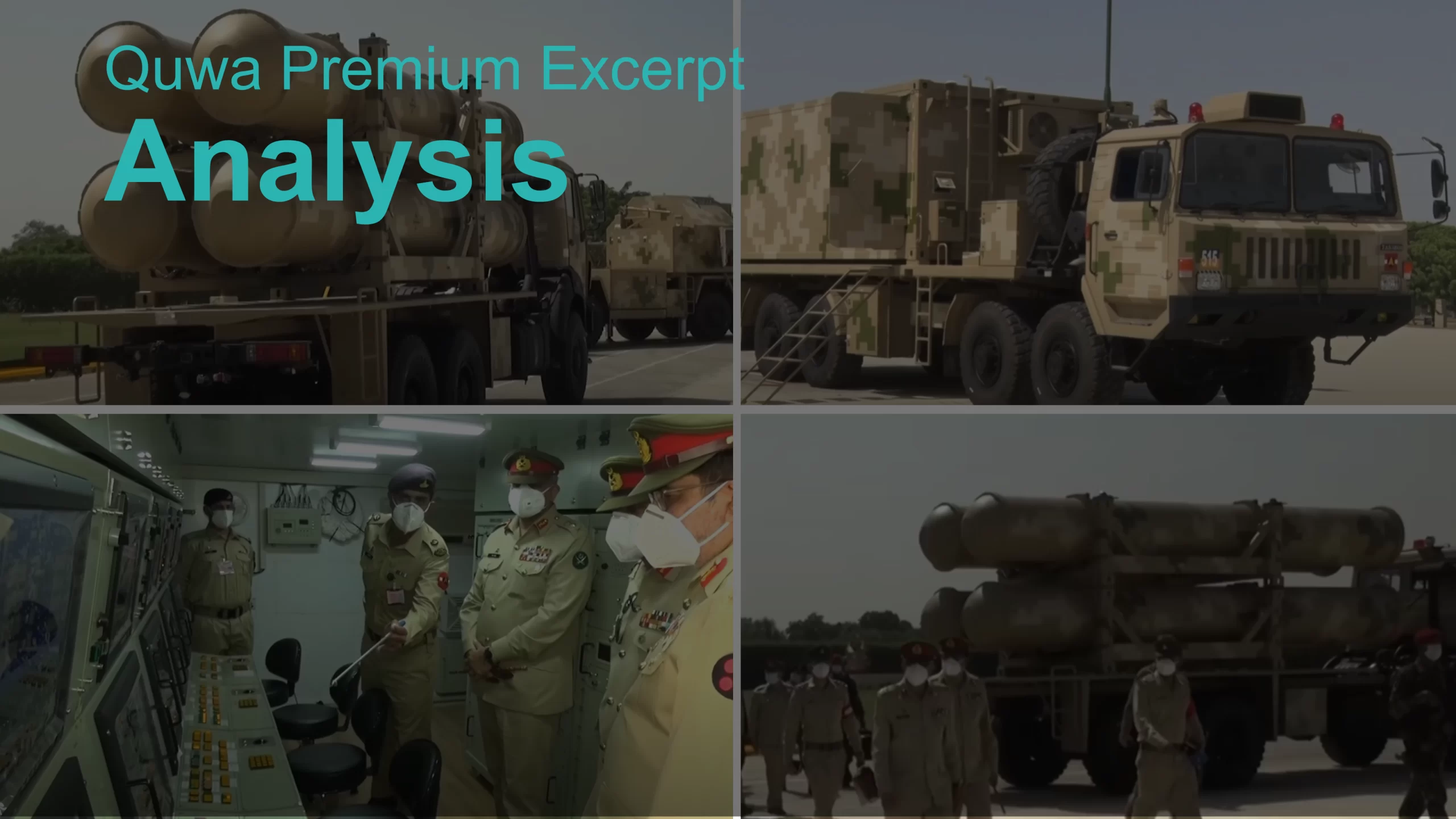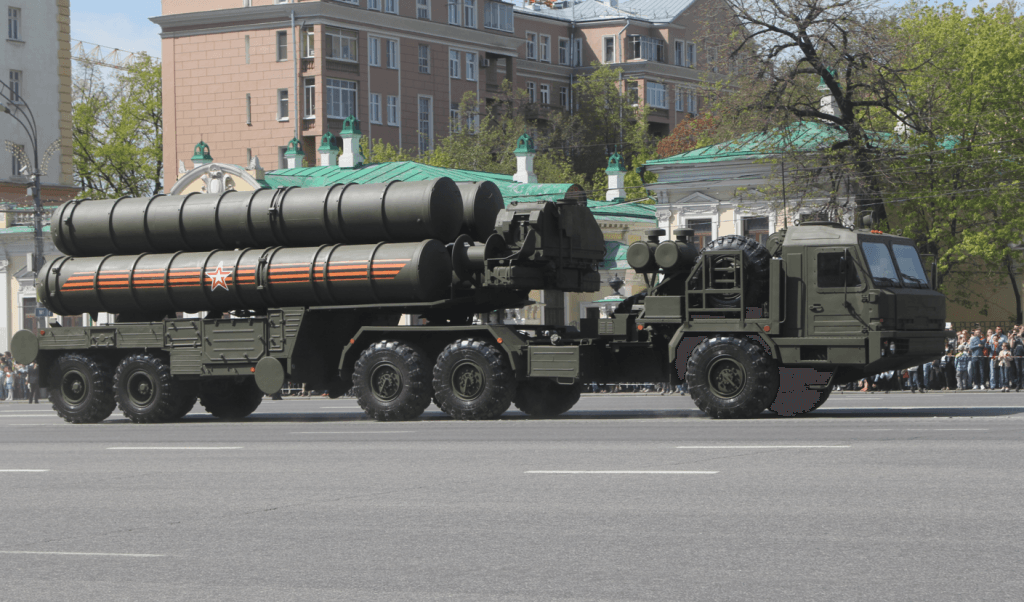
Following Turkish President Recep Tayyip Erdogan’s official visit to Moscow, Turkish and Russian officials have their respective media outlets that talks regarding the sale of Almaz-Antey S-400 long-range surface-to-air missile (SAM) systems to Turkey are progressing.
Sergey Chemezov, the CEO of Rostec (the overarching firm involving Russia’s state-owned industries), told the Russian broadcaster Rossiya-24 that Ankara requested a loan to back an S-400 purchase (via Russian News Agency TASS). Chemezov added that the Russian Ministry of Finance is actively engaged in the talks, indicating that Moscow is eager to finalize a sale to Turkey.
Turkish Minister of Defence Fikri Işık told A Haber that “there is progress in the discussions.” Responding to questions regarding the S-400’s place in NATO’s air defence environment, Işık reportedly stated (via the Daily Sabah) that the S-400 “will not be integrated into the NATO system.”
Işık also confirmed that Turkey’s homegrown long-range SAM is under development, and is expected to enter production “within five-to-seven years.” Earlier reports indicated that Turkey is also seeking Russia’s technical support for the domestic SAM program.
Notes & Comments:
Ankara’s request for a loan indicates that this S-400 sale could be large, potentially in the range of several billion dollars (akin to the U.S. $4.5 billion sale to India). With Rostec signing an agreement to develop a fifth-generation fighter for the United Arab Emirates (UAE), Moscow could be on the verge of securing large long-term contracts from two long-time buyers of Western armaments. This is significant in that the success in these areas would provide Russia access to new high-value markets (to join China and India).
Interestingly, the Turkish and UAE moves appear to be driven by a desire to source locally, albeit with an outside partner (i.e. Russia) providing technical assistance and bridging gaps in capacity.