For the Pakistan Air Force (PAF), ‘Swift Retort’ – i.e., its response to India’s air strikes on Balakot – is serving as a template for its modernization plans for this decade. In the PAF’s view, the ingredients that made the 2019 air operation successful were: situational awareness, long-range air-to-air missile (LRAAM) usage, electronic countermeasures (ECM), and stand-off weapons (SOW). The key to driving all of those elements was the availability of capable combat aircraft. In an isolated incident, the PAF was able to field enough aircraft with experienced aircrew and supporting operators. In this context, the PAF deemed Swift Retort a success, but can it replicate that impact in a full-scale conflict?
One potential reality of a full-scale conflict is that the PAF may need to undertake Swift Retort-level strikes in multiple locations, and potentially, undertake those strikes simultaneously. If the PAF is able to achieve that type of capability, it may be able to establish a sense of ‘conventional deterrence.’ Basically, if India perceives that Pakistan can inflict significant damage (especially within the opening hours or days of a full-scale conflict), it may not pursue Balakot-type adventures. However, achieving ‘conventional deterrence’ is an expensive proposition, and for a fiscally-constrained country like Pakistan, achieving it in every area is unrealistic. Thus, Pakistan – and especially the PAF – will have to focus on specific areas.
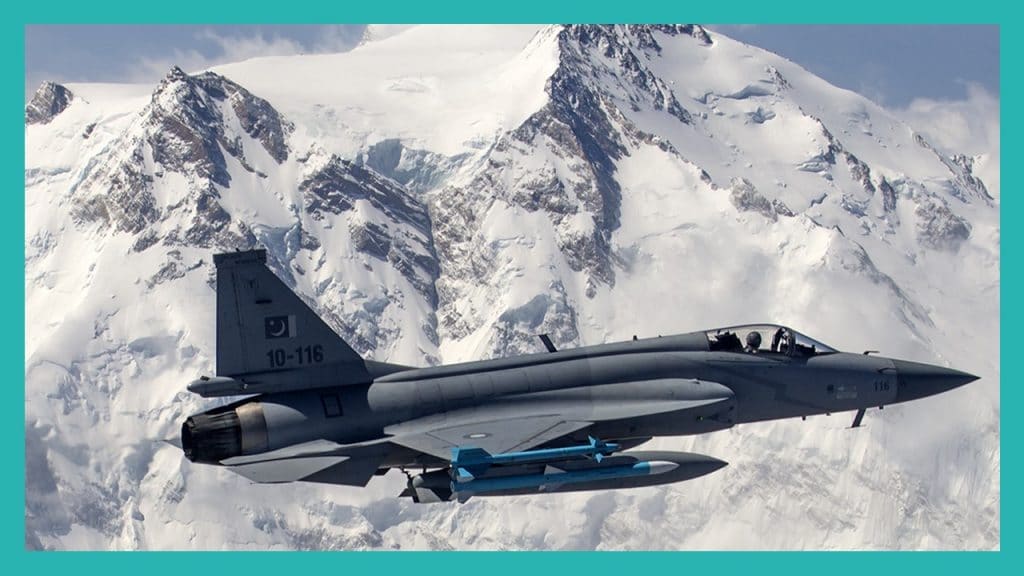
Returning to Swift Retort, the PAF sensed that it accrued the greatest payoff from the four key areas this article listed above, i.e., LRAAMs, ECM, SOW, and ISR (intelligence, surveillance, and reconnaissance). But in an earlier assessment, Quwa ascertained that the JF-17 would be the centerpiece of driving the bulk of these capabilities. However, based on recent reports and observations, the JF-17 might only play one part of the PAF’s fighter procurement goals for the 2020s and early 2030s.
Off-the-Shelf Fighters Take Center Stage
Quwa has learned from multiple sources that the PAF is procuring the Chengdu J-10CE from the Aviation Industry Corporation of China (AVIC). Deliveries might start as early as late 2021, though fleet integration and induction would take until 2023. The PAF signalled its need for an off-the-shelf fighter since 2016 with a need for around 36 aircraft.[1] Previous PAF Chief of Air Staffs (CAS) reiterated this requirement in various ways, but the clearest call came from Air Chief Marshal (ACM) Sohail Aman, who said, “Pakistan definitely has to induct new aircraft. We have both Chinese and Russian options.”[2]
Based on the information available to Quwa, the PAF wants to induct the J-10CE in this decade. However, the PAF will not stop at less than 40 aircraft. In general, when the PAF acquires a new fighter platform, it will commit to a long-term procurement roadmap of 90-150 aircraft. Of course, the final number depends on the availability of funding, the cost of the fighter, and the PAF’s requirements for that system. However, in the case of the J-10CE, the PAF is likely planning for at least 90 aircraft by 2030.
The PAF will use the J-10CE the same way it had used the F-16 in Swift Retort – i.e., long-range air-to-air cover. There is no doubt that the PAF will expect a new LRAAM to accompany its J-10CEs, though the exact missile type is currently unknown. However, one should expect a minimum range of 90-100 km.
Like the F-16, the J-10CE’s goal will be to provide top cover for the PAF’s strike assets. Basically, the J-10CE would form the air-to-air element in an offensive counter-air (OCA) scenario. With LRAAMs and integrated ECM (for radar jamming), the J-10CE will work to mitigate enemy air-to-air threats. The PAF will likely get a helmet-mounted display and sight (HMD/S) and high-off-boresight air-to-air missile (HOBS AAM) for an added assurance should the air-to-air conflict reach within visual range (WVR).
In light of the resource expense and long-term commitment of a new fighter, the PAF has determined that the J-10CE is sufficient for its requirements moving forward. It would be wrong to view the J-10CE as some interim; rather, this procurement would be the start of the PAF’s shift to next-generation fighters.
The JF-17 Could Be a Strike Asset
If the J-10CE is coming, is the PAF wrapping up the JF-17? Thus far, the PAF’s procurement JF-17 roadmap consists of around 50 Block-I, 62 Block-II, 26 JF-17B, and 30 Block-III – i.e., 168 aircraft. The PAF may order the remaining 20 Block-IIIs (it had originally planned for 50 aircraft). In any case, the PAF would have about 150-200 JF-17s, as it had originally intended to acquire from the start of the program. If the PAF is buying the J-10CE, it is unlikely to expand its JF-17 order beyond the original 150-200-unit plan.
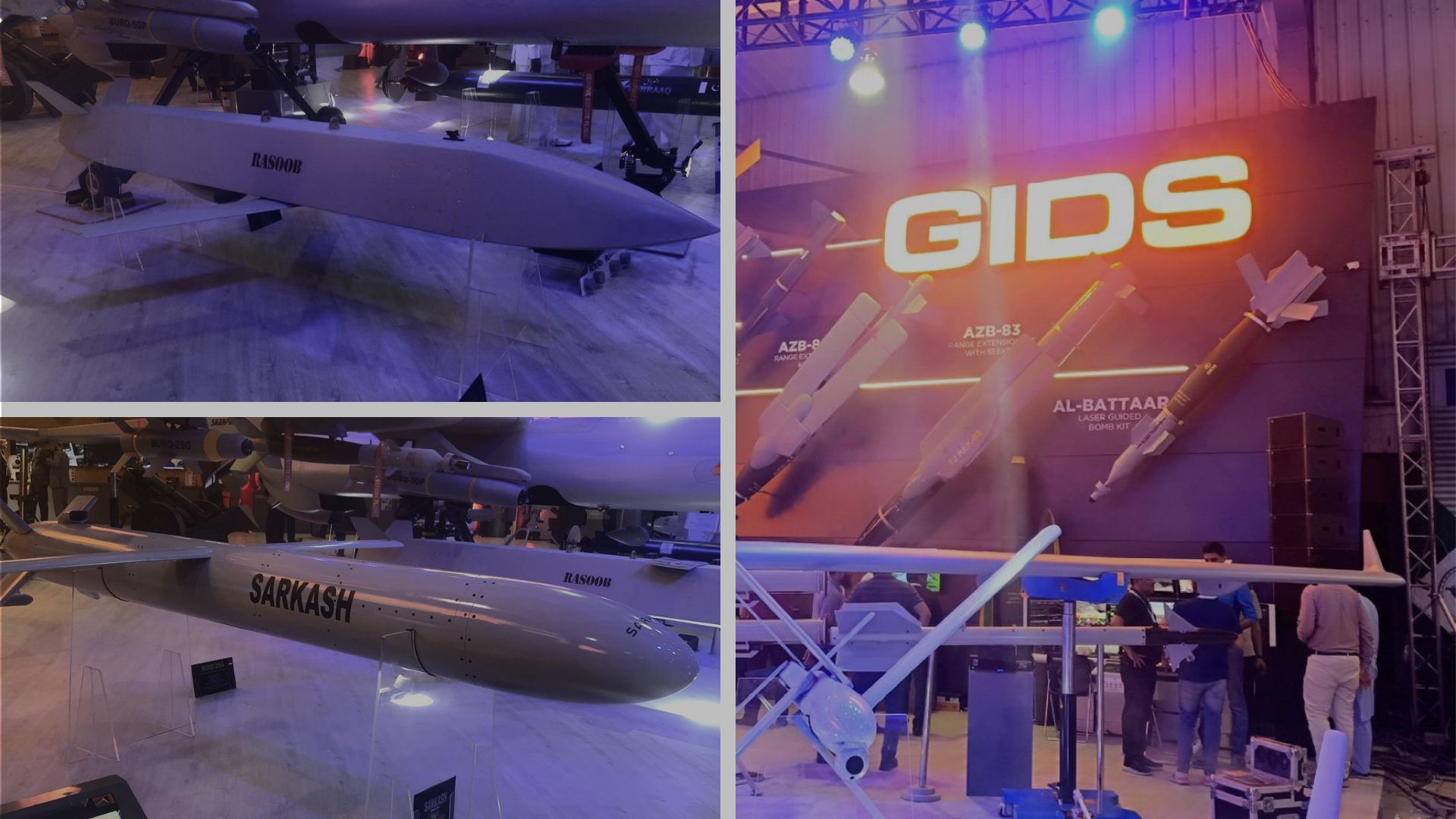
However, the cap on JF-17 procurement does not mean that the JF-17 is inconsequential. Rather, it seems that the PAF is investing in improving the JF-17’s attack capabilities, especially in terms of SOW. Currently, the PAF can deploy the C-802 anti-ship cruising missile (ASCM), CM-400AKG air-launched rocket, and the Indigenous Range Extension Kit (IREK), which can turn Mk-83 general purpose bombs (GPB) into precision-guided bombs (PGB). The IREK offers a range of over 50 km.
Don't Stop Here. Unlock the Rest of this Analysis Immediately
To read the rest of this deep dive -- including the honest assessments and comparative analyses that Quwa Plus members rely on -- you need access.