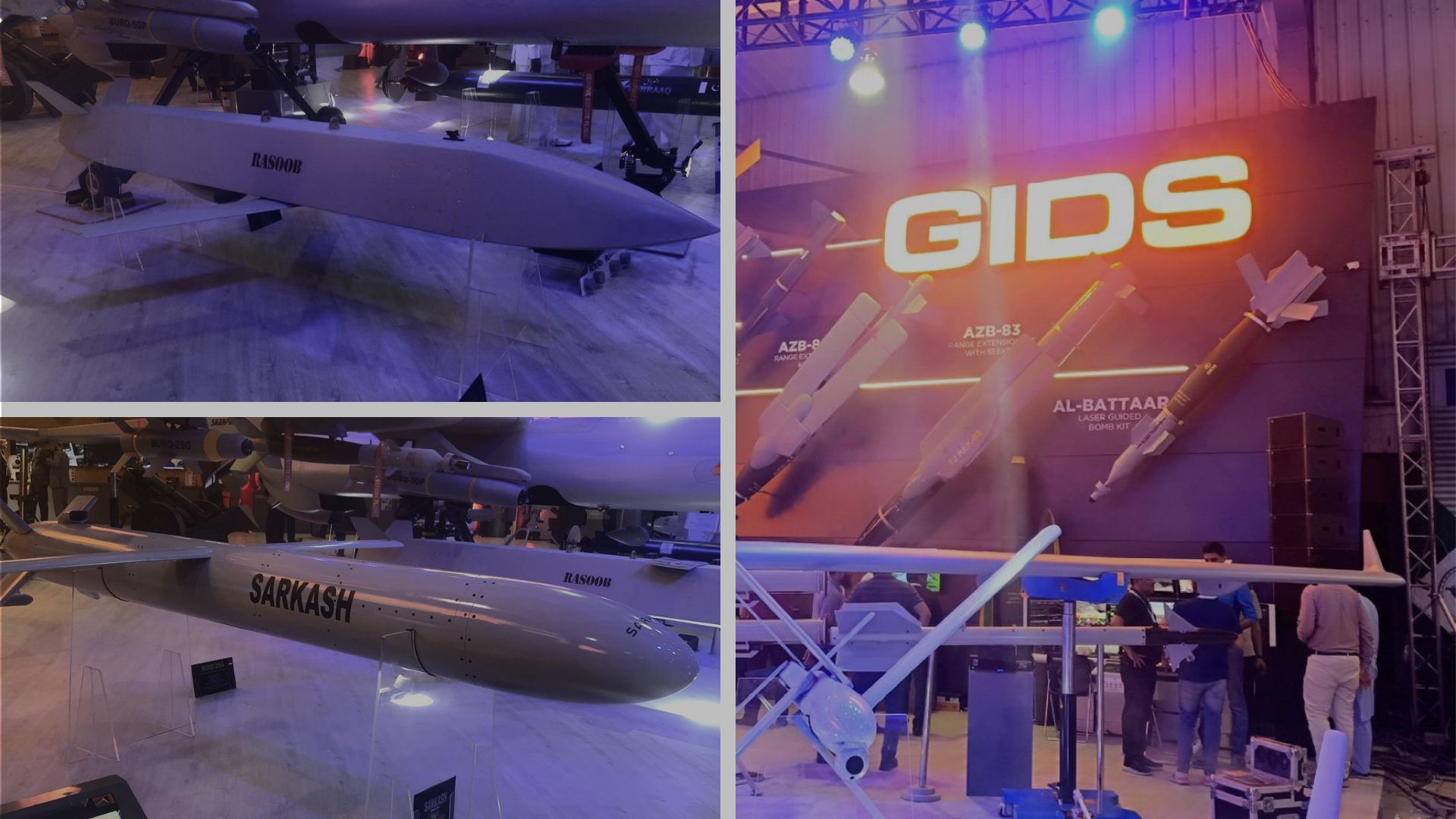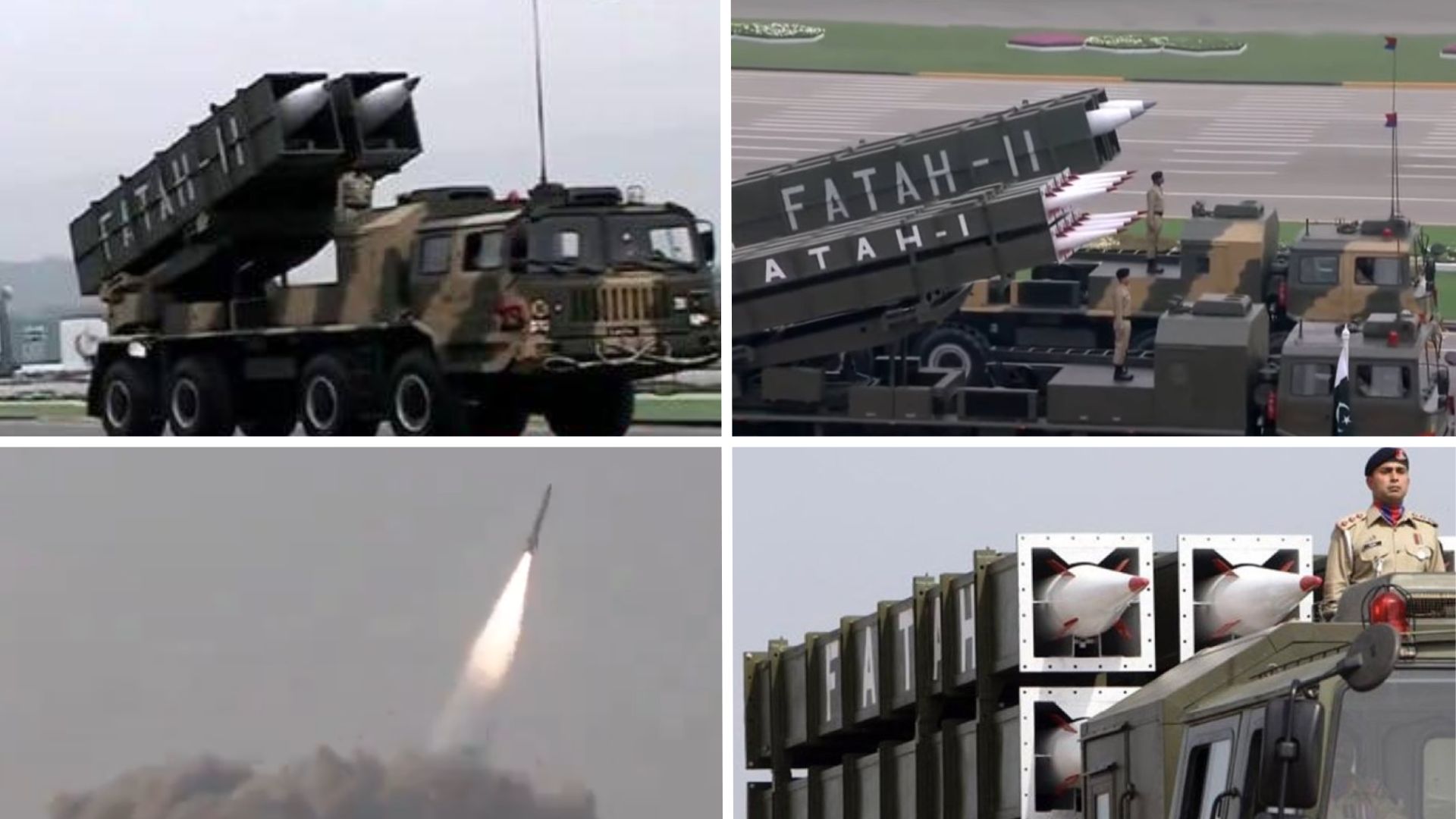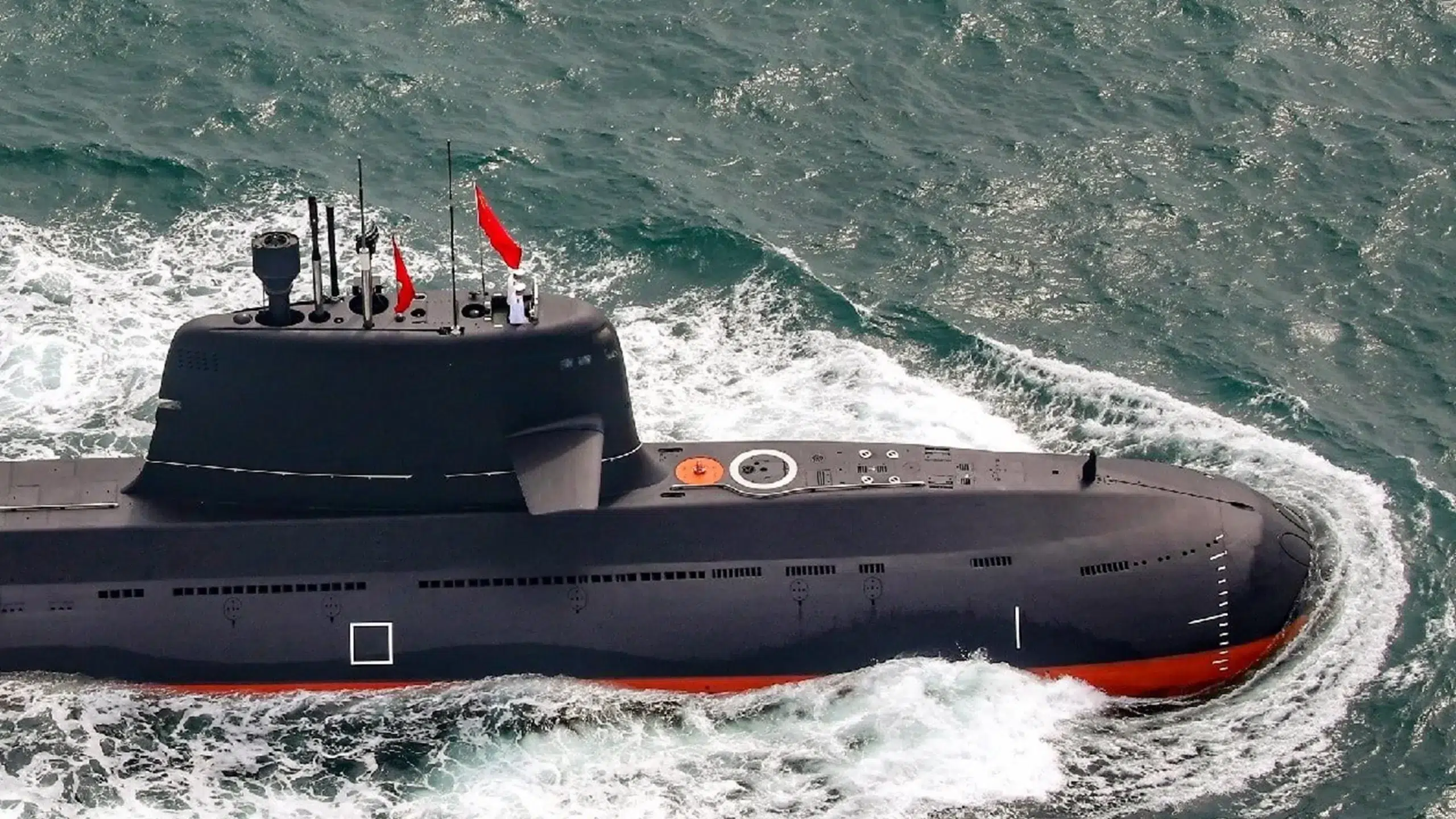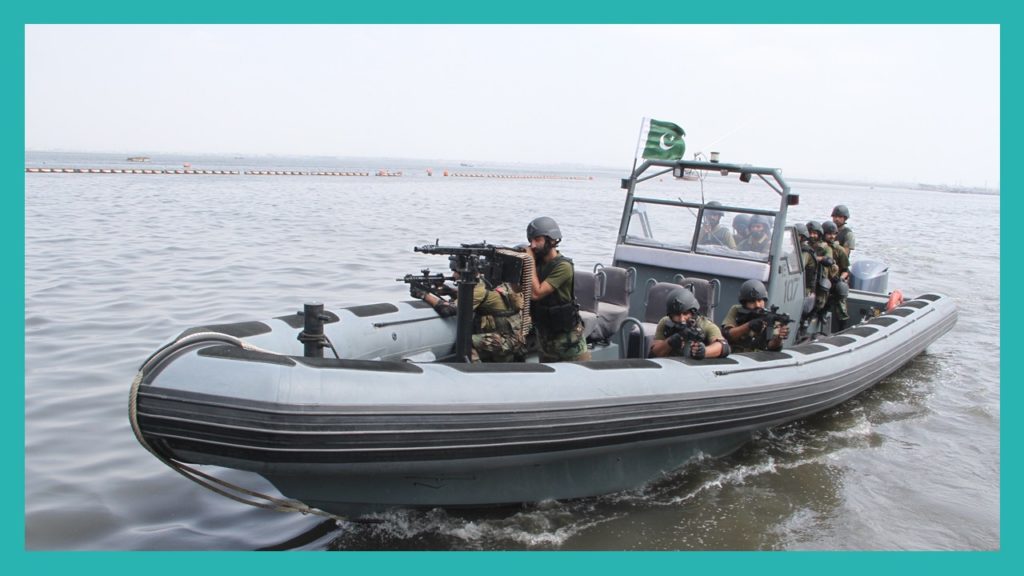
From 24 February to 06 March, the Pakistan Navy (PN) and the Pakistan Air Force (PAF) conducted a joint-naval exercise – i.e. RIBAT-2018 – to validate “war fighting concepts under evolving multi-faceted threats” and continue fine-tuning interoperability between the PN and PAF. The inter-services cooperation aspect is discussed in detail in Part One of this Quwa Premium series, “Improving PAF-PN Interoperability”.[1]
This interoperability is essential to Pakistan’s maritime anti-access and area-denial (A2/AD) strategy, which will rely upon networking disparate assets to air and surface-based radars for long-range situational awareness and enabling the firing of stand-off range weapons from the sea, air and land. This is outlined in detail in an earlier Quwa Premium article, “The Impact of Pakistan’s Harba dual-AShM and LACM”.[2]
The second major aspect of RIBAT-2018, according to Inter Services Public Relations (ISPR), was to validate the PN’s capabilities in addressing “sub conventional warfare”.[3] Like its long-term A2/AD plans, the PN’s efforts to build capacity to effect peacetime maritime security is also under development, particularly in terms of the procurement of new assets such as offshore patrol vessels (OPV), among others.
Interestingly, although the PN’s duties in this area are less pronounced than its A2/AD efforts – with the relevant assets being less complex and less costly than the A2/AD core (which will include new submarines and long-range cruising missiles) – maritime security is important, especially as Pakistan aims to increase international confidence in its sea-lanes and ports as part of the China Pakistan Economic Corridor (CPEC).
In fact, in the absence of a conventional conflict, effecting peacetime maritime security will likely spur the majority of the PN’s naval action in the long-term, be it through securing its exclusive economic zone (EEZ) and sea-lines-of-communication (SLOC) from asymmetrical threats or committing to its duties under the Combined Task Force (CTF) coalition. Combined, these efforts are meant to support Pakistan’s economic and foreign relations interests, with the latter (i.e. CTF) in relation to the US and Western Europe.
Maritime Security Responsibilities
In the maritime space, asymmetrical threats can emanate from piracy, trafficking and seaborne terrorist activity. It is important not to reduce the expanse of the sea and the advantage that can confer (by virtue of the difficulty countries can have monitoring activities) to such actors. Furthermore, unlike the response of a conventional warfare scenario, where detecting a threat can trigger the firing of anti-ship missiles, an anti-piracy or trafficking operation necessitates hardware and personnel to reach the target, which could involve freeing trafficking victims, hostages and/or commercial property. Tangibly, Pakistan is vested in preventing these threats from affecting its trade and coastal economic assets, such as the new shipyard being built in Gwadar. However, with Pakistan in the position of having to struggle for confidence in the international arena, the risk of an event that could further scathe Pakistan’s image is too severe to ignore.
Participation in Combined Task Force (CTF) 150 and CTF-151 have provided the PN opportunities for both its own capacity building as well as avenues to forge and maintain bilateral relations with key powers, not least the United States. CTF-150’s function “is to promote maritime security in order to counter-terrorist acts and related illegal activities, which terrorists use to fund or conceal their movements”.[4] In operation since 2001, CTF-150 operates in the Gulf of Aden, Red Sea, Indian Ocean and Gulf of Oman.[5] CTF-151 has a specific focus on piracy at sea, drawing upon the United Nations Security Council Resolution 2316 as its legal mandate to conduct maritime security operations.[6] At various points, the PN had commanded both.
Under CTF-150/151, the PN provides support through contributing its ships – including its multi-mission frigates – for force presence and skilled personnel, the latter including special operations forces (SOF) for VBSS (i.e. visit, board, search and seizure). To continue building its human resources in this area, the PN began construction of a Maritime Counter Terrorism Centre (MCTC) in August 2017. According to the PN (via the Associated Press of Pakistan), the MCTC will train “[Pakistani] special operation forces and special wings and other law enforcement agencies (LEAs).”[7] Through numerous acquisitions – by itself and for the Maritime Security Agency (MSA) – the human resources will be paired with hardware.
Maritime Security Hardware
Don't Stop Here. Unlock the Rest of this Analysis Immediately
To read the rest of this deep dive -- including the honest assessments and comparative analyses that Quwa Plus members rely on -- you need access.