Pakistan Navy · Special interview
Admiral
Naveed Ashraf
Chief of the Naval Staff
Pakistan Navy
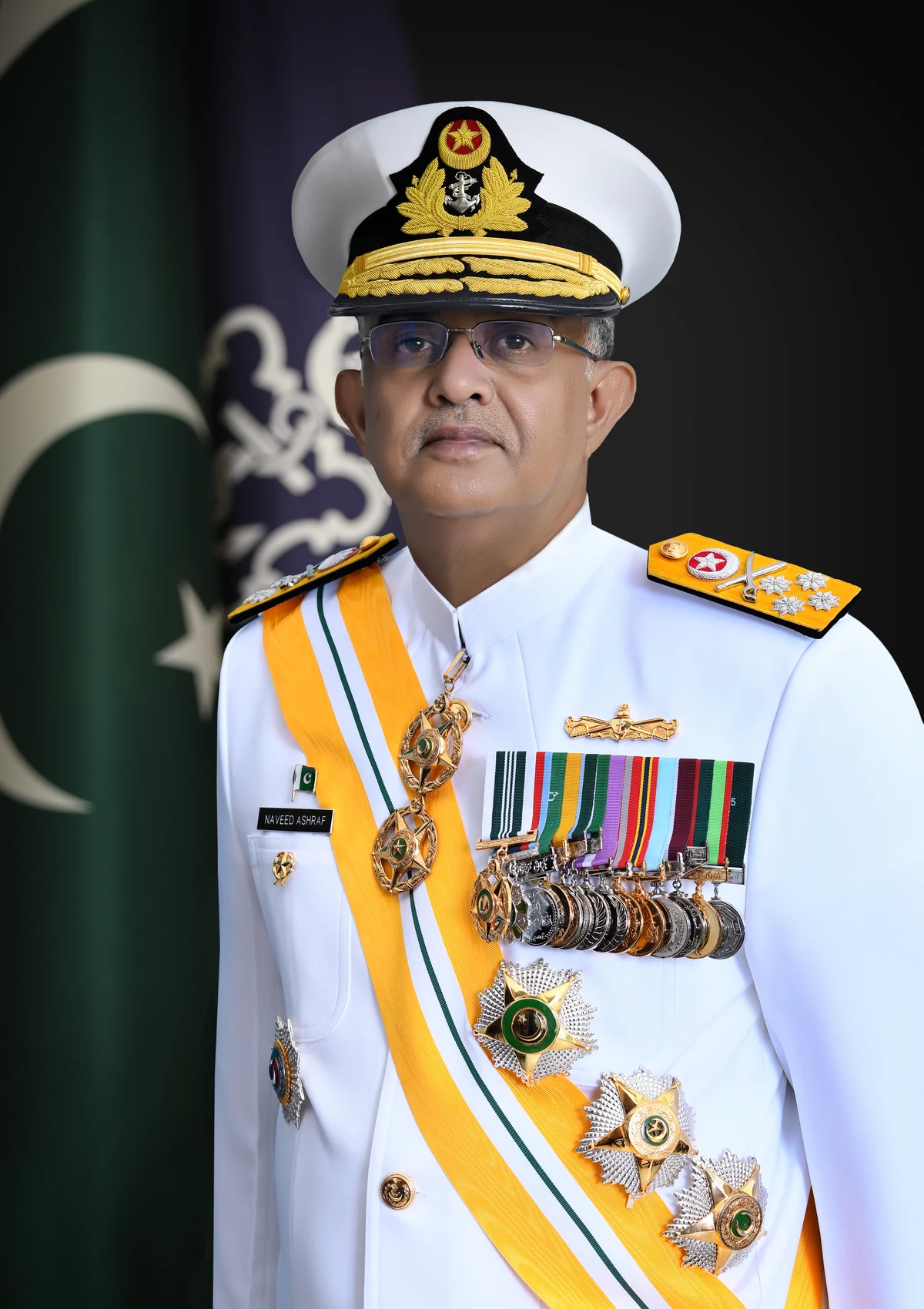
About Admiral Ashraf
Admiral Naveed Ashraf is Pakistan’s Chief of the Naval Staff, having assumed command on 7 October 2023. Commissioned into the Pakistan Navy’s Operations Branch in 1989, he has commanded warships, destroyer squadrons and the Pakistan Fleet, and served as Commandant of the Pakistan Naval Academy. His senior staff appointments include Deputy Chief of Naval Staff (Operations) and Chief of Staff at Naval Headquarters. He is a graduate of the Pakistan Navy War College, National Defence University, US Naval Staff College and the United Kingdom’s Royal College of Defence Studies. His decorations include Nishan-e-Imtiaz (Military) and Tamgha-e-Basalat.
 Advertising & partnerships
Earn attention. Stay part of the conversation.
Connect your capabilities with the defence leaders, service professionals and engaged readers who turn to Quwa.
Question
Since the start of 2026, the maritime security environment in the northern Arabian Sea has evolved considerably. From your vantage point as Chief of the Naval Staff, how would you characterize the Pakistan Navy's principal priorities in this period and how is the service aligning its force development to meet them?
Admiral Ashraf
The maritime security environment in the North Arabian Sea and wider Indian Ocean has become increasingly complex and unpredictable. Geopolitical competition, conflict in the Middle East, pressures on maritime trade and energy from converging conventional and grey-hybrid threats, proliferation of disruptive technologies and continuing capability development in our immediate neighbourhood, have profound implications for Pakistan's maritime security.
Our priorities remain clear, foremost being to ensure maritime security and uninterrupted Sea Lines of Communication (SLOCs) along with maintenance of credible deterrence against threats from sea while contributing to regional stability through a collaborative approach. Pakistan's leadership has played a constructive role in facilitating dialogue between US and lran, while Pakistan Navy has maintained continuous presence in the North Arabian Sea and Gulf of Oman to reassure and assist national and international shipping through Operation Muhafiz-ul-Bahr, launched in March 2026.
Our force development is aligned with these requirements. We are developing a balanced, technologically advanced, innovative and adaptive force across surface, sub-surface and air domains while strengthening maritime domain awareness, unmanned capabilities, cyber and space enabled support systems and indigenous leaning technological capacity. Alongside this material modernization, our concepts and doctrines are also evolving towards multi-domain operations, enabling us to respond more effectively to an increasingly complex operating environment. We believe that regional stability is best ensured through preparedness, credible deterrence and the ability to safeguard our national interests.
Question
It is clear that in recent years the Pakistan Navy has undertaken an ambitious force modernization and capability growth programme in terms of submarines, surface units and naval aviation. What are your objectives for the future of the Pakistan Navy?
Admiral Ashraf
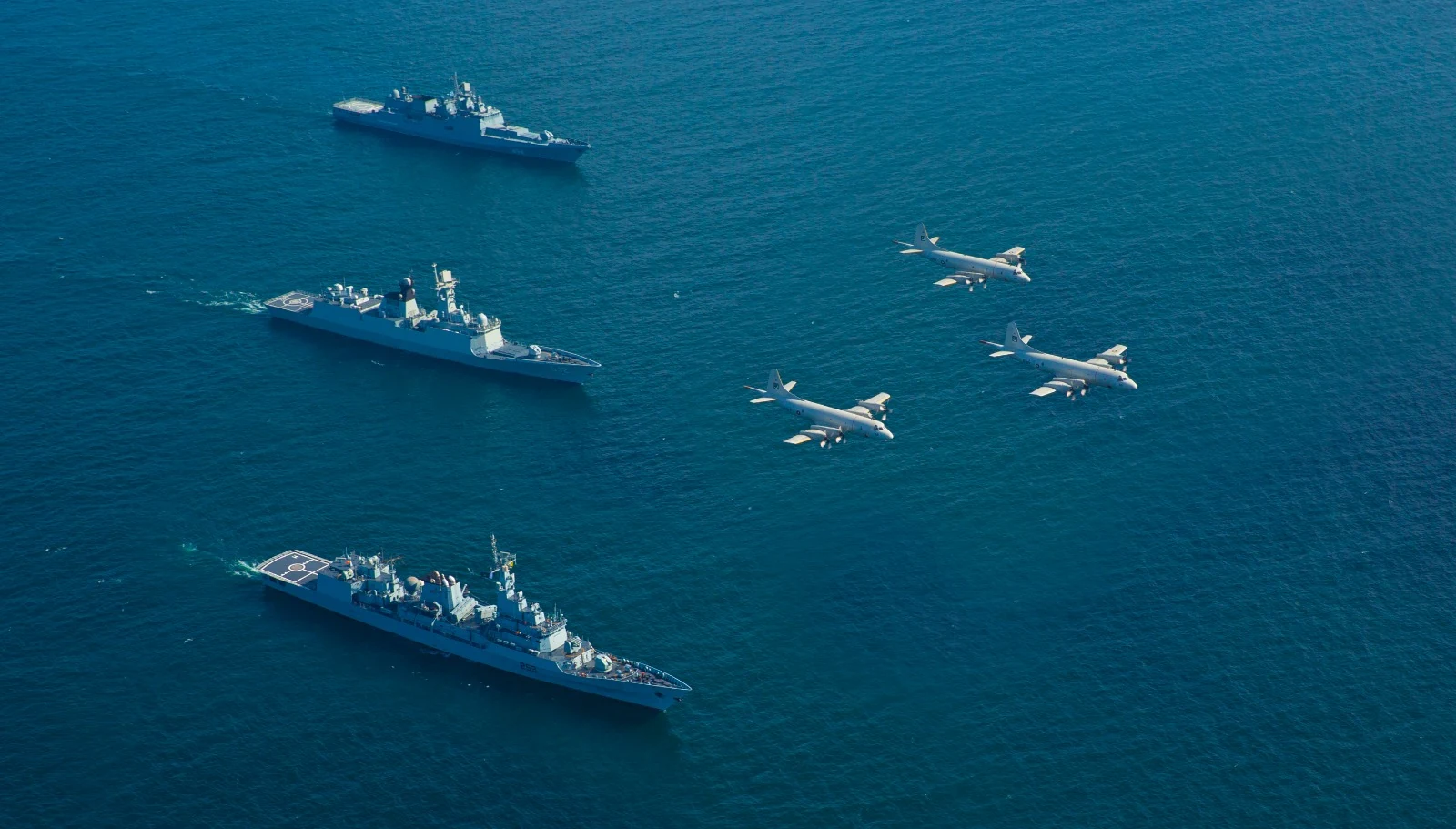
The modernization you have referred to is not an end in itself. Our modernization programme is driven by the evolving threat environment, our defensive compulsions and the lessons of Marka-e-Haq, Pakistan's successful military response to aggression against us in May 2025. The objective is to build a future-ready, balanced, combat- credible and sustainable Navy capable of protecting Pakistan's maritime interests and deterring any aggression in future across the complete spectrum of conflict.
Our focus is therefore on capability-based development rather than platform-based modernization with integration of advanced sensors, precision weapons, unmanned systems, potent air defence, electronic warfare, C4lSR and maritime surveillance, alongside enhanced underwater and naval aviation capabilities. These capabilities are particularly important in our unique strategic environment, where the changing character of warfare with increasingly compressed decision timelines demand credible multi-domain options, resilience and operational readiness at all levels.
At the same time, we are investing in indigenous design, construction, maintenance and technology absorption to ensure long-term sustainability. The construction of MILGEM Class ships and HANGOR class submarines at Karachi Shipyard is a manifestation of the same approach.
Question
Naval aviation has clearly been a focus area, with the Sea Sultan LRMPA program progressing and the recent induction of the TECNAM (Sentinel) at the training and light-aircraft end of the fleet. As you look at naval aviation as a whole fixed-wing patrol, rotary-wing and unmanned systems - where do you see the arm heading over the coming years? And is there a prospect, especially as the Pakistan Navy seeks new-generation air platforms, of greater collaboration between NRDI/ PDW and the aviation sector?
Admiral Ashraf
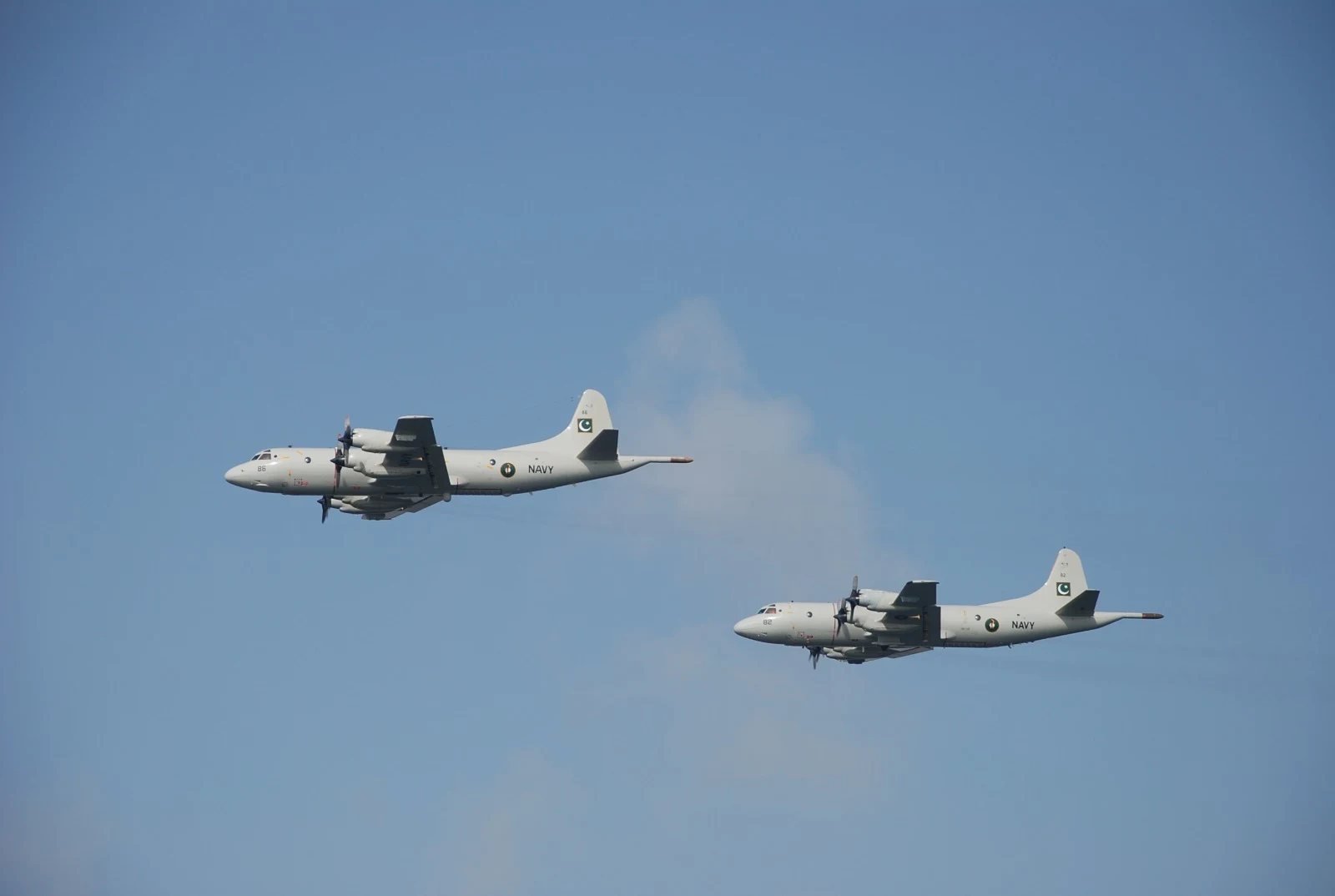
As our regional responsibilities grow, strengthening of Naval Air Arm will remain a key area of our future capability development. The Sea Sultan LRMPA programme along with induction of TECNAM Sentinel aircraft is an important milestone in our broader approach in this domain.
My vision is to develop an integrated Naval Air Arm with a balanced mix of long range maritime patrol aircraft, rotary wing platforms and increasingly capable unmanned systems providing the fleet with enhanced maritime domain awareness, reach and operational flexibility. The future of Naval Air Arm will rely on increasingly manned- unmanned teaming enabled by Al, sensor fusion, autonomous systems supported by MESH network and secure communication systems, with air platforms operating as part of a wider network supporting multi-domain operations.
Indigenization is central to this effort. I see Naval R&D Institute/ Platform Design Wing working more closely with Pakistan Maritime as well as National Aerospace Science & Technology Parks, local industry, academia and our international partners to develop mission based systems, sensors, electronic warfare suites, secure data links and autonomous technologies. The aim is therefore, not simply to acquire new aircraft, but to build a networked and resilient naval aviation ecosystem that combines platforms, technology and indigenous innovation.
Question
With the Hangor-class program now advancing and construction progressing at Karachi Shipyard & Engineering Works (KSEW), the submarine service is entering a new chapter. Beyond the platforms themselves, what does the Hangor bring to the Navy in terms of capability and indigenous know-how-and as the force matures, how is the Navy's thinking evolving on the future of the underwater fleet, including the role of autonomous and uncrewed underwater systems?
Admiral Ashraf
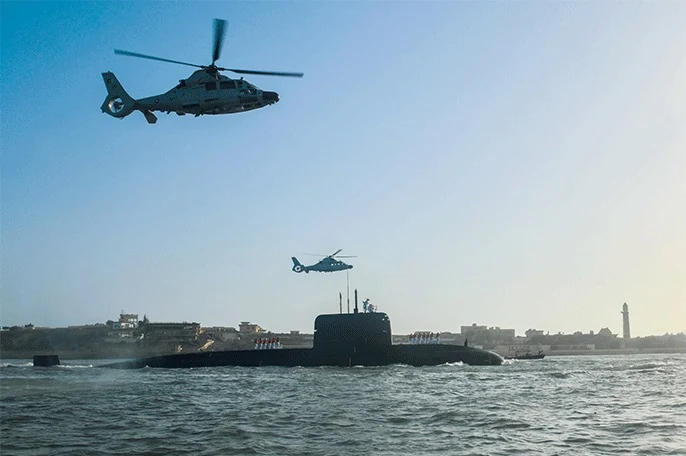
HANGOR class submarine programme represents a major enhancement of Pakistan Navy's underwater capability and will significantly strengthen our conventional deterrence. Equipped with AIP, advanced weapons and sensors alongwith stealth features, these submarines will provide greater endurance, operational reach and flexibility across a range of missions. But its importance goes well beyond the platform itself.
Construction of submarines at Karachi Shipyard is strengthening indigenous skills and technology absorption in one of the most complex areas of naval engineering. Our long term objective is to build national capacity to progressively construct, maintain and ultimately develop increasingly sophisticated underwater capabilities.
Looking ahead, submarines will remain central to our underwater force. However, I expect autonomous and uncrewed underwater systems to gradually complement conventional platforms, particularly in areas where persistence, flexibility and reduced risk are important.
Quwa Plus · In-Depth Pakistan Coverage
Understand Pakistan’s Defence and National Security in Unmatched Depth
Understand what Pakistan is acquiring, how its armed forces are evolving, and where national security policy is heading through dedicated defence news, force analysis, procurement tracking, Pulse Check briefings, and more than a decade of documented reporting.
Featured & Trusted By








Question
On the surface side, the Jinnah-class frigate stands out as Pakistan's first indigenously designed frigate-sized combatant. Could you share where the program currently stands and how do you envisage the surface combatant force evolving once the current MILGEM, Type 054A/P and OPV inductions have bedded down?
Admiral Ashraf
The Jinnah-class frigate is an important milestone in Pakistan Navy's journey towards greater self reliance in warship design and construction. Building on the experience gained through the MILGEM Programme, it is intended to progressively strengthen our indigenous capability in design, construction and systems integration. It is satisfying that the programme is progressing in accordance with its planned roadmap. As Type-054A/P, MILGEM and OPV inductions consolidate, we envisage a balanced, network-enabled and multi-mission force, optimized for an increasingly contested maritime environment. Our focus will increasingly be on integration rather than numbers - linking advanced sensors, weapons, unmanned systems and data networks to enable faster decision-making and effective multi-domain operations. This will make the future surface fleet not only more capable, but also more interoperable, resilient and sustainable.
Question
The Navy has consistently emphasized indigenization and the Blue Economy, most recently around PIMEC. Looking at Pakistan's shipbuilding base specifically, how do you see the scope for public-private partnership and is the Navy actively seeking foreign investment or joint ventures to expand national shipbuilding capacity? What would an ideal partnership model look like from the Navy's perspective?
Admiral Ashraf
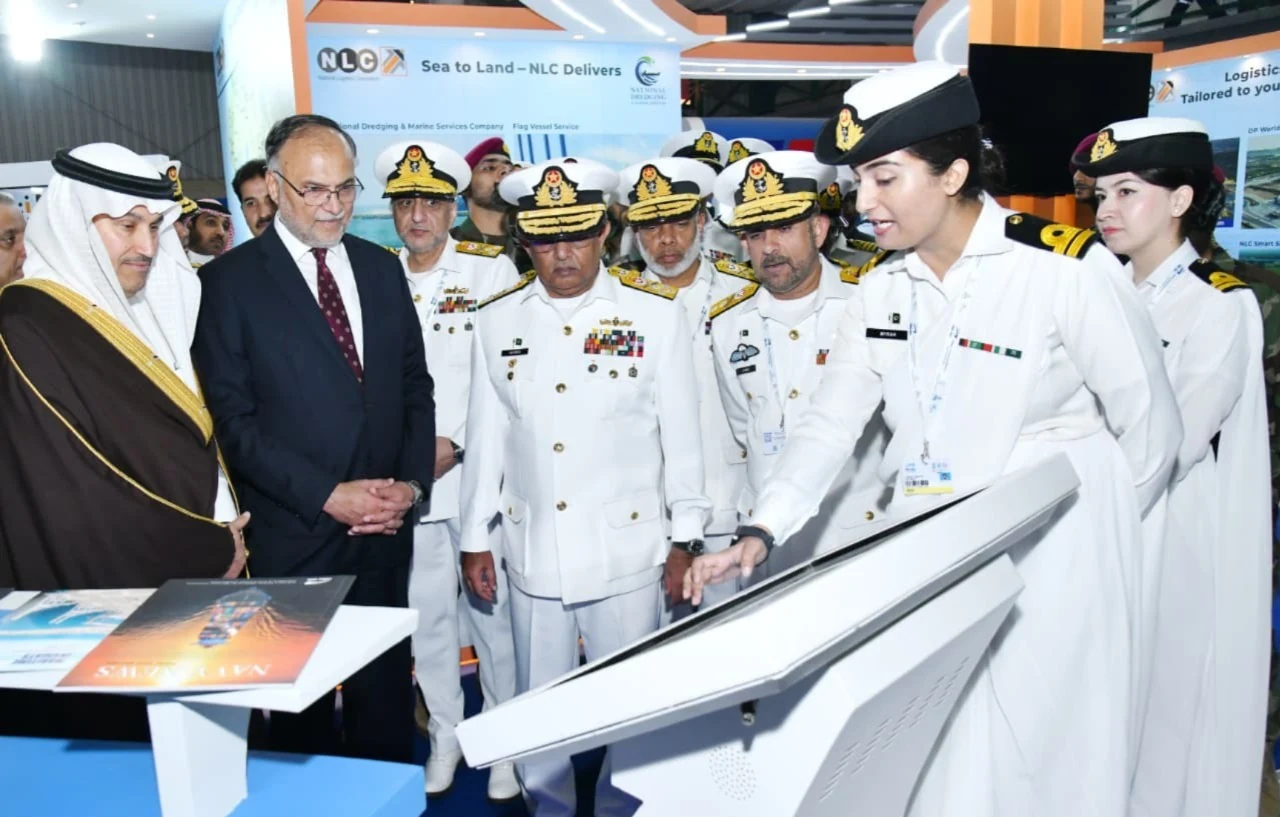
For Pakistan, maritime security and economic security are inseparable. As a key maritime stakeholder, Pakistan Navy's role is to provide secure environment and institutional support in which Blue Economy can flourish. Platforms such as PIMEC help bring government, industry and international partners together to translate this potential into investment and industrial growth. With the forthcoming PIMEC next year, we look forward to welcoming our international partners, maritime industry and investors to Pakistan and I would take this opportunity to invite them to explore the diverse opportunities offered by Pakistan's maritime sector.
A strong national shipbuilding industry is central to this effort. It is not only a defence capability but also a driver of technology, skilled employment, industrial growth and economic resilience. We therefore, see considerable scope for stronger public-private partnership, supported by foreign investment and joint ventures with trusted partners, particularly where they bring technology as well as expertise. Construction of submarine and MILGEM class corvettes at KS&EW under transfer of technology with China and Turkiye, demonstrates the value of such partnerships.
From the Navy's perspective, the ideal model would be the one that goes beyond assembling platforms. It should incorporate transfer of technology, develop local skills & supply chains and progressively build indigenous design, construction and maintenance capacity. Our long-term aim is a competitive and inclusive maritime industrial eco-system that contributes to both, our national security and economic prosperity.
Question
Pakistan's merchant marine and wider maritime trade footprint appears set to grow, which by extension, makes Pakistan a larger seafaring nation with expanding interests to protect. In your view, does that trajectory imply a corresponding growth in the Pakistan Navy's size, reach and capability over the coming decade - and how does the Navy see its role in safeguarding those national maritime and trade interests?
Admiral Ashraf
Pakistan's maritime future is closely linked to its economic prosperity. As maritime trade, ports and the Blue Economy expand, so too will our responsibilities to protect Sea Lines of Communication (SLOCs), coastal and offshore infrastructure and the uninterrupted flow of commerce.
As Pakistan's maritime interests grow, the Navy will also need to evolve in its reach, capacity and capability. The nature and pace of that growth will be determined by our expanding maritime responsibilities, the evolving security environment and the resources available to the country. Our focus will remain on a balanced, network-enabled and technology-driven force, with enhanced Maritime Domain Awareness, integrated command and control and multi-domain operational capability.
The Navy's responsibility remains to secure and contribute optimally to Pakistan's economic growth and national prosperity.
Question
As a leader of one of the most important institutions in Pakistan, how do you inspire and guide the next generation of officers and sailors in the Navy?
Admiral Ashraf
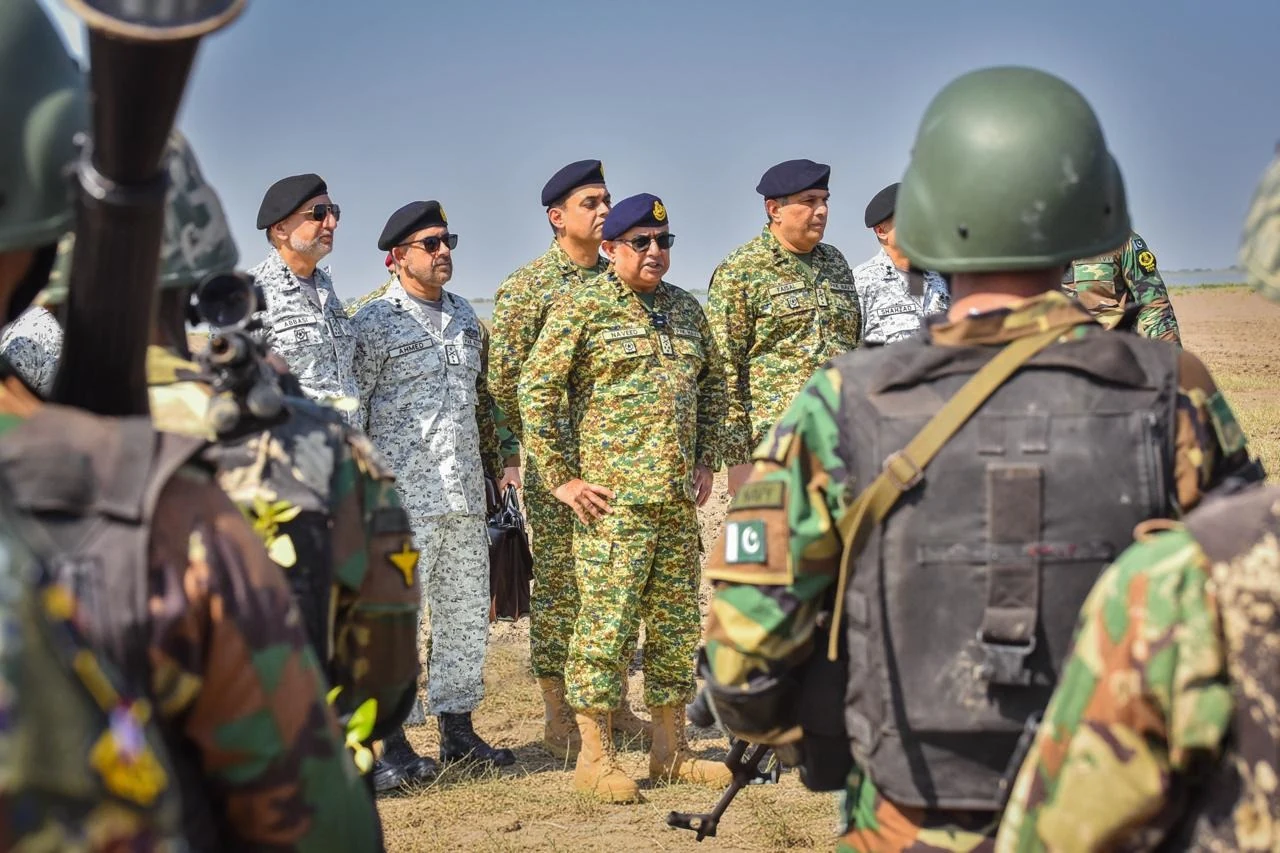
I firmly believe that although technology is transforming warfare, people will remain decisive. Automation and Artificial Intelligence shall be critical but success to a greater extent will depend on the professionalism, character and commitment of our officers and sailors.
Therefore, my aim is to develop future-ready warfighters who are professionally competent, technologically adept, intellectually agile and capable of operating effectively in an increasingly complex multi-domain environment. This requires us to continuously adapt our training and education while encouraging initiative, critical thinking and the ability to make quick and right decisions under pressure and time compressed environment.
At the same time, technology and skill set must be anchored in character. Our enduring values of Faith, Character, Courage and Commitment remain the foundation of naval service and these are the qualities, I seek to instill in the next generation of Pakistan Navy.
Question
As you look ahead, what message would you offer to Pakistan's international partners and to the wider maritime community about where the Pakistan Navy is headed as a service?
Admiral Ashraf
The maritime challenges confronting the North Arabian Sea and wider Indian Ocean are too complex for any single navy to address them on its own. Maritime security is a shared responsibility, requiring rapid information sharing, coordinated surveillance, capacity building and interoperability to keep the global maritime commons safe and secure.
For Pakistan Navy, our message to international partners is clear; we remain committed to partnerships, regional stability and collective maritime security. As we modernize our capabilities, we will continue to contribute actively through initiatives such as Exercise AMAN, AMAN Dialogue, PIMEC and through our responsibilities in NAVAREA IX, while strengthening engagement with partner navies across the region and beyond, including information exchange through Joint Maritime Information Center.
Pakistan Navy will continue to be a reliable maritime partner, a contributor to regional peace and stability and a credible guardian of Pakistan's interests at sea. We seek cooperation with all and confrontation with none but our commitment to the defence of Pakistan remains absolute.
Quwa Plus · In-Depth Pakistan Coverage
Understand Pakistan’s Defence and National Security in Unmatched Depth
Understand what Pakistan is acquiring, how its armed forces are evolving, and where national security policy is heading through dedicated defence news, force analysis, procurement tracking, Pulse Check briefings, and more than a decade of documented reporting.
Featured & Trusted By
Advertising & partnershipsEarn attention. Stay part of the conversation.
Connect your capabilities with the defence leaders, service professionals and engaged readers who turn to Quwa.