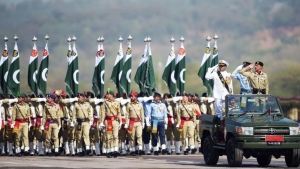
The “CDF” Risk: How Centralization Could Paralyze Pakistan’s Response to India Plus Pro
Modern war demands agility, but Pakistan is choosing rigid authority. Why centralizing command could be a fatal error in a future conflict.

Modern war demands agility, but Pakistan is choosing rigid authority. Why centralizing command could be a fatal error in a future conflict.

Pakistan’s OWEs: A siloed, redundant strategy. In-depth analysis of 3 new systems and the critical industrial & strategic risks ahead.

Pakistan just revealed a secret swarm of new naval drones. A deep dive into the kamikaze & stealth tech that could be a naval game-changer.

Pakistan just created a "super general" role. But this analysis explains why the military needed a joint office, not another officer.
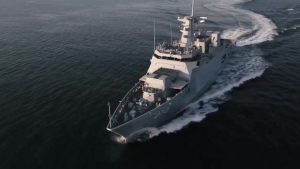
Why is Pakistan building new warships? It's not just India. A $4.6B freight bill is forcing a huge merchant fleet expansion-- and it all needs...
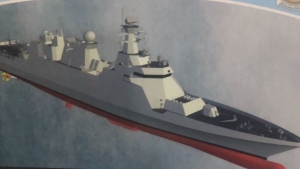
Pakistan's Navy is modernizing its fleet. Here's a first look at the new Jinnah-class, an advanced, indigenously-designed frigate built for speed.
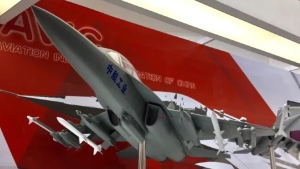
Pakistan's new 4.5+ gen jets have a hidden training gap. The old methods are obsolete, and the cost of failure is high. Here's the LIFT...
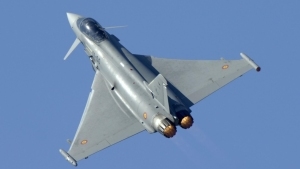
Turkey inks a $10.67B deal for UK Typhoon jets, plus it's buying F-16s. But what does this mean for its own next-gen KAAN fighter program?
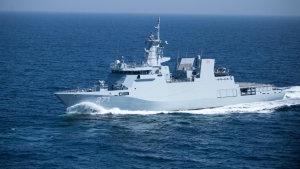
A $100M ship just seized $972.4 million in contraband. This massive bust proves Pakistan's new naval strategy is a game-changer. Here's why.

Pakistan's new HS-1 satellite completes a powerful "triad" with SAR and EO, enabling it to see through camouflage and identify decoys from space.