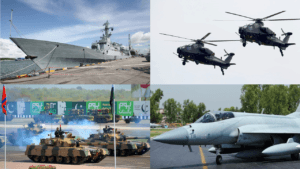
Pakistan to spend $12 billion on arms in 2016-2024
According to analysts, Pakistan will likely spend $12 billion U.S. on armaments from 2016 to 2024. An uncertain economic outlook could have an impact.

Founder of Quwa, Bilal has been researching Pakistani defence industry and security issues for over 15 years. His work has been cited by Pakistan's National Defence University (NDU), the Council of Foreign Relations, Bulletin of Atomic Scientists, Centre of Airpower Studies and many others. He has a Hons. B.A in Political Science and Masters of Interntional Public Policy from Wilfrid Laurier University in Waterloo, Ontario, Canada.
According to analysts, Pakistan will likely spend $12 billion U.S. on armaments from 2016 to 2024. An uncertain economic outlook could have an impact.
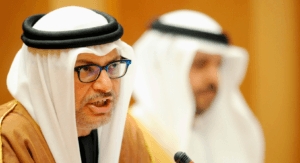
The United Arab Emirates has announced that it will end its military operations in Yemen, roughly one year after it and Saudi Arabia entered the...
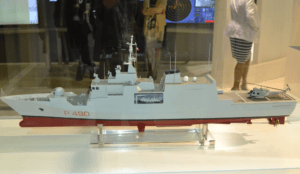
Qatar will soon sign a $5.61 billion U.S. contract with the Italian shipbuilder Fincantieri for five corvettes/light frigates and a support ship.
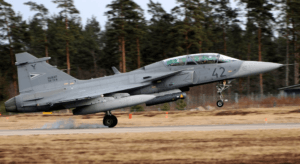
Botswana has confirmed that it is in talks with the Swedish government for 8-12 Gripen multi-role fighters for the Botswana Defence Force.
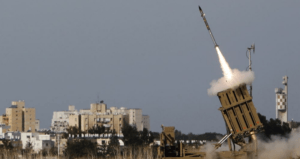
An overview & analysis of whether the Israeli Iron Dome is a concept worth emulating, especially as an air defence system for small projectiles &...
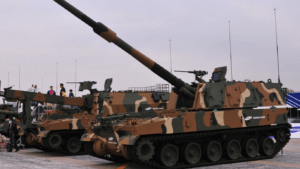
Hanwha Techwin is marketing its K9 Thunder 155mm/52 calibre self-propelled howitzer at Eurosatory 2016 in Paris. It is competing for several tenders.
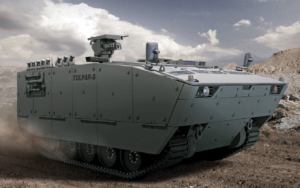
The new generation armoured personnel carrier TULPAR-S by the Turkish military vehicles maker Otokar made its international debut at Eurosatory 2016.
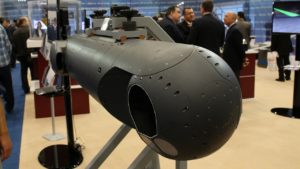
Turkey's Aselsan secured a $25 million contract to integrate the ASELPOD advanced targeting pod to an airborne platform of an undisclosed country.
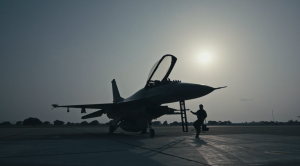
The Pakistan Air Force no longer has new-built F-16s on its modernization roadmap, but F-16s may still arrive, but in the form of used and...
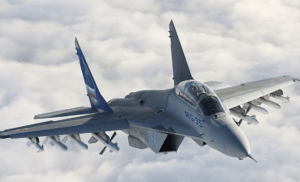
MiG-29 (or MiG-35) Fulcrums for the Egyptian Air Force are reportedly in production as per a $2 billion U.S. contract apparently signed in 2015.