27207Views
The Return of Export Credit? How the EU is Fighting for Fighter Jet Market Share in South Asia Quwa Premium

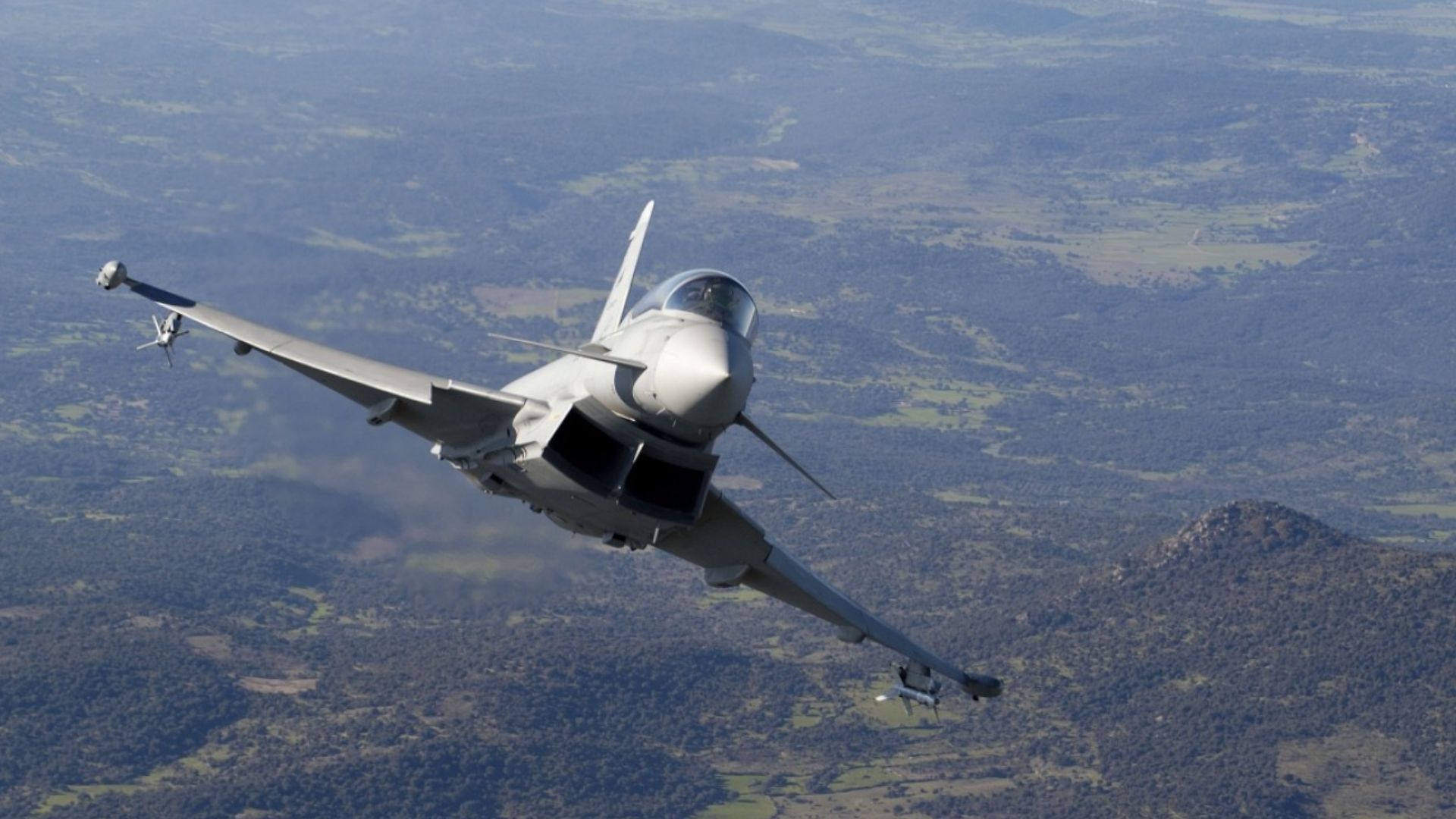
On 09 December, the Bangladesh Air Force (BAF) and Leonardo S.p.A signed a letter-of-intent (LoI) outlining a potential purchase of Eurofighter Typhoon multirole fighters.
The LoI marks a significant step forward in the BAF’s efforts to modernize its fighter fleet, which dates back to 2017, when it issued a tender for 12 new twin-engine multirole combat aircraft (MRCA).
Before the LoI, the Bangladeshi government had signalled that it also approached China for new fighters, such as the J-10CE, but the BAF is evidently looking towards the Typhoon. Indeed, as Dhaka apparently approached China, the BAF’s decision-makers were in Italy evaluating their lead Western option.
The actual number of aircraft ordered, their configuration, and other elements (e.g., offsets) will likely be finalized through follow-up negotiations. However, the BAF requires 20 new fighter aircraft; thus, Dhaka could pursue a two-tranche program with Leonardo.
It is unclear whether the BAF would pursue a second fighter type to complement the Typhoon or adopt a single platform-based force structure (in line with most modern air defences).
Given the inherently high cost of fighter procurement, especially for high-tech, high-performance aircraft like the Typhoon, consolidating on a single platform and building a system-of-systems around it would be the more cost-effective option.
The Typhoon is part of the BAF’s broader modernization effort, which will also include acquiring modern surface-to-air missiles (SAMs) and long-range radars.
Reports indicate that Turkiye’s Roketsan and Aselsan are engaging the BAF for its new integrated air defence system (IADS) requirements.
If finalized, SAM systems such as the Roketsan HISAR and SIPER series would equip Bangladesh with a modern air defence stack tailored to neutralize high-speed missile threats, such as India’s BrahMos (in contrast, Pakistan’s IADS posture has struggled with such threats).
Bangladesh’s current political leadership was amenable to procuring Chinese platforms, but the Typhoon likely resulted from the BAF’s longstanding preference for a Western platform. In 2024, for example, the French government reportedly entered into talks with Dhaka regarding a potential Rafale sale.
One could only speculate on the “why” behind the BAF’s decision, but ultimately, one strong aspect is likely a shift in the European Union’s (EU) policy towards its defence industry.
Is the EU Offering Liberal Financing?
The Bangladeshi government had reportedly estimated it would need USD $2.2 billion over 10 years to drive a 20-unit J-10CE order. Thus, the new fighter program was contingent on credit/financing, which enabled Chinese vendors to drive sales (especially in Pakistan).
One could see a scenario in which Leonardo has either committed to (via the LoI) or outright secured a comparable package for Bangladesh.
End of excerpt.
Unlock the full strategic breakdown of the EU’s shifting defence policy and what it can mean for the future of Pakistan’s air power. Subscribe to Quwa Premium today to access this complete analysis and join the inner circle of experts tracking South Asian defence evolution.
Existing Quwa Plus/Pro members can log in below
Note: Logged in members may need to refresh the article page to see the article.