
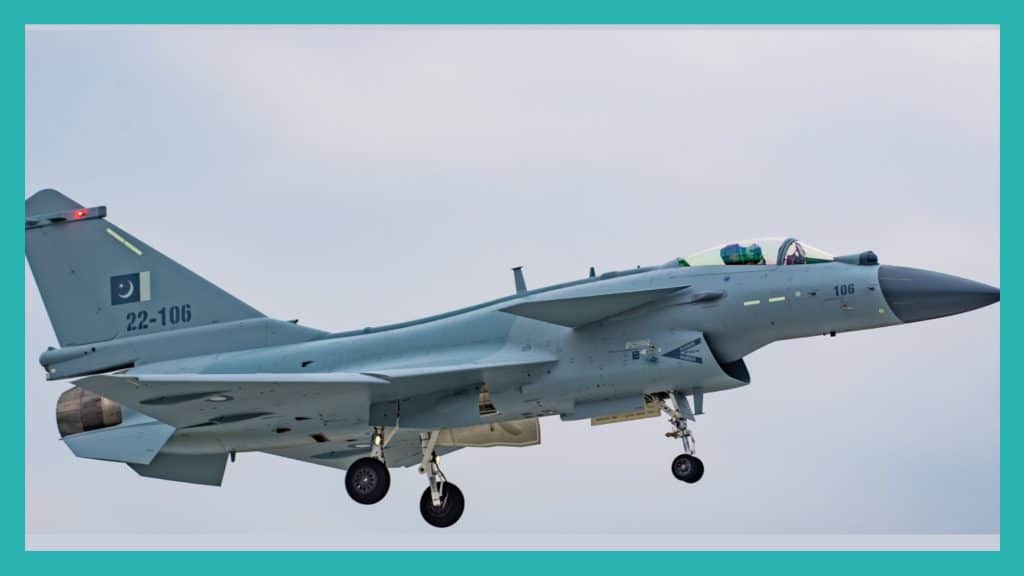
In 2022, the Pakistan Air Force (PAF) started inducting two major weapon systems: the J-10CE Dragon multi-role fighter aircraft and the Bayraktar Akıncı high-altitude, long-endurance (HALE) unmanned aerial vehicle (UAV). The PAF has also hinted at potentially acquiring the HQ-9 long-range surface-to-air missile (SAM) system. Overall, these systems – along with the much-anticipated JF-17 Block-3 – form the core of the PAF’s air modernization efforts for the rest of this decade.
For the 2020s, the PAF is firmly focusing on fully transitioning its fighter fleet to the fourth-generation and fourth-generation-plus standards. In addition, it is inducting a HALE UAV capability, a significant addition considering that relatively few countries in the world that have access to such solutions.
A Multi-Role Fighter Fleet
Basically, the outcome of transition to a fleet of 4/4+ generation fleet is that the PAF will phase out most of its legacy generation fighters. In fact, the F-16 and JF-17 Block-1 and Block-2 have largely replaced the F-7P and Mirage III/5s in frontline roles, especially in the air-to-air domain.
However, once its transition is complete, the baseline fighters of the PAF fleet will consist of 4th-generation platforms, i.e., non-upgraded JF-17 Block-1/Block-2s and F-16A/B Block-15-based Mid-Life Update (MLU).
Granted, some platforms may soldier on in niche areas (e.g., the Dassault Mirage III/5s in the strike role), but its general fighter fleet, the PAF will transition to multi-role fighters across the chain, be it lightweight or medium-weight platforms. Not only that, but a substantial portion of these fighters will essentially be 4+/4.5-generation platforms equipped with active electronically scanned array (AESA) radars, integrated electronic countermeasures (ECM) suites, and advanced long-range air-to-air missiles (LRAAM).
When viewed in the context of having close to 20 fully-equipped squadrons of multirole fighters, this will be a significant evolution for the PAF. Several years ago, the PAF had remarked on becoming a true “next-generation” force, and fully retiring F-7P/PGs and Mirage III/5s from frontline roles is the first step.
The next step would likely involve bringing all multirole fighters to the same general standards – i.e., fourth or fourth-plus generation. From at least a supply standpoint, this will be easier to achieve through adding more J-10CEs and/or JF-17 Block-3s. In fact, as Quwa noted earlier, the PAF only inducts a net-new fighter platform when it intends to acquire at least 90 units of that type. Thus, Quwa expects that the PAF would induct a total of at least 90 J-10CEs by 2030. Funding would be the main constraint. However, the PAF can spread its procurement throughout the decade via small batch purchases.
However, the JF-17 Block-3 gives the PAF a lower cost alternative to the J-10CE. In fact, it seems that the PAF worked to standardize the J-10CE and Block-3 in terms of LRAAM configuration (i.e., via the PL-15 and PL-15E). Thus, should the PAF lean on more Block-3s in lieu of J-10CEs, it can still deploy the latter fighter’s marque weapon systems. Overall, the PAF has an avenue to acquiring net-new 4+/4.5-generation fighters.
The bigger question is whether the PAF can augment its F-16 fleet. Having built decades of experience and extensive infrastructure to operate this fighter, upgrading it would be ideal. The market has a number of upgrade packages available, but it is unclear if these are available to the PAF in any form.
Quwa Plus
Go Beyond the Headlines on Pakistan’s Defence and Security.
Quwa Plus gives you deeper reporting, briefings, and analysis on Pakistan’s defence programs, foreign policy, national security, and regional strategy. Follow the developments that matter to professionals, analysts, and serious readers tracking Pakistan’s security landscape.
Join ($29.99/Year) Already a subscriber?Sign in