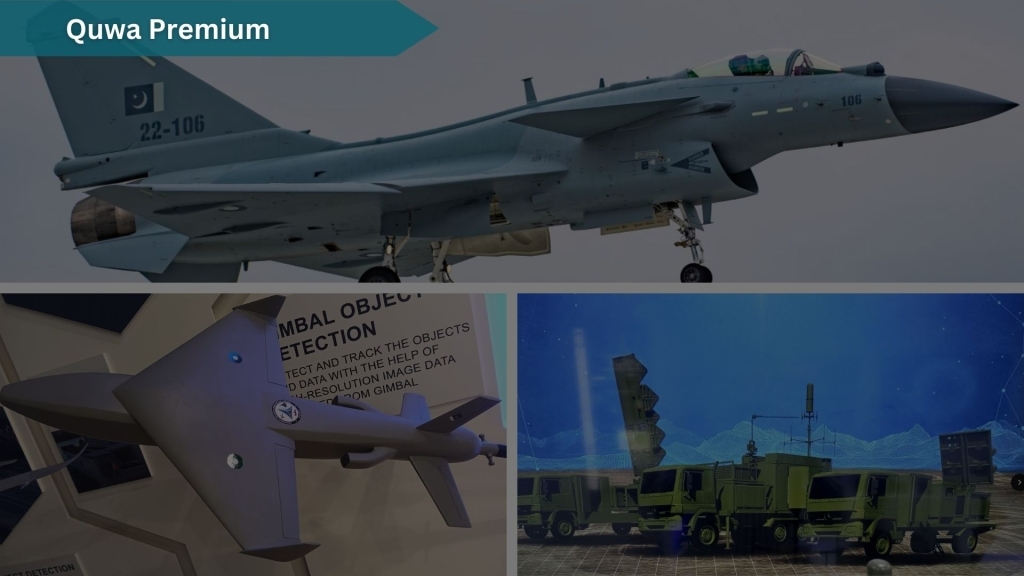
Following its skirmish with India in February 2019, the Pakistani military, particularly the Pakistan Air Force (PAF), initiated a major modernization drive. The brief clash – which saw the PAF implement its own retaliatory strike via Operation Swift Retort – underscored a need to expand the procurement pipeline across previously less developed areas, notably in terms of unmanned aerial vehicles (UAV), surface-to-air missiles (SAM), electronic warfare and electronic support measures (EW/ESM), and ‘smart munitions’.
Over the past six years, the PAF pursued a procurement strategy involving new multirole combat aircraft, medium-to-long-range SAMs, precision-guided munitions (PGM), EW and ESM systems, medium-altitude long-endurance (MALE) and high-altitude long-endurance (HALE) drones, and loitering munitions.
Collectively, these new acquisitions set the groundwork for an evolved offensive strike strategy that aims to engage a larger assortment of targets, reach targets further into enemy territory, and, not least, be as prepared as possible for a comparable, if not more extensive, adversary response.
Since 2019, Pakistan has transformed this approach by acquiring and deploying the HQ-9BE long-range SAM system.
The HQ-9BE provides Pakistan with a strategic air defence capability with a reported range of 260 km and the ability to engage tactical ballistic missiles (TBMs), cruise missiles, and aircraft. Its deployment represents a quantum leap in Pakistan’s ability to deny airspace to adversaries.
This multi-layered approach to air defence reflects clear lessons from both Swift Retort and observations from the Russia-Ukraine conflict. By establishing robust area-denial capabilities via SAMs, Pakistan aims to complicate Indian planning for Balakot-style strikes, raising the potential cost of such operations. The SAMs also free up fighter aircraft that might otherwise be assigned to air defence duties, allowing them to be repurposed for offensive operations.
Quwa Plus
Go Beyond the Headlines on Pakistan’s Defence and Security.
Quwa Plus gives you deeper reporting, briefings, and analysis on Pakistan’s defence programs, foreign policy, national security, and regional strategy. Follow the developments that matter to professionals, analysts, and serious readers tracking Pakistan’s security landscape.