23 March 2016
By Bilal Khan
Go deeper into the defence market.
Research on procurement, emerging technology and the industry behind the news.
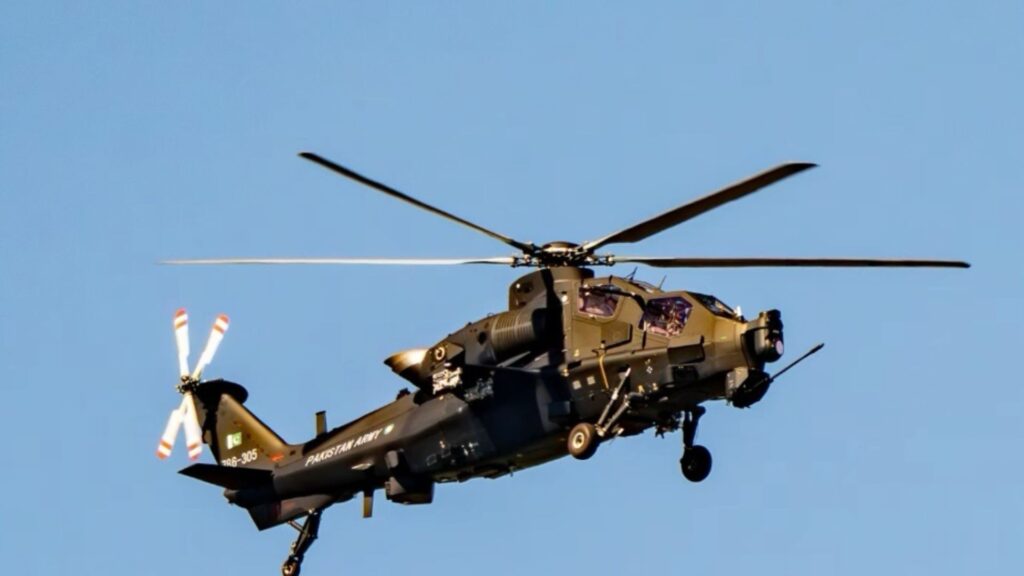
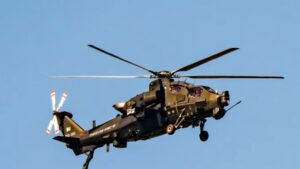
The appearance of the Changhe Aircraft Industries Corporation (CAIC) Z-10 Thunderbolt attack helicopter at the 2016 Pakistan Day Parade was interesting. It was the first instance where the Pakistan Army had brought the Z-10 to the public’s attention. As far as the average Pakistani is now concerned, the Z-10 is as much a part of the armed forces as the JF-17 Thunder and Karakoram Eagle airborne early warning and control (AEW&C) aircraft. Despite that however, the Army has yet to officially commit to the platform.
At present, it is not entirely clear how the Z-10 is being used by the Pakistan Army. Initially, it was believed that the helicopters would be evaluated (on and off the battlefield); during the parade, the Army claimed that the Z-10 was a key driver of its counterinsurgency (COIN) efforts. In fact, the Z-10 is a member of the Army’s Air Combat Group, specifically with the ‘Mustangs’ squadron. Integration with an active squadron and attendance at a major national event does not suggest a short-term service run. Yet despite this, it does not seem like the Army is going acquire additional Z-10s, at least in the short-term.
A number of purported reasons have been expressed as to why the Army has not sought to move forward with the acquisition of additional Z-10s. The most common one heard is in relation to the powerplant. At present, the Z-10 is powered by two WZ-9 turboshaft engines, each of which offers 1000 kW in output.
Turboshaft engines in the WZ-9’s range typically power attack helicopters in the realm of 3000 kg, such as the Eurocopter Tiger. Helicopters in the Z-10’s weight class, such as the AH-1Z Viper (5500 kg), typically use turboshaft engines with outputs in excess of 1300 kW. Given the Z-10’s empty weight of 5000 kg, the WZ-9 is an underpowered solution. This prevents Z-10 from achieving its maximum payload potential. For example, the Z-10 ought to be able to carry up to 16 guided air-to-ground missiles (such as the HJ-10), but it is limited to eight. The relatively low power-to-weight ratio may also be the cause to performance issues on the field as well, especially in active combat, which is what the Z-10 has apparently seen in Pakistan.
Fortunately, CAIC does have a new turboshaft engine in the pipeline – the WZ-16. The WZ-16 is being developed by Aviation Industry Corporation of China (AVIC), CAIC’s parent company, and Safran, an industry leading French aircraft propulsion developer and manufacturer. The WZ-16 is to have a take-off output power of at least 1240 kW, and continuous operation output of over 1100 kW. Although the WZ-16 is being developed for the Z-15 utility helicopter being developed by AVIC in partnership with Eurocopter, it is widely believed that the WZ-16 will make its way to the Z-10.
With the WZ-16 in mind, the Z-10 has considerable potential that will be of value to the Pakistan Army. The base parameters of a WZ-16-powered Z-10 would offer the Army an attack helicopter with the same payload capacity of the promising AH-1Z. But unlike the AH-1Z, the Army would have considerably more flexibility in equipping the Z-10 with the weapons, sensors and on-board electronics suites of its choice. In fact, a few of the subsystems found on the AH-1Z, such as the Thales TopOwl helmet-mounted display and sight (HMD/S), could potentially even be looked at for use on the Z-10. The point here is that the Army has the flexibility to customize the Z-10 to achieve its operational requirements in an optimal manner.
Given the potential capabilities on offer and the almost certain prospect of lower costs, the Z-10 (especially powered by the WZ-16) is a more than appropriate option for the Army. If Pakistan has a shot at building a quantitatively sizable attack helicopter fleet, that shot would rest with the Z-10. Such a fleet would equip the Pakistan Army with a potent and far-reaching close air support (CAS) force, one that could be freely used and flexibly equipped for different operational needs.
Pursuing the Z-10 could also open the doors to valuable support assets, such as maintenance, repair and overhaul (MRO) and spare-parts manufacturing facilities. No Western option (such as the AH-1Z or T-129 ATAK) could offer that opportunity, not without prohibitive costs and/or political and regulatory hurdles.