Pakistan Defence News

Turkish Aerospace Pakistan Test Flies IQBAL Scaled Technology Demonstrator Plus

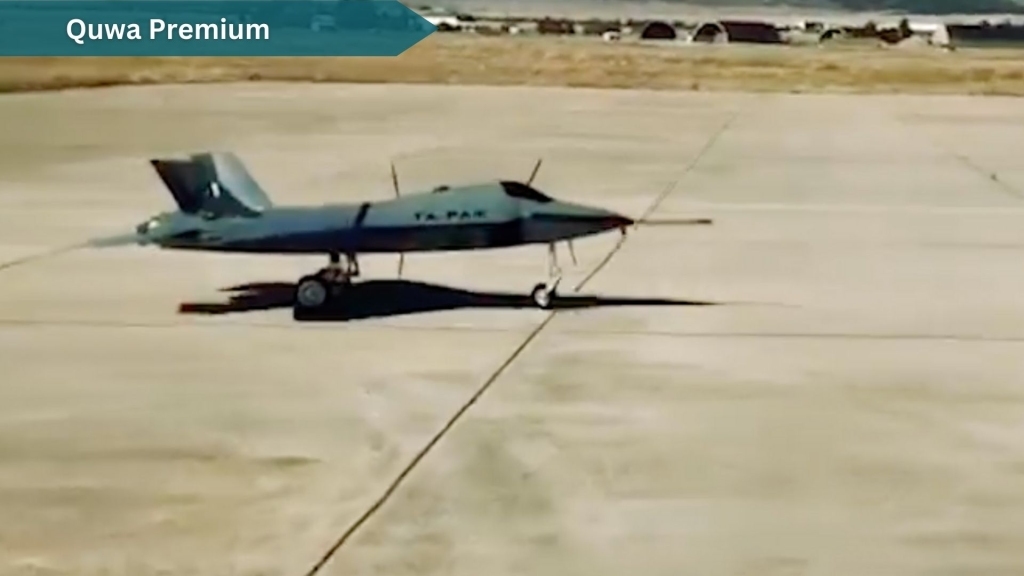
On 14 March 2025, Turkish Aerospace Pakistan successfully conducting the maiden test flight of "IQBAL," a locally developed technology demonstrator.


Linkedin


X-twitter

On 14 March 2025, Turkish Aerospace Pakistan successfully conducting the maiden test flight of “IQBAL,” a locally developed technology demonstrator.

Named in honor of Pakistani national poet, Dr. Allama Muhammad Iqbal, the IQBAL demonstrator is a 1:7 dynamically scaled version of the Turkish Aerospace KAAN fifth-generation fighter jet (FGFA).

The six-minute test flight showcased the engineering design and development capacity TAI is developing at its subsidiary in Pakistan.

Turkish Aerospace views the PAF as a target customer for the KAAN FGFA and, for a time, it had seemed that the PAF was interested in the project. But with the PAF’s apparent decision to commit to the Chinese J-31/J-35, its interest in the KAAN is, at best, now questionable. It is unclear if the PAF will circle back to the KAAN, at least before a true ITAR-free variant with Turkish engines is available.

That said, Turkish Aerospace’s other equipment, such as the T625 utility helicopter and/or T129 ATAK attack helicopter, could still be of interest to the Pakistani armed forces. In fact, the two sides had discussed collaborating on a helicopter program in January, while Turkish Aerospace signed a memorandum-of-understanding (MoU) to collaborate with Pakistan’s Naval Research and Development Institute (NRDI).

Thus, there could be a scenario where Turkish Aerospace offers an offset deal for a potential helicopter deal, for example. In this sense, Turkish Aerospace’s Pakistani footprint could expand to include maintenance, repair, and overhaul (MRO) facilities and services, or even a production line of some type.

Basically, a commercial offset that ties into Pakistan’s defence industry would be a major shift in the country’s defence market. For the first time, it would see a private sector contractor (via Turkish Aerospace Pakistan) providing large-scale after-sale support to the Pakistani military from within Pakistan.

Moreover, an offset deal of this nature also helps buffer Turkish Aerospace. First, an upfront FDI element (e.g., to expand Turkish Aerospace Pakistan) helps lower the foreign-currency outflow involved with a big-ticket defence sale. Second, it can also enable Turkiye to lower the upfront acquisition cost of its hardware as it could recoup – and exceed – that amount through its after-sale support to Pakistan. It can also use its Pakistani facilities to provide services to regional third-party users.

Aside from the technical merits of Turkiye’s aircraft offerings, the main question is the Pakistani military’s willingness to ‘open up’ its defence industry. Of Pakistan’s industries, defence is, arguably, its most active and lucrative one given the sheer breadth of production and maintenance entities involved to support its fairly large force structure. For example, while Pakistan Aeronautical Complex (PAC) is not a large aircraft manufacturer, its MRO element supports over 150 JF-17s as well as dozens of C-130s and Saab 2000s, among other aircraft types.

Quwa Plus

Don't Stop Here. Unlock the Rest of this Analysis Immediately

To read the rest of this deep dive -- including the honest assessments and comparative analyses that Quwa Plus members rely on -- you need access.

Join Today

USD $29.99/Year