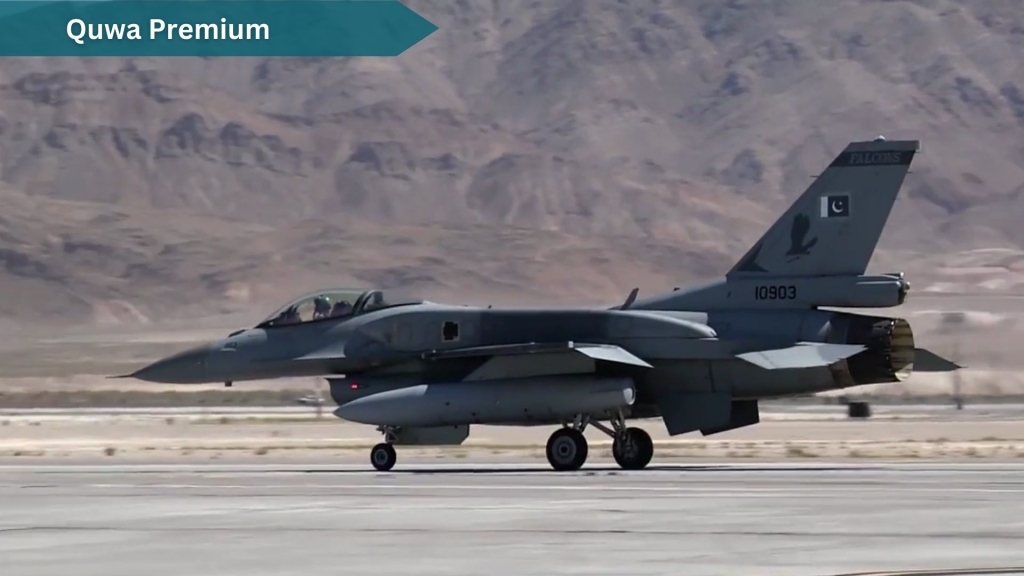
The U.S. State Department’s recent decision to exempt $397 million in security assistance from a broader aid freeze marks the latest turn in the decades-long saga of Pakistan’s F-16 program.
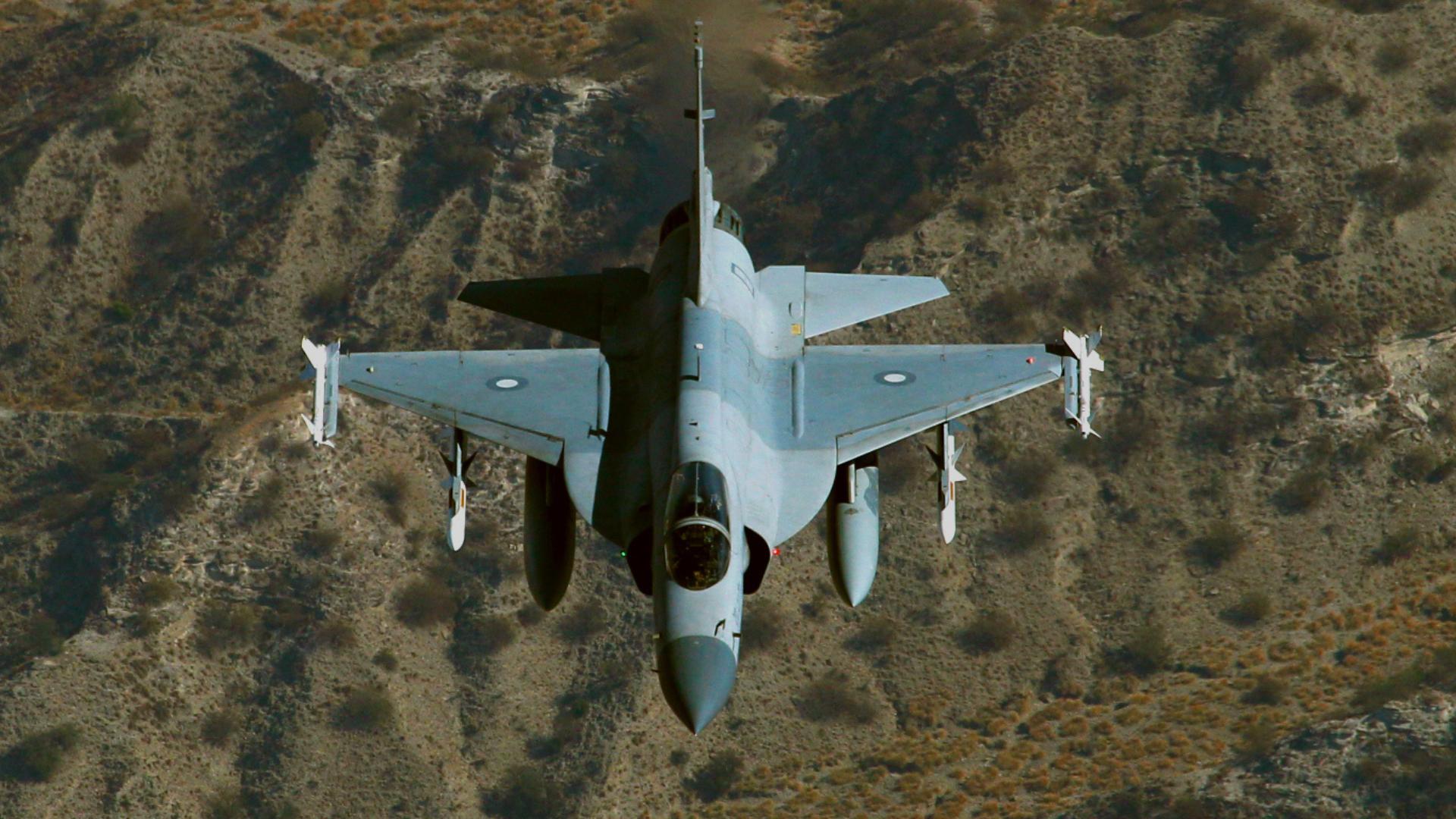
This funding seeks to specifically support the Technical Security Team (TST), a contingent of contractors stationed in Pakistan to monitor F-16 usage under strict end-use monitoring rules, which seem to require the Pakistan Air Force (PAF) to only use the F-16s, especially the newer F-16C/D Block-52 fighters, for counterinsurgency (COIN) and counter-terrorism (CT) operations.
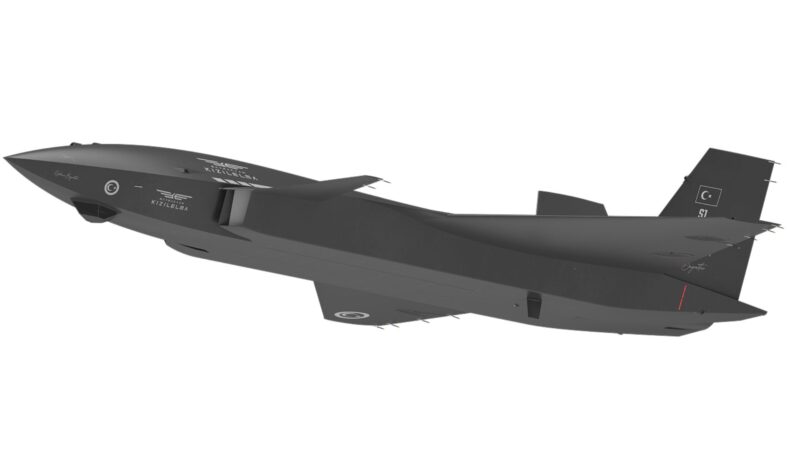
From a technical standpoint, the PAF can merge the air-to-air and air-to-surface roles of the F-16A/B MLU and Mirage ROSE, respectively, into one platform. Yes, the J-35 would be costly, and the PAF will not field it in as large numbers as its older platforms. However, the PAF would likely employ a manned-unmanned teaming (MUM-T) approach involving unmanned combat aerial vehicles (UCAV) and smart munitions.
The irony in this scenario is that in its bid to control the PAF’s reach and capabilities via the F-16, the U.S. may have steered the PAF into the other direction. Instead, the PAF could deploy the offensive capabilities the U.S. wanted to prevent it from gaining and, more crucially, be immune to U.S. pressure, at least from a technical support or technology access standpoint.
When viewing the history of U.S. arms transfers to Pakistan, one notices that Washington generally wants Islamabad to secure its western borders. In the Cold War, this focus involved providing Islamabad enough arms to fortify itself against the Soviet Union. Following 9/11, this focus shifted to COIN and CT, but again, in the context of securing Pakistan’s borders with Afghanistan.
Thus, the U.S. would not transfer or sell anything that exceeds the scope of the Western border, such as a larger strike-capable fighter, like the F-15, for example. Moreover, it would take punitive action against the Pakistani military if it used American-supplied arms in a conflict against India, often through sanctions, as shown during and shortly after the 1965 War.
However, historically speaking, the U.S. never had to worry about a rival economic and military power that would supply Pakistan with comparable weapons in its place. The Soviets were a non-factor since, on one end, Pakistan allied itself with America and, on the other, its close ties with India. The Western Europeans, on the other hand, would generally prioritize the Indian market over Pakistan, which was generally unable to buy European arms in large numbers due to cost and fiscal limitations.
Since 2010, however, China has emerged as not only a rival economic power, but a supplier of advanced weapon systems that are analogous in technology and comparable in capability to Western products. The U.S. itself deems China a “peer adversary,” indicating its recognition of Beijing’s technology gains. As the U.S. confronts China in the Pacific, it essentially closes the door on pressuring the Chinese to stop arming Pakistan. In the past, letting China arm Pakistan would have been trivial as the Chinese lacked advanced military technology; but this is no longer the case today, China can step in lieu of the U.S.
One example of this shift was the PAF’s preference for buying the J-10CE instead of pursuing additional F-16s from the U.S. Even though the U.S. blocked the previous sale by ending Pakistan’s access to the FMF, it might have still been open to Pakistan spending its own funds. Instead, the Pakistani funds went towards financing a purchase of 20 J-10CEs from China at a purported cost of $1.5 billion U.S. In other words, instead of shoring up its F-16 fleet with 10-12 F-16 Block-72s.
Don't Stop Here. Unlock the Rest of this Analysis Immediately
To read the rest of this deep dive -- including the honest assessments and comparative analyses that Quwa Plus members rely on -- you need access.