Pakistan Air Force News

Is Pakistan Close to Finally Securing a Strike Fighter? Plus

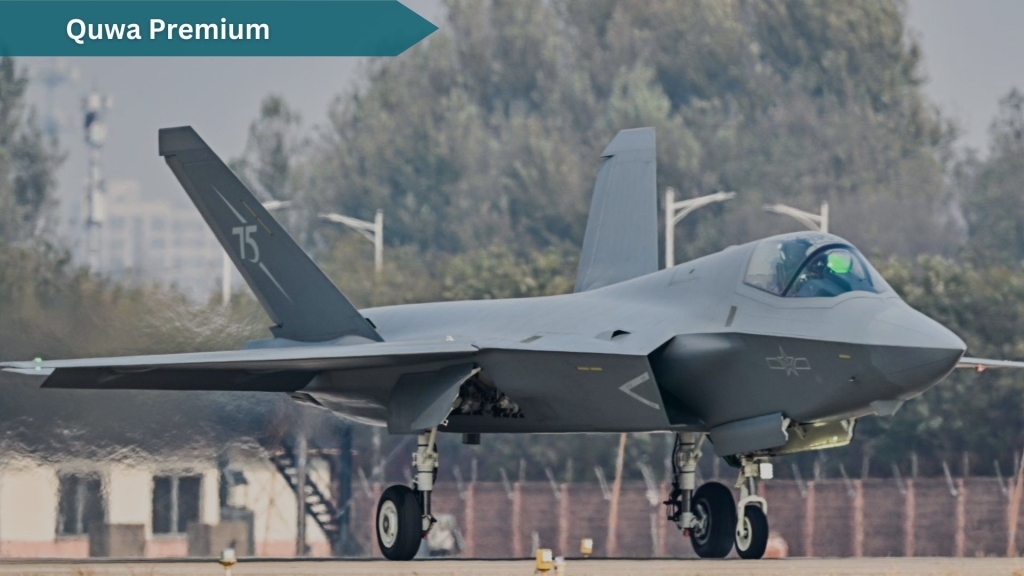
With it showing interest in the Chinese J-31/J-35 and Turkish KAAN, the Pakistan Air Force could be embarking on its most significant induction yet.


Linkedin


X-twitter

In the mid-1970s, the Pakistan Air Force (PAF) sought to strengthen its offensive strike capabilities through a significant procurement initiative: the acquisition of the LTV A-7 Corsair II.

By 1974, the PAF formally approached the United States, aiming to acquire as many as 110 A-7s. This move signaled a clear strategic shift, showcasing Pakistan’s intent to field a sizable strike fleet capable of both close air support (CAS) but also long-range strike missions.

It is likely that the Rasoob 250 and AZB-81LR, which closely emulate the concepts of new munitions like the Joint Strike Missile (JSM) and SPEAR, respectively, were sought for next-generation fighter aircraft (NGFA) with internal weapons bays and, possibly, unmanned combat aerial vehicles (UCAV).

The ‘Swift Retort Model’

Swift Retort did not lead the PAF to build its offensive capability; rather, it revealed a key dynamic: The upgraded F-16s offered a long-range air-to-air reach, while the Mirage ROSE offered the strike element.

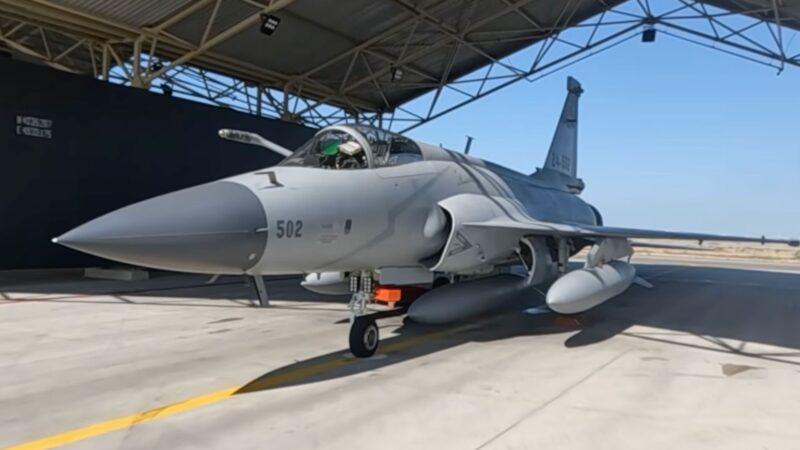
Quwa had discussed this dynamic in 2017, when initial reports of the PAF’s interest in the Shenyang J-31 had first emerged. The F-16A/B Block-15 Mid-Life Update (MLU) and Mirage ROSE basically covered the gaps of each other, thus making for a natural pairing in any future offensive strike formation. This came to pass in Swift Retort, with the two aircraft (albeit supported by JF-17s across both offensive and defensive roles) forming the main brunt of the PAF’s responsive element.

However, what changed in 2019 was that the PAF validated this strategy, specifically the idea that it can, and should, form dedicated attack wings with long-range air-to-air and air-to-surface capabilities. In order to achieve a conventional deterrence posture, the PAF would need multiple such offensive wings so as to launch successive – and simultaneous – Swift Retort-type operations.

Interestingly, the PAF’s focus on preemptive strikes is not new. It had engaged in numerous such strikes in both the 1965 and 1971 Wars, often with the aim of deprecating Indian airpower (e.g., Pathankot in 1965 or Operation Chengiz Khan in 1971). Indeed, the PAF’s interest in 110 A-7s in the 1970s reflects a desire for building a robust air offensive capability. Unfortunately for the PAF, it generally never had access to the right platforms to fully support these requirements. The A-7s were the closest the PAF could ever reach towards building such a capability.

In the future, the PAF cannot realistically engage in a Swift Retort-type strike and expect identical results, especially as the Indian Air Force (IAF) will be far better equipped and prepared. Moreover, in a genuine wartime situation (i.e., not a limited skirmish), more of the IAF’s assets will be ready to both intercept any such adventure and, as importantly, respond with large-scale strike formations. Thus, the PAF’s offensive expansion would need to take these dynamics into account.

That said, changes in both air warfare technology and the aerospace market could make this expansion a relatively tenable pursuit, even with Pakistan’s limited fiscal means.

Quwa Plus

Don't Stop Here. Unlock the Rest of this Analysis Immediately

To read the rest of this deep dive -- including the honest assessments and comparative analyses that Quwa Plus members rely on -- you need access.

Join Today

USD $29.99/Year